
Aramco Approved Calibration Company in Duba
Traceable calibration support for Saudi industrial teams working across the Eastern Province and Dubai-linked operations.
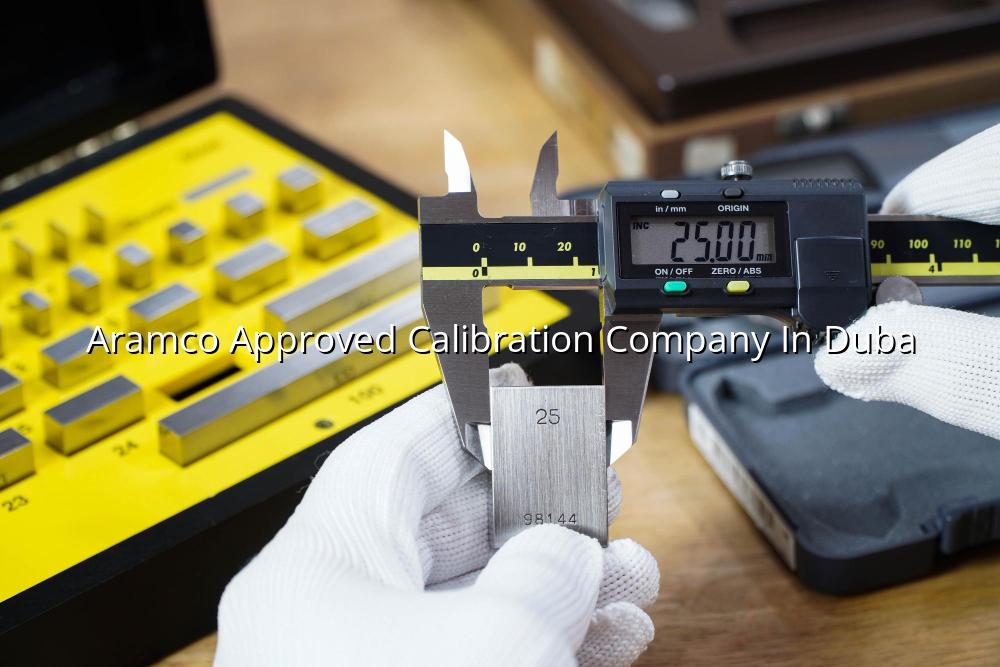
Aramco approved calibration company in Duba is the phrase many maintenance and QA teams search when they need traceable calibration done without drama. If that's your brief, this page will help you figure out what to ask, what documents to check, and how to avoid getting stuck with instruments that can't stand up in a shutdown review.
We work with industrial clients in Saudi Arabia, India and the Middle East, so we understand the pressure around vendor qualification, calibration certificates, and site access. In practice, most teams don't just need a lab. They need a partner who can come onsite, handle special conditions, and keep the paperwork clean enough for audit day.
What you should expect from an Aramco approved calibration company in Duba
When people ask for an Aramco approved calibration company in Duba, they're usually trying to solve three things at once: approval confidence, traceable measurement, and fast deployment to site. For Saudi oil and gas work, that usually means calibration records that line up with ISO/IEC 17025:2017 practice, instruments handled by competent technicians, and enough flexibility to work around plant access, permit rules, and shutdown windows. We see this every week in Dammam Industrial City 2 and across nearby industrial zones.
Why approval alone is not enough
An approval label is useful, but it doesn't replace a proper calibration method. You still want to know whether the provider can calibrate pressure gauges, temperature instruments, torque tools, electrical testers, and dimensional items with the right uncertainty control and the right certificate format. If the equipment goes back to a refinery, petrochemical plant or power station, the record has to make sense to the maintenance lead, the QA reviewer and the audit team.
What industrial buyers usually check first
Most procurement teams start with scope. Then they look for lab capability, onsite mobilization, and whether the provider can support special handling for sensitive instruments. If the device needs controlled temperature conditions or pick-up and delivery, that matters too. In our work, those small details often decide whether a job runs smoothly or turns into a second visit.
- Confirm the service scope — match your instrument list against the provider's calibration disciplines, not just the headline approval claim.
- Check traceability documents — ask how certificates, data sheets and reference standards are controlled under ISO/IEC 17025:2017.
- Set the site conditions — confirm access, shutdown timing, permit needs and whether onsite or in-lab service fits the asset.
- Review the handover pack — make sure labels, status tags and certificates are clear enough for your maintenance and QA files.
- Ask for scope-specific certificates, not generic wording.
- Use onsite calibration for assets that are hard to remove.
- Keep a register of instrument serial numbers before the visit.
- Separate routine verification from formal calibration in your maintenance plan.
Choosing the right calibration route for Saudi industrial work
| Need | Best route | Why it suits the job |
|---|---|---|
| Fixed plant instruments | Onsite calibration | Reduces removal time and keeps critical assets available. |
| Sensitive instruments | In-house laboratory | Temperature-controlled conditions support stable measurement. |
| Special handling items | Pick-up and delivery | Helps when instruments need controlled movement or packing. |
| Multi-discipline shutdown work | Mobile calibration lab | Supports faster coordination during plant maintenance windows. |
How traceability helps during audits and shutdowns
Saudi industrial buyers often work under tight QA expectations. In that setting, traceability is not a nice extra. It's the part that lets your team defend a reading, a certificate, and a maintenance decision when someone asks where the reference came from. That's why we keep our calibration work aligned with ISO/IEC 17025:2017 practice and our quality system aligned with ISO 9001:2015.
Where the paperwork matters most
Pressure gauges, electrical protection gear, torque tools, temperature devices and dimensional instruments all need clean identification. If you manage a refinery, power plant, manufacturing line or cold-chain site, the record trail should be easy to follow. A good provider makes that simple instead of burying it in vague wording and missing details.
Built for real plant conditions
We support oil and gas, petrochemical, power, construction, healthcare, pharmaceutical, cold chain, food and beverage, manufacturing and engineering teams that need dependable calibration records and practical site support.
Typical calibration jobs we see from Dubai-linked and Saudi sites
Jobs coming from Dubai-linked operations and Saudi sites are often a mix of routine and urgent. One day it's pressure transmitters and gauges for a process unit. The next it's thermometers for cold rooms, insulation testers for electrical maintenance, or torque tools used during assembly and reassembly. Some clients also bring us biological and biomedical instruments, mass and volume items, and equipment for concrete batching or civil works.
That mix matters because it changes the approach. Not every item belongs in the same queue, and not every instrument should travel the same way. In-house work is a good fit when the item needs stable conditions. Onsite work is better when removal would create downtime or extra risk.
Short list of items people often forget
Site teams often remember the main process instruments first, then realize the support items still need calibration too. That's usually where the small surprises are hiding.
- Pressure gauges and pressure transmitters.
- Temperature probes, indicators and baths.
- Torque wrenches and force tools.
- Electrical testers used during commissioning.
How Mayon Industrial Services Can Help
We support calibration, mechanical services, inspection, orbital welding, lab setup and training, so we're used to working around real plant needs rather than neat theory. If your site in Saudi Arabia needs an Aramco approved calibration company in Duba, we can discuss the instrument list, the site conditions, and whether onsite, in-lab or mobile-lab work fits best. You can also ask about pick-up and delivery for items that need special handling.
Call +91 99447 80844 (India) or +966 59 633 8012 (Saudi Arabia), email services@mayonservices.com, or message us on WhatsApp.
Frequently Asked Questions
People usually mean a provider that can work to the qualification and documentation expectations used on Saudi industrial sites. For you, that translates into usable certificates, traceable methods and a team that understands plant access and shutdown work. Approval by itself is not the whole job; the delivery has to stand up in a QA review too.
Yes, we can support onsite work where the asset is better left in place. That is often the best choice for fixed process equipment, shutdown-critical instruments and items that are awkward to remove. Our mobile calibration lab also helps when the job needs more than a basic visit.
Yes. Our calibration services are aligned with ISO/IEC 17025:2017, and we use controlled processes for certificate output and instrument identification. If you need the documentation to match a plant QA file or an audit pack, we can talk through that before the job starts.
We see strong demand from oil and gas, petrochemical, power, manufacturing, construction, healthcare, pharmaceutical and cold-chain users. Those sectors tend to have a mix of process, electrical and mechanical instruments, so the calibration scope gets wide very quickly. That's normal for industrial work.
Yes, we offer pick-up and delivery for instruments that need special conditions. That can be useful when the item needs controlled handling or when the plant team wants the job moved offsite. It also helps reduce the time your own staff spend packing and transporting delicate equipment.
That's common. Many clients ask us for calibration first, then also need mechanical work, inspection, orbital welding, lab setup or training support. It usually makes coordination easier when one team can cover several linked tasks on the same site visit or project cycle.
Ready to get your calibration plan in order?
If you need a dependable partner for Saudi work, send us the instrument list and we'll help you decide the right route.
Contact Mayon