
Aramco Approved Calibration Company in Red Sea
Support for industrial calibration needs around the Red Sea corridor, with onsite and in-lab capability for critical instruments.
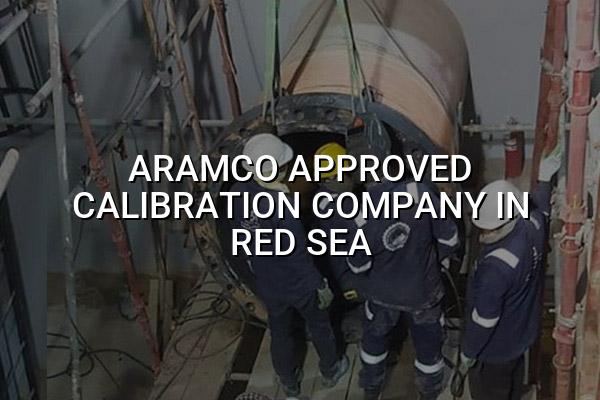
An Aramco approved calibration company in Red Sea needs to do more than issue certificates. You need traceable measurements, clean paperwork, and technicians who understand how plant shutdowns, maintenance windows, and offshore or coastal logistics actually work.
That is the standard we work to at Mayon Industrial Services. We support industrial teams across Saudi Arabia and the wider Middle East with onsite calibration, in-house laboratory work, mobile lab visits, and practical help for instruments used in oil & gas, petrochemical, power, construction, and cold-chain operations.
What You Should Expect from an Aramco Approved Calibration Company in Red Sea
For Red Sea projects, the real test is consistency. Your pressure gauges, temperature probes, torque tools, multimeters, weighing systems, and process instruments need calibration that fits the job site and the documentation expectations around Saudi industrial work. We handle those requests under ISO/IEC 17025:2017 discipline, with calibration methods aligned to the instrument type and the risk attached to its use.
Why the approval question matters
People often search for an Aramco approved calibration company in Red Sea because procurement teams need confidence before a shutdown or startup. The approval itself matters, but so does the work behind it: proper traceability, clear identification, calibration labels that make sense in the field, and reports your QA team can file without chasing missing data.
Onsite work or lab calibration?
Our mobile calibration lab is useful when the instrument is installed, large, or too awkward to remove without disrupting operations. For smaller devices and items that need controlled conditions, our temperature-controlled in-house lab in Chennai can handle pickup and delivery planning for special cases. That mix helps when a project manager needs the job done without turning maintenance into a bigger event than it should be.
- Identify the instrument set — list the devices in service, tag numbers, ranges, and where they are installed on the Red Sea site.
- Match the environment — decide which items can be calibrated onsite and which ones need lab conditions or special handling.
- Check the traceability chain — confirm the standard references, documentation format, and any project-specific QA requirements before work starts.
- Carry out calibration and review results — verify readings, record deviations, and flag items that need adjustment, repair, or retesting.
- Use onsite calibration for equipment that should stay in service locations.
- Keep temperature-sensitive instruments in controlled lab conditions when stability matters.
- Ask for calibration records that your QA and maintenance teams can actually audit.
- Confirm whether the job needs pressure, electrical, dimensional, thermal, torque, or mass calibration.
- Plan around shutdown windows so production loss stays low.
Calibration Options for Red Sea Industrial Sites
| Service route | Best for | Typical field use |
|---|---|---|
| Onsite calibration | Installed instruments and assets that should stay in place | Pressure gauges, process loops, electrical test points, torque tools |
| In-lab calibration | Instruments that need controlled conditions or tighter handling | Thermal devices, precision mass items, select dimensional tools |
| Mobile calibration lab | Projects where equipment movement is difficult | Plant areas, maintenance shutdowns, remote industrial locations |
| Pickup and delivery | Items needing special condition management | Sensitive instruments, planned batch work, controlled transport |
How we keep calibration traceable and usable
Saudi plant teams usually care about two things: can the instrument be trusted, and can the paperwork stand up to an internal audit? We work to ISO/IEC 17025:2017 for calibration competence, and we also understand the practical side of the job — tags, asset lists, results, corrections, and the small details that help a maintenance engineer move from report to action.
Where that shows up on site
You’ll notice it in the way we plan work around live operations, separate items that need retest from those that only need verification, and keep communication simple for QA, maintenance, and procurement. On larger shutdown jobs, that matters. Nobody wants a pile of vague paperwork after a long shift in the heat.
Built for industrial teams
We support oil & gas, petrochemical, power, construction, healthcare, manufacturing, and cold-chain facilities across Saudi Arabia and the Middle East. That means the work is shaped around real plant conditions, not a lab-only view of the world.
More than calibration: the support teams usually need next
Condition monitoring
Vibration analysis, laser shaft alignment, ultrasound monitoring, and infrared thermography help maintenance teams catch failure signs before they become a shutdown.
Mechanical services
Cold cutting, flange weld testing, hydrotesting, bolt torquing, tensioning, flange facing, and testing & commissioning support field work on critical plant systems.
Lab design and setup
If a project needs a new calibration or chemical lab, we can help with design, installation, and commissioning so the space is ready for controlled work.
How Mayon Industrial Services Can Help
If you need an Aramco approved calibration company in Red Sea, we can support the job with onsite calibration, lab-based work, mobile calibration services, and follow-on repair or maintenance where an instrument needs attention before it goes back to service. Our team also works with electrical testing, inspection, PAT testing, temperature mapping, and orbital welding, so you can deal with one industrial partner instead of chasing five vendors.
Call +91 99447 80844 (India) or +966 59 633 8012 (Saudi Arabia), email services@mayonservices.com, or message us on WhatsApp.
Frequently Asked Questions
Usually, you’re looking for calibration support that fits Saudi industrial work sites: traceable results, proper documentation, and the ability to work onsite or in a controlled lab. In practice, that covers pressure, electrical, thermal, torque, mass, and dimensional instruments, depending on the asset list. The approval side matters, but so does whether the team can work around your operations without causing avoidable downtime.
Yes, and for many plant items that’s the better choice. Onsite calibration works well when the instrument is installed, difficult to move, or tied to a live process line. We also use a mobile calibration lab for jobs where bringing the service to the site is cleaner than pulling assets out of service.
For calibration competence, we work to ISO/IEC 17025:2017. Where needed, we also stay aligned with ISO 9001:2015 for quality management and EURAMET CG-15 for electrical calibration reference practice. The exact approach depends on the instrument and the work scope.
Yes. Our work is built around industrial settings in Saudi Arabia, India, and the wider Middle East, including oil & gas, petrochemical, power, construction, manufacturing, and cold-chain facilities. We also support related services like mechanical work, inspection, and electrical testing when a project needs more than calibration alone.
Start with an instrument list, tag numbers, ranges, locations, and any site access rules. If you have previous certificates, share those too; they help us understand the equipment history and what needs attention first. That small bit of preparation usually saves time once the job starts.
Yes. Our repair and maintenance services cover equipment such as generators, air compressors, pumps, hydrotest pumps, hydraulic cylinders, and related industrial items. If the instrument or asset needs repair before it can be put back into service, we can review that as part of the overall support plan.
Ready to keep your Red Sea instruments in control?
If you want a calibration partner that understands Saudi industrial work, send us the instrument list and we’ll help you plan the next step.
Contact Mayon