
Bolt Torquing Service Company in Al Hasa
Controlled bolt tightening and tensioning support for flanges, equipment skids and maintenance shutdowns in Al Hasa.
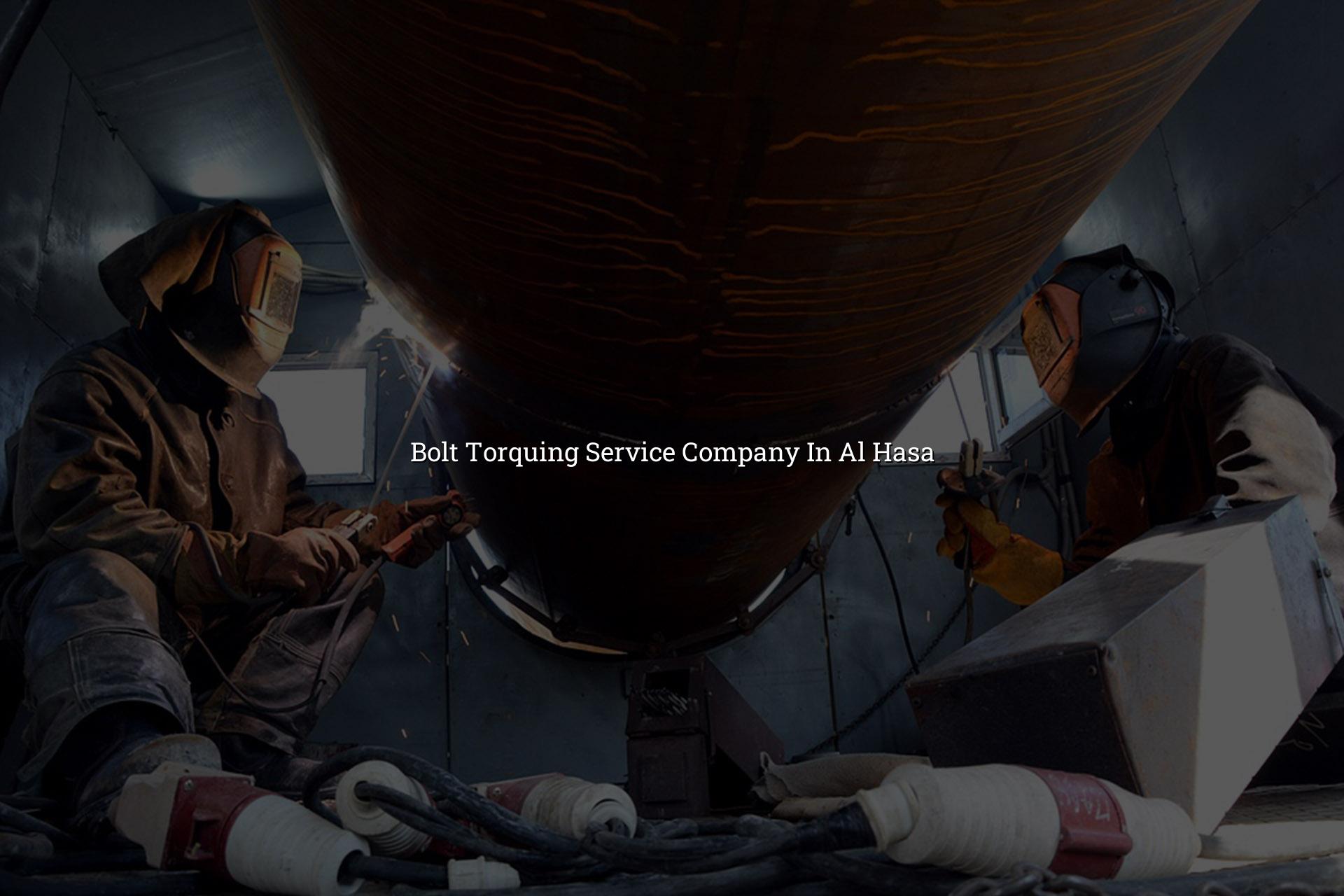
Bolt torquing service company in Al Hasa is what plant teams search for when a flange has to go back together right the first time. We help you tighten critical joints with the right method, the right sequence and a clear record of what was done, so maintenance crews can get back to work without guessing.
In Al Hasa and the wider Eastern Province, we see the same pattern again and again: turnaround work on pumps, compressors, skids, heat exchangers and pipe runs where one uneven bolt load can turn into leakage or a repeat shutdown. Our team supports that work with mechanical services, calibrated tools and onsite field discipline built around real industrial conditions.
Bolt Torquing Service Company in Al Hasa for Safer Mechanical Joints
Good bolt torquing is not just “tight enough.” It is controlled tightening that helps a flange seal, keeps gasket load even and reduces the chance of local overstress around studs, nuts and flange faces. For oil and gas, petrochemical, utilities and manufacturing sites in Saudi Arabia, that matters because the joint has to hold under vibration, temperature swing and repeat load cycles.
Where we usually get called in
Most calls come during shutdowns, after a gasket change, or when a joint has started weeping around the perimeter. We also support planned maintenance on pipe spools, valves, vessels, hydrotest setups and equipment packages that need a documented tightening pattern before recommissioning. If you already have a maintenance scope, we can work from it; if not, we can review the joint, the access and the tool method first.
Torque and tension are not the same thing
Torque gives you controlled rotational force. Tensioning stretches the stud more directly. Both have their place, and the right choice depends on the joint, access, bolt size and the condition of the flange. On jobs where the stakes are high, our crew checks the joint condition, confirms the sequence and uses the method that suits the application instead of forcing one approach everywhere.
- Inspect the joint first — we check flange faces, studs, nuts, gasket condition and access before any tightening starts.
- Confirm the sequence — the bolt pattern is set so load is pulled down evenly, not in random circles.
- Apply controlled tightening — we use calibrated tools and the agreed method, then work in passes where needed.
- Record the work — the final condition, tool details and relevant observations are documented for maintenance and QA files.
- Recheck after settling — if the scope needs it, we return for a verification pass after the joint has seated.
- Bring the bolt set, nuts and gasket to the job in matched condition; mixed hardware makes consistency harder.
- Keep flange faces clean and dry before tightening starts, especially after blasting, machining or gasket removal.
- Use the same tightening pattern on all similar joints in the same package so the crew works predictably.
- Check access early; a perfect torque plan still fails if sockets, clearance or reaction arms don’t fit the space.
- Ask for a written record when the joint is critical, because maintenance teams often need traceable sign-off later.
Typical Bolt Tightening Methods for Industrial Work
| Method | Best Used For | Field Note |
|---|---|---|
| Manual torque tightening | Smaller joints, routine maintenance and accessible flanges | Useful when the joint is straightforward and the sequence can be followed without crowding. |
| Hydraulic torque wrench | Larger studs, heavier flange assemblies and controlled shutdown work | Good for repeatable load application where access and reaction points are planned. |
| Hydraulic bolt tensioning | High-integrity joints and applications that need more direct stud load control | Chosen when the joint design and access suit tensioning better than wrenching. |
| Multi-pass tightening | Critical flanges, fresh gaskets and joints that need staged load-up | Used to seat the gasket evenly and reduce the chance of one side taking too much load early. |
Why Al Hasa Plants Ask for a Controlled Torque Method
In process plants, the joint does not care how busy the shutdown is. It only reacts to load distribution, face condition and hardware quality. That is why a bolt torquing service company in Al Hasa needs more than tools; it needs field discipline, the right maintenance sequence and a team that understands how a flange behaves after it is reassembled.
We keep the job practical
Our crew works around the conditions you actually have on site. That may mean heat, limited clearance, dirty bolt holes, awkward access near pipe racks or a short maintenance window in a live industrial area. We also support related mechanical services such as flange work, hydrotesting, bolt tensioning and commissioning support, so the full scope can stay with one team.
Field-ready support for shutdowns and maintenance turns
For engineers and maintenance managers, the real value is simple: fewer rework loops, better traceability and a joint that’s tightened with care. That matters on compressor packages, tank farms, utility lines and production systems where a small leak can create a much larger problem.
Key Checks Before Bolt Torquing Starts
Before any wrench goes on the nut, we look at what can change the result. That includes whether the studs are clean, if the gasket matches the duty, whether the flange faces are flat and whether the joint has been disturbed by corrosion, paint build-up or previous over-tightening. A bad starting point gives a bad finish, no matter how skilled the technician is.
We also look at the surrounding system. Sometimes the problem is not the joint itself but a misaligned spool, a stressed pipe run or poor support. If the flange is being pulled out of line by the pipework, torque alone won’t solve it, and it is better to spot that before tightening starts than after the first leak test.
Documentation matters on critical jobs
On many Saudi industrial sites, the maintenance team needs a traceable record for the job file, handover pack or QA review. We can keep that process clean with written notes on the joint condition, method used and observations from the work. That makes it easier for your own team to track repeat issues later, especially on frequently serviced assets.
- We can work onsite in Al Hasa and nearby Eastern Province industrial areas.
- Calibrated tools are part of the method, not an afterthought.
- Our mechanical team can handle adjacent flange and hydrotest work where needed.
- We support maintenance teams that want a clear, tidy handover record.
How Mayon Industrial Services Can Help
Mayon Industrial Services supports bolt torquing, bolt tensioning and related mechanical services for shutdowns, planned maintenance and recommissioning work. If your team needs a controlled flange make-up, we can bring the right people, the right tools and a practical field approach that fits the job.
We also back that up with calibration, inspection, testing and commissioning support across Saudi Arabia and the wider Middle East, so you’re not juggling too many vendors for one maintenance scope. If you want to discuss an onsite job in Al Hasa, reach out and tell us what the joint, the access and the schedule look like.
Call +91 99447 80844 (India) or +966 59 633 8012 (Saudi Arabia), email services@mayonservices.com, or message us on WhatsApp.
Frequently Asked Questions
The right team is the one that understands the joint, not just the wrench. For industrial flanges, look for a crew that can inspect the hardware, follow a tightening sequence and document the work clearly. That matters more than a flashy tool list.
Yes, onsite work is a big part of how we support maintenance teams. We regularly handle field jobs where access is tight, the schedule is short and the joint needs to be put back together cleanly before the next stage of work starts.
Torque tightening applies controlled rotational force to the nut, while tensioning stretches the stud more directly. The better method depends on the joint design, the bolt size, the access available and how critical the flange is to the process line.
We can support related mechanical scopes, including flange work and hydrotesting, when the job needs a broader maintenance package. That helps when one contractor is preferred for the full sequence instead of splitting the work between several teams.
Yes, we can keep the job record clean so your maintenance team has something useful to file and review later. On critical joints, that kind of traceability helps when the same flange comes up again in a future shutdown.
We most often see demand from oil and gas, petrochemical, power, manufacturing and heavy engineering sites. Those sectors rely on flanged joints, skids and process equipment that need careful reassembly after maintenance.
Ready to get the joint tightened properly?
If you need a bolt torquing service company in Al Hasa, send us the scope and we’ll help you plan the work around your shutdown or maintenance schedule.
Contact Mayon