
Bolt Torquing Service Company in Ras Tanura
Onsite flange tightening, bolt tensioning and documented torque control for Ras Tanura and nearby Eastern Province sites.
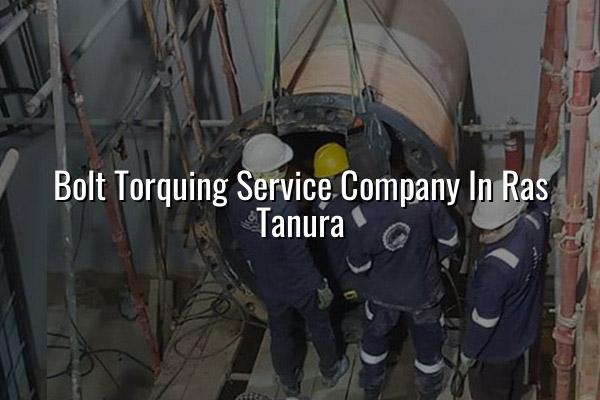
Bolt torquing service company in Ras Tanura searches usually come from people who need a job done properly on live plant hardware, not a generic hand-tightening crew. We help you control preload, protect flange integrity and keep maintenance records that stand up to QA checks.
Ras Tanura work often means refinery piping, shutdown windows, utility lines and equipment that cannot be treated casually. Our team supports industrial sites in Saudi Arabia with calibrated torque tools, bolt tensioning methods, onsite mobilization and the kind of documentation maintenance managers expect.
Bolt Torquing Service Company in Ras Tanura: what good site work looks like
In our experience, most torque problems start before the wrench even turns. Dirty studs, damaged nuts, wrong lubrication, poor sequence or a rushed shutdown can leave a joint unevenly loaded, and that shows up later as leakage, bolt relaxation or repeated rework. A proper bolt torquing service company in Ras Tanura should bring field discipline, not just tools.
We plan around the joint type, size, access and service conditions. That may mean controlled torque tightening, hydraulic bolt tensioning, flange checking, re-torque checks after settling, or a mix of those steps. For refinery and petrochemical sites around Ras Tanura and the Eastern Province, that practical approach matters more than fancy language.
Where torque control makes the biggest difference
High-pressure piping, exchangers, pumps, manifolds and skid-mounted packages are the usual problem points. If the bolts on a pressure joint are uneven, gasket compression becomes uneven too, and then the whole assembly starts working against itself. We see this often during turnarounds when several teams are moving fast on the same line.
Why field records matter
Procurement and maintenance teams usually ask for proof after the work is done. That is fair. We document the joint ID, tool used, target value, sequence followed and any issues found during the job. It gives you a paper trail for shutdown files, maintenance logs and internal reviews.
- Inspect the joint first — we check stud condition, flange faces, gasket seating and access before any tightening starts.
- Confirm the tightening method — torque control, bolt tensioning or a combined approach is selected based on the service and joint condition.
- Apply the sequence carefully — tightening is carried out in the proper cross pattern so load builds evenly around the flange.
- Verify and record the result — final readings, tool details and any recheck notes are logged for your maintenance file.
- Use calibrated torque tools, not unverified shop tools pulled from a van.
- Make sure studs and nuts match the flange material and service duty.
- Clean the faces and threads before tightening, especially after corrosion exposure.
- Recheck critical joints after the first load cycle if the job scope allows it.
- Keep the tightening sequence on the work pack so the next shift can review it.
Common bolt tightening methods used on site
| Method | Best use | Site note |
|---|---|---|
| Manual torque wrench | Smaller flanges and routine maintenance | Works well when access is good and the joint is straightforward. |
| Hydraulic torque wrench | Heavier joints and controlled load applications | Useful where repeatability and higher torque output are needed. |
| Hydraulic bolt tensioning | Critical joints with strict preload control | Often preferred when even bolt load is more important than simple turning torque. |
| Staged cross-pattern tightening | Most flange assemblies | Helps distribute clamp load and reduce gasket distortion during pull-down. |
What you should expect from a proper torquing job
A good site team does more than tighten bolts. It protects the joint from damage, keeps the sequence under control and avoids the kind of quick fixes that create another shutdown later. On critical process lines, that discipline can save a lot of avoidable rework.
Traceable tools and trained hands
We support jobs with calibrated tools and technicians who understand industrial flange work. That matters in Saudi plant environments where QA teams want traceability, and it matters in India too when a maintenance supervisor needs clean records for a turnaround pack or client handover.
Built for refinery and shutdown conditions
Ras Tanura sites often have tight access, heat, dust and schedule pressure. We work around those realities with mobile support, clear job steps and a practical approach to flange tightening, bolt tensioning and field verification.
Related services that often sit beside bolt torquing
Flange facing and repair checks
When sealing faces are damaged, tightening alone will not solve the problem. We can support the wider mechanical work so the joint is ready before torque is applied.
Hydrotesting and pressure-related work
Shutdown scopes often bundle torquing with hydrotest preparation, manifold work and leak checks. That is normal in refinery and petrochemical maintenance.
Tool calibration and verification
Torque results are only as trustworthy as the tool behind them. Our ISO/IEC 17025:2017 calibration capability helps keep the measuring side of the job under control.
How Mayon Industrial Services Can Help
We support Ras Tanura and wider Saudi industrial sites with bolt torquing, bolt tensioning, flange work, hydrotesting support and field-ready mechanical services. If your shutdown pack needs calibrated control, documented tightening and a team that understands refinery conditions, we can help. You can bring us in for a single joint package or a wider mechanical scope.
Call +91 99447 80844 (India) or +966 59 633 8012 (Saudi Arabia), email services@mayonservices.com, or message us on WhatsApp.
Frequently Asked Questions
We tighten flange and equipment bolts to a controlled target using the right sequence, tool and method for the joint. The work usually includes inspection, tightening, verification and recording. On shutdown jobs, that record helps your team track what was done and who signed off.
Not always. Bolt tensioning is often better for critical joints where preload consistency matters a lot, while torque tightening works well for many standard flange jobs. We look at the service, access and joint condition before choosing the method.
Yes, we use calibrated tools and can support the wider measurement side through our ISO/IEC 17025:2017 calibration capability. That helps when a client wants traceable records for QA, shutdown files or inspection packs. It also reduces arguments later about whether the tool was trustworthy.
Yes. Shutdown work is a normal part of what we do, especially where the schedule is tight and the joint list changes during the job. We are used to working with maintenance teams, supervisors and other contractors on the same site.
We most often see requests from oil & gas, petrochemical, power, manufacturing and engineering sites. Cold chain and utilities also need controlled bolting on certain packages and equipment. The common thread is simple: the joint has to hold, and the record has to make sense.
Ready to put proper torque control on your next shutdown?
If you need a dependable team for flange tightening, bolt tensioning or mechanical support in Ras Tanura, speak with Mayon and get the job scoped before the outage starts.
Contact Mayon