
Bolt Torquing Service Company in Salwa
Controlled bolt tightening for flange joints, equipment skids and plant maintenance work in Salwa and nearby industrial zones.
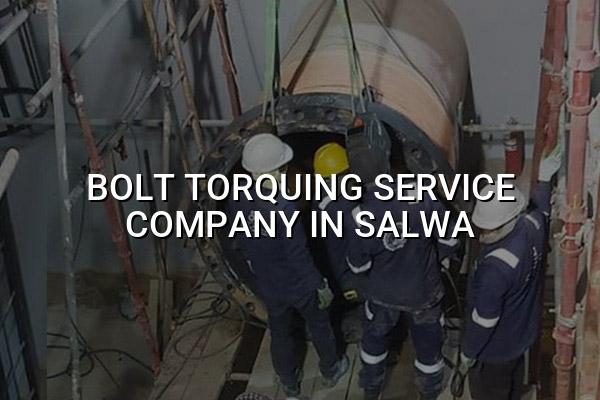
Bolt torquing service company in Salwa is what many maintenance teams search for when a flange joint, skid frame or rotating machine needs controlled tightening, not guesswork. We help you get the clamp load right, protect gasket integrity, and keep assembly work aligned with site procedures.
Our team works across Saudi Arabia, including Salwa and the wider Dammam industrial belt, where oil, gas, petrochemical and utilities jobs often need careful bolt tightening after shutdown work, installation or re-torque checks. We bring site experience, calibrated tools and a practical approach that fits real plant conditions.
Bolt torquing service company in Salwa for controlled joint integrity
In flange work, the issue is rarely just tightening a bolt. The real job is to apply the right load in the right pattern so the gasket seats evenly, the flange faces stay happy and the joint behaves the way the piping team planned. That’s why torque sequence, lubrication condition, bolt grade and tool calibration all matter. A joint that looks tight can still be wrong.
Where this service is used most
We’re usually called in for process piping, pump bases, pressure vessels, heat exchangers, compressor skids and equipment that has been opened for inspection or repair. On shutdowns in Salwa and nearby industrial areas, teams often need bolt torquing after gasket replacement, nozzle work, cold cutting or flange facing. The work becomes sensitive fast when the plant is on a restart path and no one wants a leak, distortion or uneven load.
Why site crews ask for a specialist team
Most site crews can tighten bolts. The problem is repeatability. When you have multiple studs on one joint, the difference between a careful cross-pattern and a rushed pass can show up later as seepage, flange rotation or a stressed gasket. We focus on method, tool control and documented sign-off, so your maintenance record reflects what was actually done, not just that someone “finished the bolts.”
- Confirm the joint condition — we check the flange faces, stud condition, nut engagement and whether the joint has signs of damage or contamination.
- Set the tightening plan — our crew follows the required sequence, final target and any site-specific hold points before the first pass starts.
- Use calibrated torque tools — torque wrenches, hydraulic tools or tensioning gear are selected based on the joint and access.
- Work in passes — we tighten progressively, recheck the sequence and confirm the final load pattern before handover.
- Helps reduce uneven flange loading on piping and equipment joints
- Supports shutdown, turnaround and commissioning teams
- Fits oil, gas, petrochemical, power and manufacturing sites
- Can be combined with flange facing, hydrotesting and commissioning work
Torque, tensioning and related bolt control methods
| Method | Typical use | Why teams choose it |
|---|---|---|
| Manual torque tightening | Smaller assemblies, basic maintenance tasks and light-duty joints | Simple setup and useful where access is open and the joint is not highly critical |
| Hydraulic torque wrench | Heavy flanges, larger studs and controlled plant shutdown work | Gives better control where the joint needs stronger, more even tightening |
| Bolt tensioning | Critical flange applications with strict load control | Helps apply consistent bolt load where the sequence and final clamp matter most |
| Re-torque inspection | After start-up checks or maintenance verification | Useful for confirming whether the joint stayed stable after the first thermal or pressure cycle |
How we keep the work controlled
Good bolt torquing starts before the first wrench is placed. We look at tool condition, calibration traceability and the joint details the maintenance supervisor gives us. In plants where the flange is tied to production or safety systems, that discipline matters because the bolt load is part of the system, not just a finishing step.
What a sensible site package usually includes
Depending on the job, we may coordinate with flange facing, hydrotesting, testing and commissioning, or mechanical maintenance work. For teams in Saudi Arabia and the Middle East, that joined-up approach keeps the bolt work aligned with the rest of the shutdown schedule. It also helps when the same client needs calibration support for torque tools, gauges or related instruments under ISO/IEC 17025:2017 practices.
Practical on-site support
We’ve seen enough plant jobs to know the usual trouble spots: missing studs, dirty threads, uneven lubrication and teams rushing the final pass. A better method is slower at the start and cleaner at the end. That’s the part site managers tend to remember when the joint stays dry.
Before the wrench turns
We don’t start by tightening. We start by checking whether the joint is ready to be tightened. That means looking for obvious mechanical problems, confirming the bolt set matches the job and making sure the crew knows the target pattern. A small error here can waste a lot of time later, especially if the line has to be opened again.
On real plant jobs in Salwa, the best outcomes usually come when the maintenance team, QA lead and execution crew agree on the joint condition before work begins. That saves arguments at the end. It also keeps the record cleaner when the same system is reviewed during a later shutdown.
Common checks we see on plant jobs
Thread condition, washer placement, stud length, flange alignment and lubrication status are the basics. When the joint is part of a higher-risk system, the crew may also need staged tightening, witness checks or a final inspection before the line is returned to service.
- Verify stud size, grade and thread condition before tightening
- Confirm the flange faces are clean and properly aligned
- Agree on the sequence and pass count with the site lead
- Keep tool readings and handover notes together for site records
Salwa, Dammam and the wider GCC maintenance picture
Salwa work often sits inside larger industrial campaigns that touch Dammam Industrial City 2, Jubail corridors and other Saudi maintenance hubs. The pressure is familiar: short shutdown windows, mixed contractor teams and plant owners who need the job done cleanly the first time. We’re used to that environment.
Because we serve Saudi Arabia and the Middle East alongside India, we understand the way industrial clients expect evidence, traceability and direct communication. That matters on bolt work. It also matters when the same site needs calibration, inspection, orbital welding or mechanical support from one team instead of four different vendors.
What clients usually ask us to do
They want the flange tightened properly, the sequence recorded, the job handed back without drama and the paperwork easy to review. Nothing fancy. Just disciplined work, proper tools and people who understand how plant maintenance actually runs.
How Mayon Industrial Services Can Help
We handle bolt torquing as part of a wider mechanical service package, so your team can combine tightening with flange work, hydrotesting, testing and commissioning, or repair support when the job calls for it. If you need torque tool calibration, onsite execution, or help planning the sequence for a critical joint, our crew can step in with a practical site-first approach. Send the details and we’ll help you figure out the cleanest way to get it done.
Call +91 99447 80844 (India) or +966 59 633 8012 (Saudi Arabia), email services@mayonservices.com, or message us on WhatsApp.
Frequently Asked Questions
Usually it’s maintenance teams working on piping, pumps, skids, vessels or utility lines where the joint has to be tightened in a controlled way. We also get called during shutdowns, after gasket changes and before start-up checks. If the joint is critical, it’s worth using a team that treats torque as a process, not a guess.
Torque applies a turning force to the fastener, while tensioning applies load more directly to the bolt. For some joints, torque is enough. For critical flanges or larger assemblies, tensioning can give more controlled load distribution, and we choose the method based on the job and site requirements.
Yes, that’s one of the most common times clients need it. Shutdown work tends to involve flange opening, gasket replacement, reassembly and checks before restart, so controlled tightening fits naturally into the sequence. We can work alongside other mechanical and commissioning tasks on the same site.
Yes. Since we also provide ISO/IEC 17025:2017 calibration services, we can support the tools used for tightening and measurement as part of a wider maintenance program. That helps when your QA team wants cleaner traceability for site records and equipment control.
Oil and gas, petrochemical, power, construction and manufacturing sites ask for it most often. We also see it on utility systems and equipment tied to cooling, process lines and plant services. The common thread is simple: if the joint matters, the tightening should be handled carefully.
Need bolt torquing done right in Salwa?
Send us the job details and we’ll help you plan the tightening work with the same care your plant expects from the rest of the shutdown.
Contact Mayon