
Bolt Torquing Service Company in Saudi Arabia
Controlled tightening for flanged joints, critical equipment and shutdown work across Saudi Arabia and the wider GCC.
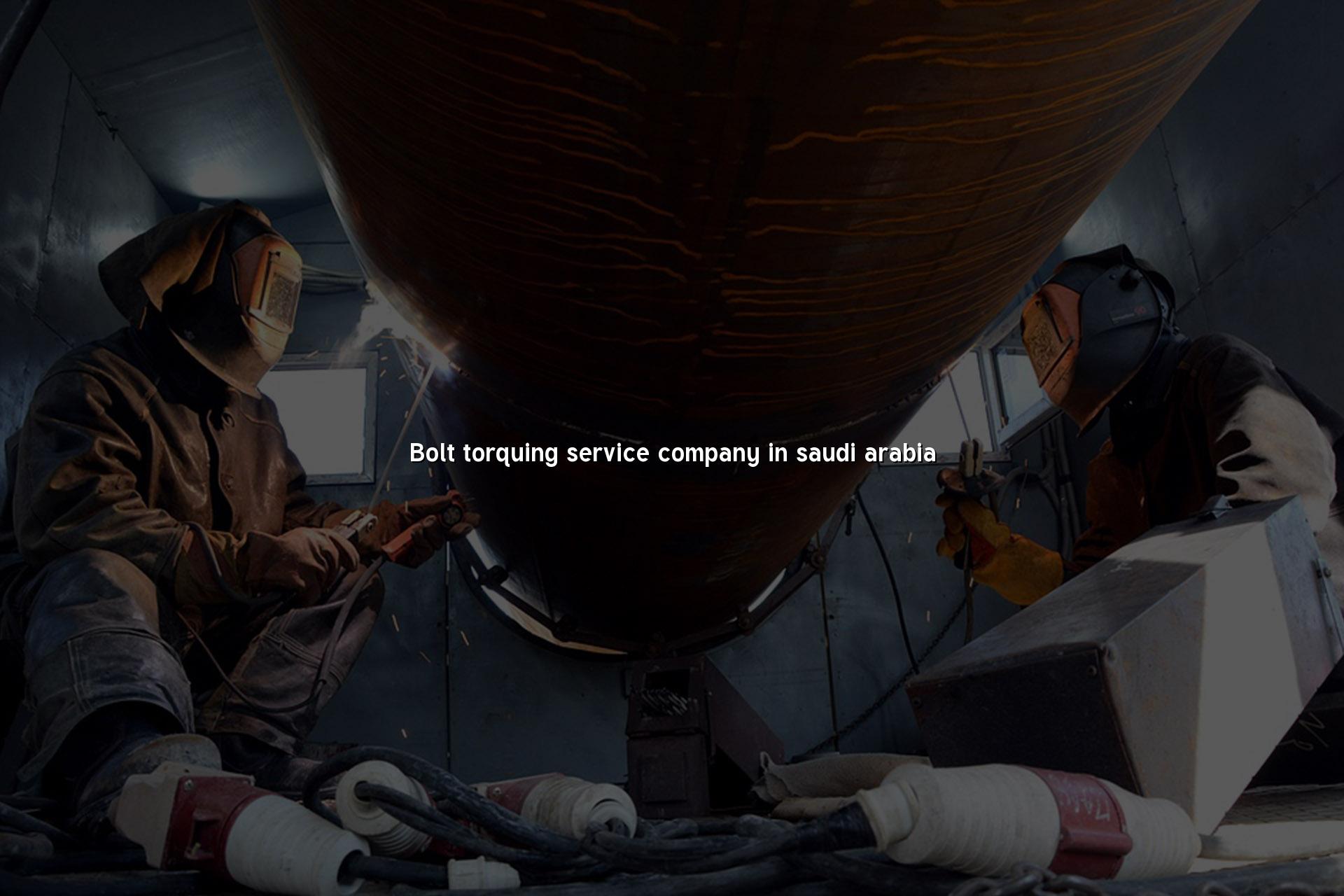
Bolt torquing service company in Saudi Arabia is the phrase people use when they need flanged joints tightened with control, not guesswork. If you're dealing with pumps, vessels, exchangers or pipework, this page shows how we handle torque, tensioning and flange integrity for real sites.
We work with shutdown teams, maintenance managers and QA groups across Saudi Arabia, from Dammam Industrial City 2 and nearby Eastern Province plants to wider GCC operations. Our team brings ISO/IEC 17025:2017 discipline, mobile onsite work and the kind of practical sense that matters when a joint has to hold under heat, vibration and pressure.
Bolt Torquing Service Company in Saudi Arabia for Critical Joints
On an industrial site, bolt tightening is rarely about the bolt alone. It's about load sharing, gasket compression, flange face condition, lubrication, sequence and the joint class you're working with. In Saudi Arabia, that matters even more because the same assembly may see heat, sand, vibration and long operating hours in oil & gas, petrochemical, power or cold-chain facilities.
Where torque and tensioning fit in
We use controlled bolting methods for flanges, skids, pressure equipment and related assemblies where even clamping force is needed. Torque tightening suits many standard joints when the procedure, tool calibration and sequence are set correctly. Hydraulic tensioning is a better fit for higher-load or more sensitive joints where you want very even bolt elongation and less risk of flange distortion.
What can go wrong on site
Most problems we've seen start before the wrench even turns. Dirty studs, poor thread engagement, mixed lubrication, wrong pattern sequence and unverified tools create uneven load. One loose corner on a flange can become a leak path fast, and in shutdown work that means time lost, rework and more inspection.
- Inspect the joint first — we check flange faces, studs, nuts, washers, gasket condition and access before any tightening starts.
- Confirm the method — torque tightening or hydraulic tensioning is chosen based on the joint, service and maintenance plan.
- Set the sequence — the tightening pattern is planned so load comes in evenly, not from one side of the flange.
- Apply controlled tightening — calibrated tools are used in stages, with repeat checks where the joint requires it.
- Record and hand over — the completed work is documented for maintenance files, inspection teams and shutdown closeout.
- Use calibrated torque tools and hydraulic equipment matched to the bolt size and joint duty.
- Keep threads, nuts and flange faces clean before tightening begins.
- Follow a cross-pattern or specified sequence to avoid uneven load.
- Recheck after initial tightening when the procedure calls for staged loading.
Torque, Tensioning and Flange Work Compared
| Method | Best fit | Site benefit |
|---|---|---|
| Manual / mechanical torque | General flanged joints, routine maintenance, accessible bolts | Simple to deploy when the procedure and sequence are controlled |
| Hydraulic torque wrench | Large bolts, confined areas, repeatable loading on critical joints | Higher control and better consistency across bolt sets |
| Hydraulic tensioning | Sensitive flanges, high-load joints, shutdown and turnaround work | Very even bolt load with less flange twist risk |
| Flange facing plus bolt tightening | Damaged faces, poor sealing surfaces, repair scenarios | Improves the sealing condition before final tightening |
Why Calibration and Procedure Control Matter
A bolting job looks straightforward from a distance. In practice, the result depends on the tool reading, lubricant condition, bolt material, joint friction and the people doing the work. That's why we treat bolting as a controlled service, not a quick mechanical task. When a flange leaks after tightening, the failure is often in the setup, not the final turn of the wrench.
For plants in Saudi Arabia, that means traceability
Our approach fits the traceability expected by industrial clients in the Kingdom. Where a procedure calls for verified torque values or controlled tightening records, we keep the work organized so your maintenance file makes sense during audits, inspections and shutdown reviews. That helps teams in oil & gas, petrochemical and power plants keep a clean history on critical equipment.
What site teams usually ask us to handle
Flange tightening on process lines, pump skids, exchanger covers, pressure systems and support equipment. If the joint needs a repeatable method, the right tool and a crew that knows how to work around live plant constraints, we're set up for that kind of job.
How We Handle Bolt Tightening on Active Plants
Saudi sites often need bolting work during shutdown windows, breakdown calls or planned maintenance. That means access can be limited, bolt sizes vary from one line to the next and the job has to fit around other trades. We come prepared for that. Our mobile capability helps us work onsite without forcing your team to wait for workshop movement when the equipment is already on location.
We also support customers who need related services at the same time. If a joint issue is tied to flange facing, hydrotesting, cold cutting, testing and commissioning or repair work, we can coordinate the work package so the mechanical side stays orderly. That saves a lot of back-and-forth between contractors.
Typical applications we see in the field
Common jobs include pump maintenance, valve removal, exchanger work, piping tie-ins and reassembly after inspection. We also see bolting requests in construction, manufacturing and cold-chain facilities where plant rooms, utility skids and process lines need controlled assembly.
- Site coordination — we align with your permit, access and shutdown plan before mobilizing tools and crew.
- Joint preparation — surfaces, studs and fasteners are checked so the tightening work starts from a known condition.
- Execution — the chosen tightening or tensioning method is applied with the right sequence and control.
- Verification — the team reviews the completed joint and documents the result for your records.
- Planned maintenance work is easier when bolting, flange and testing tasks are grouped.
- Mobile onsite service reduces handling of large assemblies and fixed equipment.
- Controlled method selection helps protect gasket seating and flange alignment.
- Documentation supports inspections, shutdown closeout and future maintenance reviews.
Who Uses This Service Most Often?
Our bolting work is usually booked by maintenance supervisors, turnaround planners, QA/QC teams and procurement leads who need one contractor to take responsibility for the joint. In Saudi Arabia, that often means oil & gas plants, petrochemical complexes, power stations, fabrication yards and process facilities that cannot afford sloppy reassembly.
Where the service fits best
If the work involves a pressure boundary, rotating equipment, critical utility line or a flange that has already given trouble, controlled torquing makes sense. If the assembly is large, heavily loaded or needs very even bolt load, tensioning is often the better call. We help you choose the right method instead of forcing one tool onto every joint.
Before we start, we want the basics right
Bolt grade, joint size, service condition, access limits and the maintenance history. Those few details tell us a lot, and they help us bring the right crew and equipment to site the first time.
How Mayon Industrial Services Can Help
We provide bolt torquing and related mechanical support as part of a wider industrial service line that includes calibration, inspection, hydrotesting, flange work, testing and commissioning, repair and maintenance, and orbital welding. That mix helps when your job needs more than one trade working to the same plan. If your site in Saudi Arabia needs controlled tightening for a shutdown, a repair or a new installation, talk to us and we'll map the work to your plant conditions.
Call +91 99447 80844 (India) or +966 59 633 8012 (Saudi Arabia), email services@mayonservices.com, or message us on WhatsApp.
Frequently Asked Questions
We tighten bolts using a controlled method so the joint gets even load instead of random force. That usually means torque tightening, hydraulic torqueing or tensioning, depending on the flange and the operating condition. The aim is simple: a joint that seats properly and stays reliable after reassembly.
Honestly, tensioning makes more sense on larger or more sensitive joints where very even bolt load matters. Torque tightening still has its place for many routine flanged joints, especially when the procedure is clear and the access is good. We look at the joint duty, bolt size and site conditions before choosing.
Yes. We regularly work onsite where access is tight and the schedule is tied to a shutdown or turnaround window. The key is planning the joint list, equipment needs and permit requirements early so the crew arrives ready for the actual job, not for a site learning curve.
No. Oil and gas is a big part of the market in Saudi Arabia, but we also support petrochemical, power, manufacturing, construction and cold-chain sites. If the job involves flanged joints, pressure systems or mechanical reassembly, the same controlled approach still applies.
We keep the work tied to the joint condition, tightening sequence, chosen method and tool control. Our ISO/IEC 17025:2017 culture helps us stay disciplined about measurement, verification and records. That makes the job easier to review during maintenance handover or inspection follow-up.
Need controlled bolt tightening for your Saudi site?
Bring us in for torque, tensioning or flange support, and we'll help you keep the joint work orderly from start to handover.
Contact Mayon