
Calibration Lab Setup Company in Turaif
Plan, build and commission a calibration lab that supports traceability, workflow and day-to-day testing in Turaif and the wider Northern Borders region.
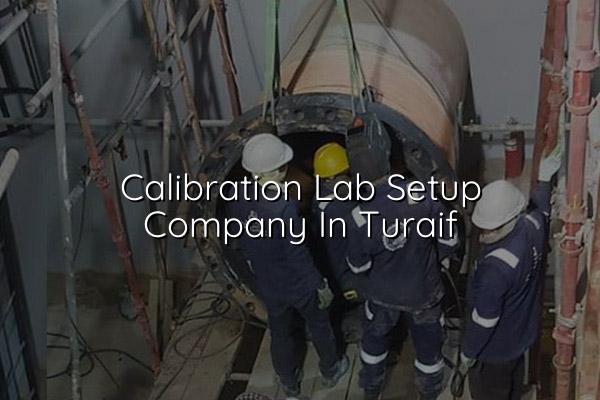
Calibration lab setup company in Turaif searches usually come from teams that need more than a room full of instruments. You need a working lab, a clean flow of work, traceable records and equipment choices that match the jobs you plan to handle from day one.
We help clients shape calibration spaces for industrial sites, maintenance teams and service businesses across Saudi Arabia and the Middle East. In practice, that means thinking through layout, environmental control, utilities, benches, storage, document flow and the instruments needed for pressure, electrical, thermal, mechanical and dimensional work.
Calibration lab setup company in Turaif for practical industrial use
A good calibration lab setup is not just about buying a few master instruments. The real job is to design a space that supports repeatable measurements, safe handling, proper segregation of equipment and a clear path from receipt to calibration, review and dispatch. For a Turaif site, that often means planning around heat, dust, power quality, access for deliveries and the kind of jobs your team will actually see from nearby industrial and logistics clients.
What we plan before any equipment is ordered
We start with the scope. Are you setting up for pressure, electrical, thermal, mechanical or dimensional work? Will the lab handle in-house asset control only, or will it support outside customers too? Those answers drive room size, bench arrangement, HVAC needs, calibration reference selection and software records. If the lab will support ISO/IEC 17025:2017 work, traceability, uncertainty and document control have to be built into the design, not added later.
Why layout and workflow matter
In our experience, poorly planned labs waste more time than they save. Instruments cross paths, clean and dirty areas mix, and paperwork sits in the wrong place. A better layout separates receiving, pre-check, calibration, quarantine, packing and dispatch. That helps technicians work faster and keeps the lab easier to audit, whether the customer is a local maintenance contractor or a larger operator supporting oil and gas, power, cold chain or manufacturing work.
- Define the scope — list the measurement disciplines, instrument ranges and the type of clients the lab will serve.
- Map the room flow — place receiving, calibration benches, storage and dispatch in a sequence that reduces handling.
- Select the core equipment — choose reference standards, baths, comparators, dead weight testers and software around the actual scope.
- Set up controls and records — build in traceability, environmental monitoring, maintenance logs and certificate formats from the start.
- Keep temperature-sensitive standards in a controlled area with stable storage.
- Separate incoming instruments from calibrated units ready for release.
- Plan enough bench space for fixtures, reference items and laptop-based reporting.
- Allow for pick-up and delivery when instruments need special handling or clean transport.
Typical elements in a calibration laboratory setup
| Lab area | What it supports | Why it matters |
|---|---|---|
| Receiving and quarantine | Incoming checks, tagging, condition review | Keeps unverified instruments out of the main workflow |
| Calibration benches | Pressure, electrical, dimensional or thermal work | Gives technicians the space needed for repeatable results |
| Environmental control | Temperature and humidity stability | Supports traceability and reduces drift in sensitive measurements |
| Storage and dispatch | Masters, fixtures, packing and release | Protects calibrated items before return to the client |
How a Turaif calibration lab stays ready for audits and daily work
Clients who ask for lab setup in this region usually want two things at once: a lab that works every day and a structure that can stand up to customer reviews. That means clear calibration intervals, equipment identification, record retention, uncertainty planning and a clean way to show traceability back to recognised references. ISO/IEC 17025:2017 is the main anchor for calibration competence, while ISO 9001:2015 helps with process control and document discipline.
Where the standards show up in real work
We see the standards in small details. A thermometer with the wrong status label, a comparator with no maintenance note or a missing link in the certificate trail can slow down the whole lab. EURAMET CG-15 is relevant for electrical calibration work, and BS EN standards matter when inspection or lifting-related checks are part of the wider service model. If the lab is serving industrial clients in Saudi Arabia, those details matter from the first week, not just at an external audit.
Built for the work you actually sell
A calibration lab should match your revenue stream, not someone else’s catalog. If you handle pressure and temperature work for maintenance contracts, the lab needs different priorities than a lab focused on only one instrument family. We plan around the disciplines you intend to serve, the storage conditions your assets need and the reporting flow your team can maintain.
Choosing equipment for a new calibration laboratory
The equipment list should come after the scope definition, not before it. For some clients, a pressure comparator, dead weight tester and temperature bath are the first priority. For others, the lab needs mass, torque, dimensional or electrical references before anything else. We also look at utilities, calibration gas or fluid requirements, bench loading, spare parts, maintenance access and whether instruments should stay in-house or move through a mobile calibration lab for onsite work.
Commissioning matters too. A room can look finished and still fail the day-to-day test if the workflow is awkward or the records are incomplete. We prefer to walk the client through equipment placement, sample routing, status tags, maintenance steps and the certificate format before the first job arrives. That saves a lot of backtracking later.
- Match reference equipment to the instrument ranges you will calibrate most often.
- Use storage and transport methods that protect sensitive instruments during movement.
- Keep a clear maintenance plan for baths, comparators and supporting tools.
- Include software, labels and certificate templates in the setup phase.
Who usually needs a calibration lab setup in Northern Borders projects?
We usually hear from plant owners, maintenance managers, metrology teams and service companies supporting oil and gas, petrochemical, power, construction, healthcare, pharmaceutical, cold chain, food and beverage, manufacturing and engineering sites. Some want a full independent lab. Others need a compact in-house room for internal control with pick-up and delivery for items that need extra care.
For a Turaif project, the practical questions are simple: what instruments will you see each month, who will use the lab, and how much control do you need over the process? Once those are clear, the design becomes much easier to justify to management.
Onsite and mobile support
Some instruments do better in a controlled lab. Others are easier to calibrate onsite with a mobile calibration lab, especially when shutdown windows are tight or the asset is difficult to move. We plan both options so you can choose the right method for each job.
How Mayon Industrial Services Can Help
We handle calibration lab design, equipment planning, lab layout, commissioning and the supporting discipline behind it, from calibration services and condition monitoring to mechanical work, inspection, orbital welding and training. If you need a lab in Turaif that can support real industrial work, we can help you set it up with traceability and day-to-day usability in mind. Start with the scope, and we’ll build from there.
Call +91 99447 80844 (India) or +966 59 633 8012 (Saudi Arabia), email services@mayonservices.com, or message us on WhatsApp.
Frequently Asked Questions
We plan the lab around the work you want to carry out, then help with layout, equipment selection, utilities, workflow and commissioning. The goal is a space that can handle daily calibration jobs without turning into a storage room. If you want the lab to support ISO/IEC 17025:2017 work, we also keep traceability and records in view from the start.
Start with the instruments you will calibrate most often. A pressure-focused lab has different needs from a lab that handles thermal, electrical or dimensional work. We usually map the scope first, then choose the reference standards, baths, comparators and supporting tools that fit that scope.
Yes. Many clients want a mix of in-lab and onsite service, especially when equipment is heavy, sensitive or tied to shutdown windows. We support that model with a mobile calibration lab and pick-up and delivery options for instruments that need special handling.
For calibration and testing competence, ISO/IEC 17025:2017 is the main reference. Many clients also want ISO 9001:2015 for process control. For electrical calibration work, EURAMET CG-15 is relevant, and BS EN standards come into play for lifting and inspection-related work.
Yes, and small rooms need careful planning. A compact space can work well if the workflow is clean, the storage is right and the equipment list is tied to the actual job list. We often help teams avoid buying too much too early.
We work across Saudi Arabia, India and the wider Middle East. Our team supports clients from Dammam Industrial City 2 through SMC Engineering Services / Sixfaces Maintenance Co, and we also serve Indian customers from Chennai. The setup approach stays the same: practical, traceable and built around the client’s actual operations.
Ready to set up a lab that works from day one?
If you need a calibration lab setup company in Turaif that understands industrial use, traceability and real workflow, talk to our team and get the planning right early.
Contact Mayon