
Calibration Labs Setup Consulting in Diriyah
Plan a calibration lab that fits your space, workflow, utilities and compliance needs in Diriyah and the wider Saudi industrial market.
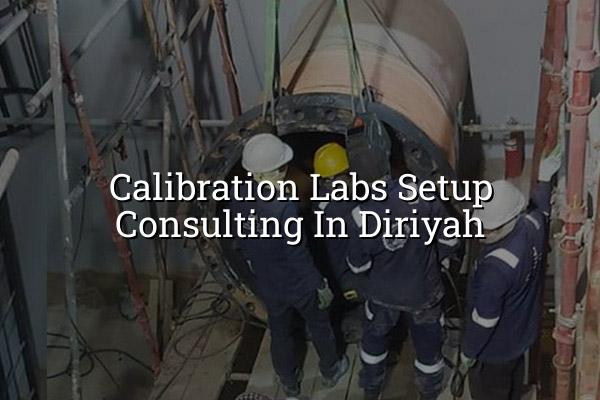
Calibration labs setup consulting in Diriyah helps you turn an empty room, shell space or existing workshop into a working lab that can support traceable calibration work from day one. You get practical help with layout, utilities, equipment selection, environmental control and the kind of workflow that saves rework later.
We work with clients across Saudi Arabia, India and the wider Middle East who need a lab that matches the real demands of industrial calibration, not a showroom drawing. In Diriyah, that usually means space planning for temperature stability, clean instrument handling, controlled access and a setup that can grow with the business.
What calibration labs setup consulting in Diriyah should cover
A serious calibration lab needs more than benches and a few instruments. The first pass should look at the services you want to offer, the measurement ranges you need, the standard of traceability your clients expect and the physical limits of the building itself. For many projects, that means separating receipt, verification, calibration, storage and dispatch so instruments do not cross paths in a messy way.
Space, utilities and environment
We usually start with the building basics: floor loading, power distribution, earthing, HVAC zoning, dust control and access for incoming equipment. In Diriyah and nearby Riyadh-area projects, heat management matters more than people expect. If the temperature swings too much, the lab ends up fighting its own environment instead of doing calibration work.
Equipment and workflow planning
The right setup depends on what you’ll actually calibrate. A lab serving pressure, mass, torque, dimensional and thermal disciplines needs different benches, storage, reference standards and verification routes. We map the workflow first, then place the equipment around it so technicians can move in a straight line, not crisscross the room all day.
- Define the service scope — list the disciplines you’ll offer first, then the future ones you may add.
- Survey the site — check room dimensions, access points, power, lighting, HVAC and instrument movement paths.
- Build the layout — place benches, storage, reference standards and verification stations around a clean workflow.
- Commission the lab — verify utilities, environmental stability, equipment placement and operating procedures before live work starts.
- Keep receiving and dispatch away from active calibration benches.
- Plan for temperature and humidity stability, especially for thermal and dimensional work.
- Allow safe storage for reference standards, certificates and controlled instruments.
- Include clear routes for heavy equipment, packed instruments and pick-up or delivery handling.
- Write basic procedures early, so the lab opens with order instead of guesswork.
Typical decisions in a new calibration lab setup
| Planning Area | What to Check | Why It Matters |
|---|---|---|
| Layout | Reception, calibration benches, storage, packing and office flow | Prevents cross-traffic and keeps instruments moving in one direction |
| Environment | Temperature control, dust management, lighting and vibration control | Supports stable readings for thermal, dimensional and precision work |
| Utilities | Power, earthing, compressed air, water and data points | Lets equipment run safely and avoids last-minute installation changes |
| Traceability | Reference standards, calibration records and document control | Builds confidence for ISO/IEC 17025-ready operations and client audits |
Why Diriyah projects need a disciplined lab design approach
In our experience, the biggest problem in new labs is not the equipment list. It’s the lack of a clean operating model. A calibration lab has to support traceability, stable handling, repeatable methods and records that stand up during customer review. If the room is awkward or the workflow is broken, every job becomes slower and harder to prove.
Where standards shape the room
For calibration and testing competence, ISO/IEC 17025:2017 drives how the lab thinks about control, traceability and records. ISO 9001:2015 supports the quality system around it. If the lab will handle electrical calibration, EURAMET CG-15 is a useful reference point, while BS EN standards matter in lifting and inspection-related environments. The layout should make those controls easier to follow, not harder.
From empty room to working laboratory
We look at the job like a plant engineer would. First the space, then the utilities, then the standards, then the people who will use the room every day. That sequence keeps the project practical and helps avoid expensive changes after equipment arrives.
How we plan for future growth, not just day one
Many clients in Saudi Arabia want a lab that can start with a focused scope and expand later into more disciplines. That makes sense. A good plan leaves room for more benches, extra reference standards, separate thermal areas or even a small mobile support corner if onsite work becomes part of the business model.
Think in phases
We often recommend a phased build: establish the core calibration services first, then add lab sections once the workflow, staffing and client demand are proven. That approach keeps capital spending under control and helps the team settle into routines before the lab gets bigger.
Growth should be planned into the floor plan
Future expansion is easier when the initial layout leaves spare utility points, sensible aisle widths and room for additional instruments. A cramped start rarely stays tidy for long.
How Mayon Industrial Services Can Help
We help you plan a calibration lab that works in the real world, not just on a drawing. That can include lab design, utility checks, equipment placement, calibration service planning and advice on how to keep the space ready for ISO/IEC 17025-style operations. If you need a setup that supports industrial clients in Diriyah, Riyadh or elsewhere in the Middle East, we can talk through the build with you.
Call +91 99447 80844 (India) or +966 59 633 8012 (Saudi Arabia), email services@mayonservices.com, or message us on WhatsApp.
Frequently Asked Questions
It should cover the room layout, utility needs, workflow, storage, equipment placement and the operating controls that support traceability. If the lab will handle different disciplines, the plan should also separate clean receiving, active calibration and dispatch so the work stays organised.
You start with control. That means defining the scope, setting up traceable reference standards, writing the basic procedures and making sure the layout supports stable, repeatable work. The building itself matters too, because an unstable room can make good procedures harder to follow.
Yes. That’s common in Saudi projects, especially when the client wants a fixed lab for controlled work plus a mobile capability for field calibration. The plan should then include storage, packing, transport handling and a sensible way to separate portable jobs from bench work.
We can support calibration setup planning, calibration services, lab design and setup, equipment advice, and related engineering work. If the project also needs mechanical services, inspection support or temperature-controlled handling, we can discuss those too.
Yes. Our work covers India, Saudi Arabia and the Middle East, with industrial clients in sectors like oil and gas, power, petrochemical, manufacturing and cold chain. Diriyah is one location we can support as part of that regional footprint.
Ready to plan a lab that works properly from the start?
If you want a calibration space that suits your instruments, your workflow and your Saudi operation, talk to our team and we’ll help shape the next step.
Contact Mayon