
Calibration Training in Hafar Al Batin
Practical training for technicians who need stronger calibration methods, cleaner records and real industrial confidence.
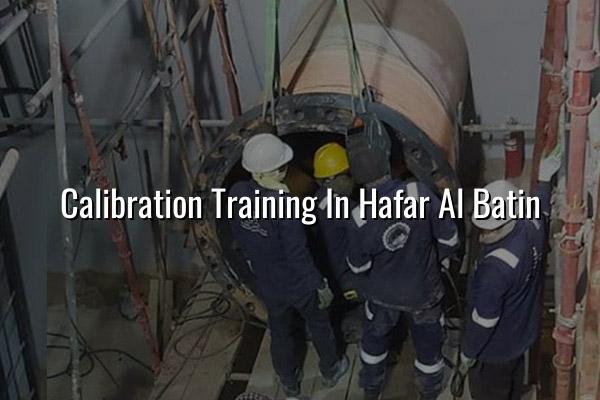
Calibration training in Hafar Al Batin is for teams that want real shop-floor competence, not slide decks that disappear after lunch. If you're responsible for instruments, records or compliance, this page shows what a useful programme should cover and how it helps your operation make cleaner decisions.
We write from industrial experience. Our work spans ISO/IEC 17025:2017 calibration, lab setup, field work, and maintenance support across Saudi Arabia, India and the Middle East, so the training angle here stays close to what engineers actually face on site.
What Calibration Training in Hafar Al Batin Should Cover
A proper programme should help technicians understand the whole chain: reference standards, environmental control, instrument handling, uncertainty, traceability and reporting. In Hafar Al Batin, where industrial work often supports defence-linked facilities, utilities, logistics and maintenance teams, you need people who can work methodically and spot a bad reading before it becomes a bad decision.
Hands-on calibration work, not just theory
Most teams learn faster when the trainer puts the meter, gauge or thermometer in their hands and walks through the process step by step. That usually means checking the instrument condition first, comparing against a suitable reference, recording the results, and learning how small mistakes show up in the certificate or logbook. We see that practical repetition helps technicians retain the method far better than a once-a-year seminar.
Records that stand up to audit
Good training also teaches people what auditors look for under ISO/IEC 17025:2017 and ISO 9001:2015. That includes identification, traceability, acceptance criteria, environmental notes, and clear pass or fail decisions. If your team works with electrical, thermal, pressure or dimensional tools, those habits matter every day, not only when the audit team is walking the floor.
- Start with the instrument list — separate the critical tools from the general workshop items and decide what needs tighter control.
- Check the reference chain — confirm what standard, master or comparator is used and how its own validity is maintained.
- Practice the measurement sequence — set up the job, stabilise the environment, take readings, and record them in a clean order.
- Review the result against limits — compare the readings with the tolerance, then decide whether the instrument can stay in service.
- Train on the instruments your team uses every week, not random examples from a catalog.
- Include practical work on pressure, temperature, dimensional and electrical devices.
- Teach how to read and file calibration certificates without mixing up units or limits.
- Show technicians how environmental drift affects results in a hot industrial setting.
- Use simple checks for traceability so records are easier to defend later.
Typical Training Topics and What They Mean on Site
| Topic | What the trainee learns | Why it matters on site |
|---|---|---|
| Traceability | How reference standards link back to a known chain. | Helps your records stand up during customer or internal review. |
| Uncertainty | Why every reading has a limit, even when the value looks stable. | Prevents overconfident pass/fail calls on borderline instruments. |
| Environmental control | How temperature, dust and handling affect measurement quality. | Useful for workshops, plants and field jobs around Hafar Al Batin. |
| Documentation | How to write clear entries, labels and calibration notes. | Reduces confusion when the next shift or auditor reviews the job. |
Why the Right Training Improves Plant Reliability
When calibration work is done properly, maintenance teams waste less time chasing false alarms and repeated faults. A technician who understands zero error, drift and reference behaviour can catch a weak instrument before it sends a bad signal into production, quality control or safety systems.
Better decisions during busy shutdowns
In a shutdown or turnaround, people move fast. That speed is exactly where training pays off: the team knows how to identify the right tool, confirm status, avoid mixing accepted and rejected items, and hand over work cleanly to the next person. We've seen this save a lot of confusion in plants where many instruments are shared across shifts.
Training That Fits Real Operations
We can shape sessions around pressure gauges, thermometers, electrical test tools, torque tools or dimensional checks, depending on what your team actually uses. That makes the workshop more useful than a generic classroom session, especially for engineers working in Saudi industrial cities or across the wider GCC.
How a Calibration Workshop Can Be Delivered
Classroom brief
Good for supervisors and junior technicians who need the terms, standards and documentation rules explained clearly before they touch the instruments.
Lab-based practice
Best when you want people to work with real gauges, meters and references in a controlled setting where they can repeat the method safely.
Onsite session
Useful when the team can't leave the plant and you want the workshop to match the exact equipment, documents and conditions they face every day.
How Mayon Industrial Services Can Help
We can support calibration training with the same practical approach we use in our ISO/IEC 17025:2017 work, lab setup projects and industrial service jobs. If your team also needs calibration, inspection, mechanical support or a mobile lab visit after training, we can keep the handover simple and consistent. That makes it easier for your people to apply the method after the workshop ends.
Call +91 99447 80844 (India) or +966 59 633 8012 (Saudi Arabia), email services@mayonservices.com, or message us on WhatsApp.
Frequently Asked Questions
It usually covers the basics of traceability, how to handle instruments, how to compare readings with a reference, and how to document the result. For industrial teams, we also include the practical parts that matter on site, such as environmental checks, pass or fail decisions, and clean handover between technicians.
Yes. Maintenance teams need to know whether a reading can be trusted before they release equipment back to service, while QA teams need solid records and acceptance logic. When both groups understand the same method, the number of disputes over instruments usually drops.
Yes, and that is usually the best way to do it. If your site uses pressure gauges, thermometers, torque tools, electrical test equipment or dimensional devices, we can shape the session around those items instead of generic examples.
We do. The aim is to help technicians understand why traceability, uncertainty, identification and result recording matter, so the paperwork supports the measurement instead of getting in the way. That makes the training more useful for labs and plant teams that work under ISO/IEC 17025:2017 or ISO 9001:2015 requirements.
Yes. We serve Saudi Arabia from Dammam Industrial City 2 and support clients across the Middle East, along with our India head office in Chennai. That helps when a training plan needs to fit real industrial schedules and local operations.
Ready to build better calibration habits?
If your team in Hafar Al Batin needs training that feels practical on day one, we can help you plan it around the instruments and work you handle every week.
Contact Mayon