
Calibration Training in Ras Al Khair
Practical calibration training for plant and lab teams working around Ras Al Khair, Jubail and the wider Eastern Province.
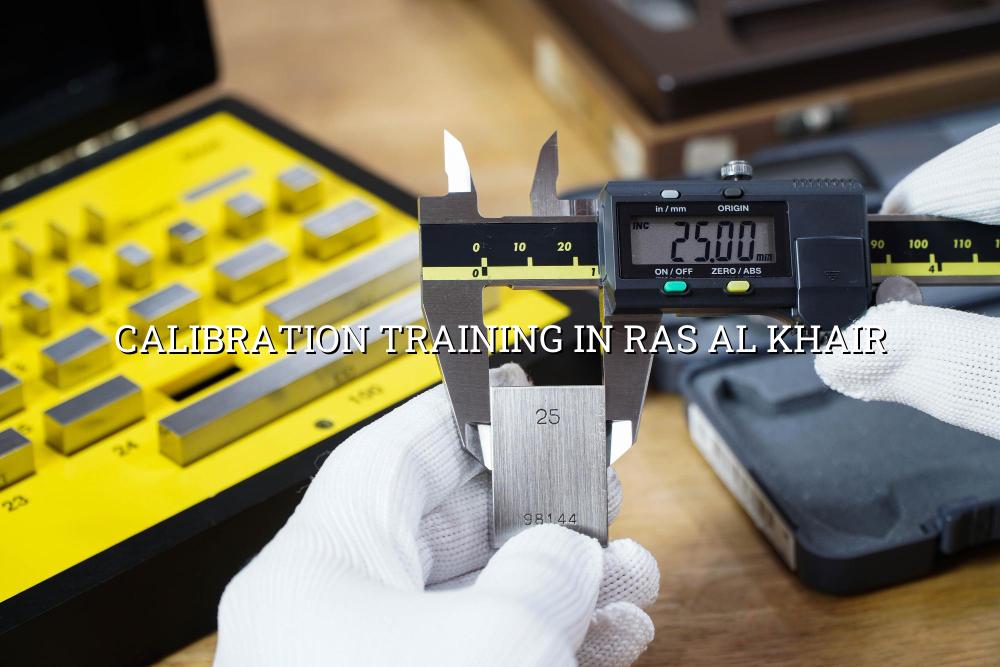
Calibration training in Ras Al Khair gives your team the hands-on skills to handle instruments correctly, keep records clean, and support ISO/IEC 17025 work without guesswork. If your lab, maintenance crew, or QA team keeps asking the same questions during audits, this is the page that answers them in plain language.
We work with engineers and technicians who support plants, terminals, fabrication shops and service contractors across Saudi Arabia and the wider Eastern Province. The focus is simple: better handling, better traceability, fewer avoidable errors, and a team that understands what calibration data is supposed to prove.
Calibration Training in Ras Al Khair for Daily Industrial Work
Most teams do not need theory for theory's sake. They need staff who can read a certificate, check tolerance, spot a drift trend, and protect the instrument from the sort of handling damage that shows up later as a bad reading. That is especially true in Ras Al Khair, where industrial sites often mix production, maintenance and contractor activity in tight windows.
What the training usually covers
Our calibration management workshops are built around the work technicians actually face: receiving instruments, checking identification, matching master equipment, recording environmental conditions, and keeping a proper chain of traceability. We also cover common mistakes we see in the field, such as mixing as-found and as-left results, copying old formats into new logs, or storing instruments without checking condition first.
Why the Ras Al Khair location matters
Ras Al Khair serves a heavy industrial base, so teams there often support rotating shifts, contractor turnover and mixed assets from different vendors. Training has to fit that reality. A good session should help your people work with pressure gauges, thermometers, weighing devices, torque tools and electrical instruments in a way that stays consistent from one shift to the next.
- Start with the instrument list — we map the tools your team handles most often and group them by discipline, such as electrical, pressure, thermal or mechanical.
- Check the current workflow — we look at how items move from store to use, who records data, and where errors usually slip in.
- Train on the practical steps — your staff learn inspection, handling, basic verification logic, tolerance checks and record keeping.
- Close with corrective habits — we cover what to do when data looks odd, when instruments are rejected, or when a certificate needs review before release.
- Use one naming system for instruments so the same item is never logged two different ways.
- Keep master equipment status visible on the register before any comparison work starts.
- Separate incoming, in-use and rejected tools so serviceable assets do not get mixed up.
- Record ambient conditions where the process requires it, especially for thermal and dimensional work.
- Review certificates against the actual job need, not just the instrument model name.
Training Topics and What They Help Your Team Control
| Training topic | Typical use case | What improves |
|---|---|---|
| Instrument handling and receipt | Stores, QA desks and maintenance counters | Fewer damaged items and cleaner tracking |
| Certificate reading | Lab, procurement and site supervisors | Better acceptance decisions and less confusion |
| Calibration intervals and planning | Shutdown planning and asset control | More stable schedules and fewer last-minute holds |
| As-found and as-left logic | Audit files and corrective action reviews | Clearer evidence for drift and release decisions |
How the Training Supports ISO/IEC 17025 Work
Teams often think calibration is only about a measurement result. In practice, the record system matters just as much. If the format is unclear, the traceability chain is weak, or the person releasing the job does not understand the limits, the paperwork can fail even when the instrument itself looks fine.
What we emphasize in the classroom
We keep the session practical and audit-aware. That means talking about traceability, the role of reference standards, basic uncertainty awareness, and how to keep information consistent across lab and site work. We also tie the training back to ISO/IEC 17025:2017, ISO 9001:2015, BS EN standards and EURAMET CG-15 where they relate to the work being discussed.
Built for real plant conditions
Ras Al Khair teams often work under maintenance windows, contractor interfaces and plant safety controls. We shape the material around those conditions, so people learn how to work with instruments without disrupting the job or the documentation trail.
How Mayon Industrial Services Can Help
Mayon Industrial Services supports teams that need calibration training, but also the work that follows it. We can help with calibration services, inspection, condition monitoring, lab design and setup, repair and maintenance, and onsite support through our mobile calibration lab. That mix matters because training lands better when your people can see how the theory connects to real instruments and real jobs.
Call +91 99447 80844 (India) or +966 59 633 8012 (Saudi Arabia), email services@mayonservices.com, or message us on WhatsApp.
Frequently Asked Questions
It helps your team handle instruments correctly, understand certificates, and keep traceable records. In a place like Ras Al Khair, that usually means better control across maintenance, QA and stores, especially when different crews touch the same assets.
Yes. We regularly speak to people who already use gauges, meters and torque tools every day. The training is built to fit that experience, so we spend less time on basics and more time on the parts that affect accuracy, records and release decisions.
Yes, in the parts that matter for daily work: traceability, certificate review, basic uncertainty awareness and clear documentation. We keep it practical, because most site teams need to understand how the standard shows up in real records, not just in a policy manual.
It can. Our mobile calibration lab and onsite services make it easier to connect the workshop to the equipment your team sees on the floor. That usually helps people remember the process, because they can match the classroom discussion to actual instruments.
We usually refer to common industrial instruments such as pressure gauges, temperature devices, electrical test equipment, weighing tools and torque tools. The exact mix depends on your site, because a Ras Al Khair maintenance team will not have the same needs as a lab or a procurement desk.
Ready to train your team with fewer gaps?
If you need calibration training in Ras Al Khair that your technicians can actually use on site, talk to us and we’ll help shape the right session for your workflow.
Contact Mayon