
Cold Cutting Service Company in Spark
Hot-work-free cutting for pipes, vessels and structural steel where spark control, shutdown safety and clean sectioning matter most.
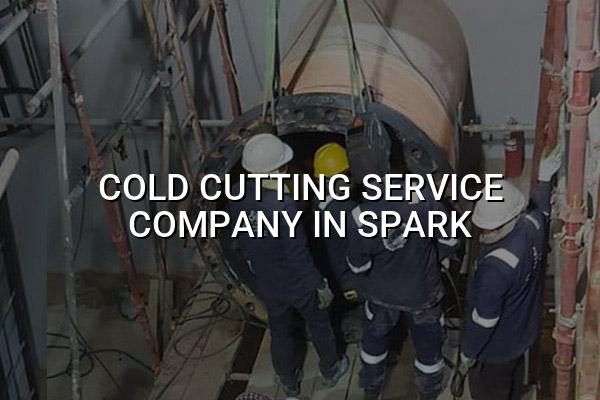
Cold cutting service company in Spark is the phrase people use when they need pipe or structural sectioning without creating sparks, heat distortion or an unnecessary shutdown headache. If that's your brief, we help you cut cleanly, keep the site safer, and hand back components that are ready for fit-up or removal.
We handle this kind of work for shutdown teams, maintenance contractors and plant engineers across India, Saudi Arabia and the Middle East, especially in oil & gas, power, petrochemical and cold-chain facilities where hot work can trigger extra permits. Our approach fits the real world: tight access, live plant nearby, and a supervisor asking for control, not drama.
Cold Cutting Service Company in Spark for Controlled Shutdown Work
When a client calls us for cold cutting, the first thing we look at is not the saw. We look at the job intent. Are you sectioning a pipe spool, removing a tank nozzle, splitting a corroded member, or taking out a flange that has to come off in one piece? The right method changes with material, wall thickness, access, residual product and nearby equipment, and the wrong method can turn a planned maintenance task into rework.
Where cold cutting fits best
We use cold cutting on lines and structures where flame, grinding sparks or excessive heat are a problem. That includes hydrocarbon plants, utility corridors, compressor skids, pump houses and utility platforms. In Spark and nearby industrial belts, many teams ask for it during turnaround work because it helps them stay clear of hot-work restrictions while still getting a precise cut edge.
What the crew checks before the first cut
Our team will ask for line condition, service history, isolation status, coating or insulation details, and whether the section is carbon steel, stainless steel or another material. We also review the lift plan or removal sequence where needed. That planning sounds basic, yet it saves more time than people expect because it avoids cutting in the wrong order and keeps the component stable while it is being removed.
- Survey the work area — confirm access, isolation points, nearby live services and the exact cut line before any equipment starts.
- Pick the method — choose mechanical, hydraulic or abrasive-free sectioning based on material, thickness and the finish needed.
- Secure the asset — support the pipe, tank part or frame so it doesn't shift once the cut is underway.
- Execute and verify — cut to the marked line, inspect the edge, then hand over the section for removal, fit-up or repair.
- No flame source is used, which makes permit control easier on many maintenance jobs.
- Clean, controlled sectioning helps protect adjacent coatings, seals and instrumentation.
- Edge quality is better for re-fit, flange work or downstream welding preparation.
- The method suits shutdowns where spark control and housekeeping are under close watch.
- It works well for awkward removals where a torch would create more risk than value.
How We Compare Common Sectioning Options on Industrial Sites
| Method | Best Use | Site Impact |
|---|---|---|
| Cold cutting | Hot-work-sensitive pipe, vessel and structural removal | Low heat, controlled edge, better around live plant |
| Oxy-fuel cutting | Thick carbon steel where hot work is permitted | Heat, sparks and wider permit controls |
| Grinding or abrasive cut-off | Small trimming and local modification | More spark control needed, less suitable near sensitive areas |
| Mechanical saw cutting | Sectioning with cleaner edges and less thermal effect | Good for planned maintenance, requires correct support and access |
Benefits That Matter to Maintenance Managers
Most maintenance managers don't ask for cold cutting because it sounds clever. They ask for it because the site has constraints. Less heat means fewer worries around adjacent seals, coatings, hydrocarbons and sensitive equipment. It also makes work planning easier in areas where local permit rules or site procedures are strict about ignition sources.
Safer access around live or sensitive plant
On crowded skids and pipe racks, a controlled cut can reduce collateral damage. That's especially useful when one section has to come out without disturbing the next spool, cable tray or instrument line. In our experience, the best jobs are the ones where the crew spends more time setting up than cutting. That usually means the result is cleaner.
Built for shutdowns, turnarounds and plant modifications
We support removal and sectioning work where the client needs controlled intervention rather than a rushed fire-watch job. Cold cutting suits plant changes, damaged line removal, structural modifications and controlled dismantling work in industrial yards, refineries and utility stations.
Our Typical Cold Cutting Workflow on a Live Project
Every site has its own procedure, but the sequence usually stays similar. That consistency helps the supervisor, the permit issuer and the client rep keep track of the job without guessing what happens next. It also helps us keep the cut line where it should be, especially when the component is already distorted or corroded.
- Review the scope — we confirm drawings, dimensions, access limits and the exact removal point.
- Isolate and prepare — the area is cleared, the asset is made safe, and the work face is exposed.
- Mark and support — the cut line is marked and the section is supported so the load doesn't shift.
- Cut, inspect and release — the section is removed, the edge is checked, and the work area is left tidy for the next crew.
- The job starts with isolation and permit readiness, not with equipment noise.
- Support points are important when a spool, nozzle or frame section can move suddenly.
- A marked cut line helps keep tolerances under control for re-fit or replacement.
- Clean housekeeping after the cut helps the next trade get in sooner.
How Mayon Industrial Services Can Help
We bring cold cutting into the wider job plan, so you're not trying to solve sectioning, isolation, inspection and handover as separate problems. If your scope also needs calibration support, mechanical services, inspection, orbital welding or lab setup, our team can line those up with the same practical mindset. That saves site coordination time and keeps the work order focused on one outcome.
Call +91 99447 80844 (India) or +966 59 633 8012 (Saudi Arabia), email services@mayonservices.com, or message us on WhatsApp.
Frequently Asked Questions
Cold cutting is used when you need to section pipes, vessels, skids or steel members without open flame and with far less heat input. That's useful during shutdowns, modifications and removals near sensitive equipment or areas where spark control matters. It is a common choice in oil & gas, power and petrochemical work.
Not always better, just better for the right job. Gas cutting can be fine where hot work is permitted and the material is suitable, but cold cutting is the safer choice when you want to reduce ignition risk, protect nearby assets or avoid thermal distortion. The site conditions decide it, not the name of the tool.
Yes, where the site procedure and isolation plan allow it. We regularly plan work around active plant, but the area still needs the right permits, access control and a sensible sequence for support and sectioning. We look at the full task before starting so the cut doesn't create a second problem.
We usually need the material, size, thickness, access conditions, location, photos if available, and the reason for removal or modification. If there are drawings or a shutdown window, send those too. The clearer the scope, the easier it is to recommend the right method and manpower.
Yes. Many jobs also need flange work, hydrotesting, bolt torquing, testing and commissioning or later welding. We can line those up so the site doesn't have to manage several separate crews for one maintenance task.
Need a cleaner way to section critical equipment?
Send the scope, a few photos and your location. We'll help you plan the cut safely and keep the job moving.
Contact Mayon