
Condition Monitoring Company in Abqaiq
Practical monitoring for rotating equipment, utilities and plant assets serving Abqaiq and nearby Eastern Province operations.
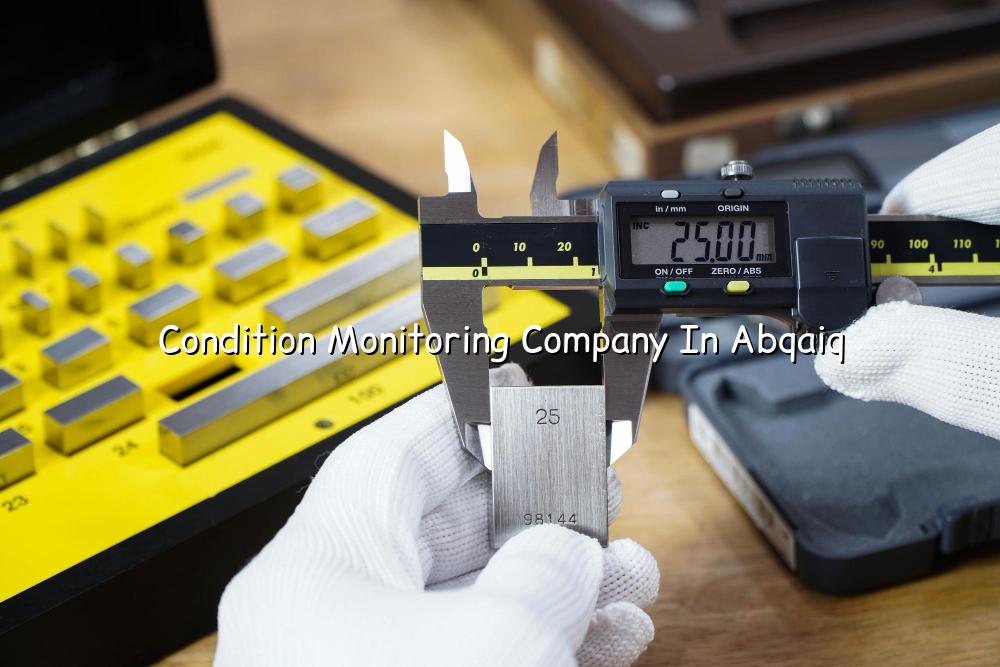
Condition monitoring company in Abqaiq is the kind of search that usually comes from a plant team that’s already seen one warning sign too many. You want a partner who can read the machine before it fails, give you evidence you can act on, and do it without slowing production.
That’s where we fit in. At Mayon Industrial Services, we support rotating equipment, utilities and critical plant assets with vibration analysis, laser shaft alignment, ultrasound monitoring and infrared thermography for teams in Abqaiq, the Eastern Province and wider Saudi industrial corridors.
Condition Monitoring Company in Abqaiq for Plant Reliability
In Abqaiq, plant owners usually care about the same things: fewer unplanned stoppages, clearer maintenance priorities and proof that a machine is still healthy enough to run. Condition monitoring gives you that proof by tracking vibration trends, heat patterns, misalignment and early-stage faults before they turn into bearing damage or repeated shutdowns.
Why teams ask for monitoring before a failure
We often hear from maintenance managers after a pump, fan or motor starts making a change they can feel but can’t yet explain. A good monitoring programme helps separate a loose base, a coupling issue, an unbalanced rotor and a bearing problem, so your team doesn’t waste a shift chasing the wrong fix.
How we read the machine, not just the report
Our work is built around real operating conditions. That means we look at asset duty, speed, load, mounting, temperature and service history, then match the data to the equipment you actually run in Saudi sites, whether that’s process pumps, compressors, gearboxes, cooling equipment or support systems in oil, gas and petrochemical operations.
- Start with the asset list — we identify the critical machines, the duty cycle and the symptoms your team is already seeing.
- Measure the baseline — vibration, temperature and alignment data are captured so future readings have something real to compare against.
- Check for fault patterns — we look for imbalance, looseness, misalignment, bearing distress and abnormal heat signatures.
- Prioritise action — findings are sorted so your maintenance crew can fix the items that matter most first.
- Use trend data, not one-off readings, so you can see whether a fault is growing.
- Combine vibration analysis with infrared thermography when the issue may be mechanical and thermal.
- Check alignment after repair work; a quick visual look is rarely enough on a high-speed drive.
- Keep records by asset number, site and operating condition for cleaner maintenance decisions.
- Use the findings to plan parts and manpower before the next shutdown window.
Common Condition Monitoring Methods and What They Tell You
| Method | What It Helps Find | Typical Plant Use |
|---|---|---|
| Vibration analysis | Imbalance, misalignment, looseness, bearing wear | Motors, pumps, fans, gearboxes and compressors |
| Laser shaft alignment | Coupling offset and angular errors | After installation, overhaul or repeated bearing trouble |
| Infrared thermography | Hot spots, friction, overload and poor cooling | Electrical panels, motors, bearings and process skids |
| Ultrasound monitoring | Steam leaks, air leaks, lubrication issues and early mechanical noise | Utility lines, valves and rotating equipment checks |
What a Good Monitoring Programme Changes on Site
When monitoring is done properly, your team stops reacting to noise and starts acting on evidence. That matters in Abqaiq and the wider Eastern Province, where oil and gas, petrochemical and power operations often depend on a few critical assets carrying a heavy load every day.
Better planning, fewer surprises
We find that maintenance crews work best when the findings are written in plain words. If a bearing is trending bad, say so. If a coupling looks out of line after a motor change, the report should make that obvious. That style saves time, and it helps production teams trust the recommendation.
Built for Real Industrial Sites
Our monitoring work suits plants that need practical fault diagnosis, not a pile of generic graphs. We support rotating machinery in process plants, support utilities, HVAC systems, compressors and other equipment where temperature, vibration and alignment all tell part of the story.
How We Structure a Monitoring Visit
Most sites don’t need a complicated story. They need the visit planned around operating hours, access limits and the assets that matter most. We work around shutdown windows where needed, and we also support onsite checks with a mobile capability when equipment can’t be easily moved.
The report should help your maintenance team answer simple questions: which machine is moving away from normal, how serious is it, and what should be checked first. That is the standard we aim for every time.
- Review asset criticality and access before the visit begins.
- Capture readings under the machine’s actual operating load whenever possible.
- Compare current values against baseline or previous service data.
- Flag items that need repair, re-alignment or closer follow-up.
What Teams in Abqaiq Usually Want From the First Visit
On the first visit, most clients want a clean starting point. That usually means a baseline for their most important assets, a short list of issues that deserve attention, and enough clarity to brief production or procurement without a second round of decoding.
We also see a lot of value when vibration analysis is tied to alignment and thermography on the same site round. It gives a better picture of what’s driving the fault, especially when a machine has been repaired before and the same symptom keeps coming back.
- Baseline readings for high-priority rotating equipment
- Clear notes on abnormal heat or mechanical noise
- Fault ranking for immediate and follow-up work
- Simple recommendations your team can act on
How Mayon Industrial Services Can Help
We support condition monitoring with the same practical mindset we bring to calibration, mechanical services and inspection work. If you need vibration analysis, laser shaft alignment, thermography or a broader reliability check across assets in Saudi Arabia, we’ll help you get a clear picture of what’s happening and what to do next.
Call +91 99447 80844 (India) or +966 59 633 8012 (Saudi Arabia), email services@mayonservices.com, or message us on WhatsApp.
Frequently Asked Questions
We watch the health of your equipment before it fails. That usually means vibration analysis, thermography, shaft alignment and fault checks on rotating assets so your team can spot wear, heat or misalignment early.
If you’re hearing a new noise, seeing repeated bearing trouble or noticing a machine running hotter than usual, vibration analysis is a sensible next step. It helps separate imbalance, misalignment and looseness, which all need different fixes.
Yes, and we use it that way often. Infrared thermography helps spot hot bearings, overloaded components and electrical hot spots, so it adds another layer to the vibration data and makes the findings easier to trust.
Yes. We work from our Saudi base in Dammam Industrial City 2 and support clients across Saudi Arabia and the wider Middle East, especially where oil and gas, petrochemical, power and cold-chain assets need careful monitoring.
That depends on duty, speed, history and how important the asset is to production. A critical pump train may need regular trend checks, while a less critical unit might only need attention after repair or when readings start to drift.
Yes. Post-repair checks are one of the best times to start monitoring, because you can confirm whether the fault was fixed or if alignment, balance or installation issues are still present.
Ready to check the health of your critical assets?
Send us the machine details and we’ll help you plan a practical condition monitoring visit for your site in Abqaiq or elsewhere in Saudi Arabia.
Contact Mayon