
Dead Weight Tester Supplier in Dawadmi
Get traceable dead weight tester supply and support for pressure work across Dawadmi and the wider Riyadh region.
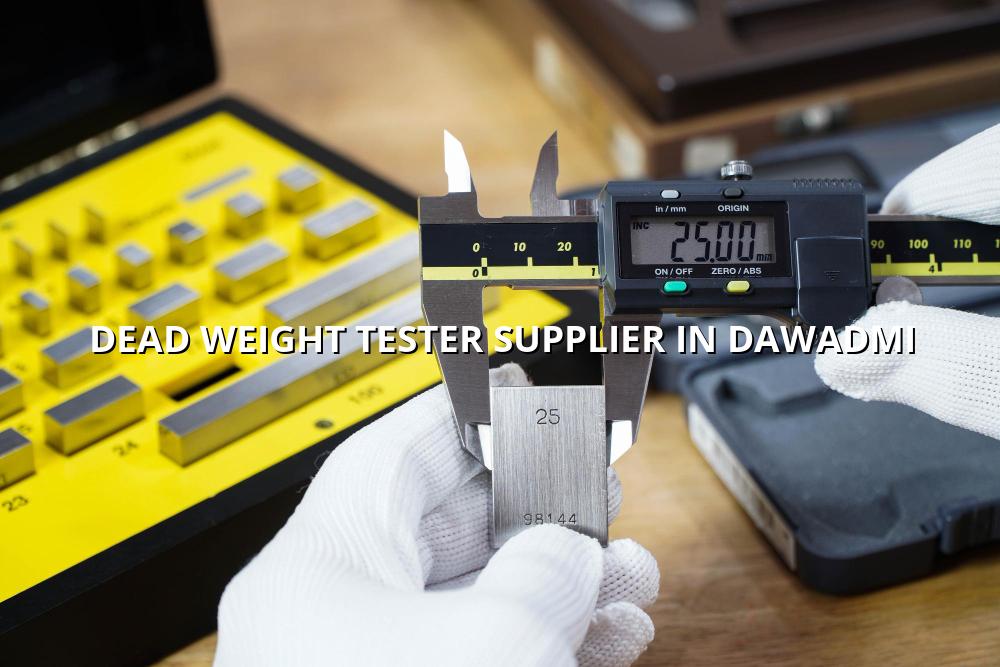
Dead weight tester supplier in Dawadmi is the search many maintenance teams use when they need a pressure standard they can trust, not just a box on a pallet. We help you source the right dead weight tester, then support the calibration, setup, and documentation around it so your gauges and transmitters stay defensible in audits.
That matters in workshops, utility plants, and oilfield service yards around Saudi Arabia, where pressure instruments have to stand up to real work. Our team works with ISO/IEC 17025:2017 traceability, onsite mobile-lab support, and practical advice that fits the way your team actually uses the instrument.
Dead Weight Tester Supplier in Dawadmi for Reliable Pressure Work
If you're comparing a dead weight tester supplier in Dawadmi, look past the catalogue photo and check what comes with the instrument. A proper supply partner should help you match range, accuracy class, piston material, fluid medium, and local usage conditions such as dust, heat, and transport between sites. That keeps the tool useful after delivery, which is where many purchases fall apart.
What buyers in Dawadmi usually need first
Most enquiries start with a simple question: can the tester support the pressure range on the gauges already in service? In practice, teams often need a unit for verifying pressure gauges, transmitters, switches, and safety-related instruments in the field or at a small workshop. We see this a lot in plant maintenance, contractor fleets, and service teams supporting industrial sites around Dawadmi and nearby towns.
Why traceability changes the purchase
A dead weight tester only earns its place when the readings can be tied back to a documented calibration chain. For Saudi customers, that usually means clear certificates, controlled handling, and a supplier who can explain how the instrument should be stored, transported, and rechecked. When your records are clean, your internal QA team spends less time arguing about numbers and more time fixing equipment.
- Define the pressure range — list the gauge and transmitter ranges you need to verify, then choose a tester that covers them with room at the top end.
- Select the working medium — confirm whether the application needs oil, hydraulic fluid, or another medium, based on the instruments in use.
- Check the connection set — make sure the fittings match your existing test points, adapters, and manifolds.
- Ask for traceable calibration support — request certificates and a plan for periodic recheck so the tester stays dependable over time.
- Match the tester range to your highest working pressure, not the nominal gauge label.
- Confirm whether your team needs onsite use, lab use, or both.
- Keep adapters, seals, and spare weights in the procurement list from day one.
- Ask for handling advice if the tester will move between Dawadmi and other Saudi sites.
What to Compare Before You Buy
| Check Point | What Good Looks Like | Why It Matters |
|---|---|---|
| Pressure range | Covers the gauges you already use, with practical headroom | Stops you from buying a tester that cannot support daily work |
| Traceability | Calibration tied to ISO/IEC 17025:2017 controlled practice | Supports audits and internal QA reviews |
| Connections | Adapters and fittings match your instruments | Reduces setup delays and leak risk |
| Support | Supplier can help with setup, recheck, and handling advice | Keeps the tester useful after delivery |
How a Dead Weight Tester Fits Daily Maintenance
In a live industrial setting, a dead weight tester is less about theory and more about repeatability. Your technicians need to know that a gauge tested this week will behave the same way next month, especially when the equipment sits in a hot workshop or travels between job sites. That is why buyers in Saudi Arabia often ask for supply partners who understand both the instrument and the maintenance routine around it.
Common use cases we see
Pressure gauge rooms, pump skids, hydraulic packages, and instrumentation benches are the usual homes for these testers. They also show up in service companies supporting petrochemical plants, power facilities, and construction fleets. The pattern is the same: you need a stable reference, and you need it documented well enough that your team can stand behind the result.
Practical procurement note
If your site moves equipment between Dawadmi, Riyadh, or western Saudi locations, ask about packaging, handling, and pick-up support before you place the order. A tester that arrives damaged or incomplete is no bargain. The same is true for missing fittings, paperwork, or a vague calibration trail.
Buying From a Supplier Who Understands Industrial Sites
A good supplier does more than hand over equipment. They should ask about your pressure media, the frequency of use, the skill level of the technician, and whether the tester will stay in one lab or travel to multiple sites. Those details affect the model you should buy, and they affect long-term reliability too.
We also advise buyers to think about how the tester will be stored. Heat, dust, and rough transport can shorten the life of seals and make the piston system harder to trust. If the unit will be used by rotating crews, simple operating notes matter more than glossy brochures.
Before you place the order
Get the pressure range, fitting type, and certificate expectations written down. If you also need calibration of connected gauges, it helps to plan the supply and service together. That reduces downtime and keeps the workflow cleaner for QA and maintenance teams.
- Confirm the fluid type and any cleaning needs before commissioning.
- Keep a log for weights, seals, fittings, and maintenance checks.
- Make sure the operator knows the safe loading procedure.
- Plan for periodic verification alongside your gauge calibration cycle.
How Mayon Industrial Services Can Help
We support pressure calibration work with ISO/IEC 17025:2017 traceable services, onsite mobile-lab capability, and practical help for teams that need dependable instruments in the field. If your requirement is a dead weight tester supplier in Dawadmi, we can help you choose the right setup, calibrate related equipment, and keep your documentation in order.
Our team also supports calibration services, mechanical services, inspection, and lab setup for industrial clients across Saudi Arabia. Call +91 99447 80844 (India) or +966 59 633 8012 (Saudi Arabia), email services@mayonservices.com, or message us on WhatsApp.
Frequently Asked Questions
Yes — if you're sourcing one for industrial use, look for a supplier who can explain the pressure range, calibration support, and fitting compatibility. In Dawadmi, the real test is whether the supplier understands Saudi site conditions, not just the product name. We help customers with both supply advice and the calibration work around it.
Start with the highest gauge pressure you need to verify, then match the tester range with some practical headroom. After that, check the medium, the connection fittings, and whether your team needs a portable unit or a bench setup. That keeps the purchase tied to how your maintenance team actually works.
Yes, we support onsite work in Saudi Arabia through our operating base in Dammam Industrial City 2. For pressure-related jobs, our mobile capability helps when instruments are better left in place or when downtime has to be kept under control. That is often the preferred route for plant and service teams.
Ask for the calibration certificate, the model details, and any handling or installation notes that matter for your site. If you need internal QA records, keep the serial number, accessories list, and the pressure range together with the certificate. That makes audits and asset tracking much easier.
Yes — we can support the calibration side so the tester and the instruments you verify stay aligned with traceable practice. That includes related pressure instruments, workshop calibration needs, and guidance on periodic recheck. Many customers prefer that because it keeps one team responsible for the full workflow.
Ready to source the right tester for your site?
If you need a dead weight tester supplier in Dawadmi, we can help you choose, support, and document the setup the right way.
Contact Mayon