
Dead Weight Tester Supplier in Safaniya
Traceable pressure equipment supply and calibration support for oil and gas sites in Safaniya and across Saudi Arabia.
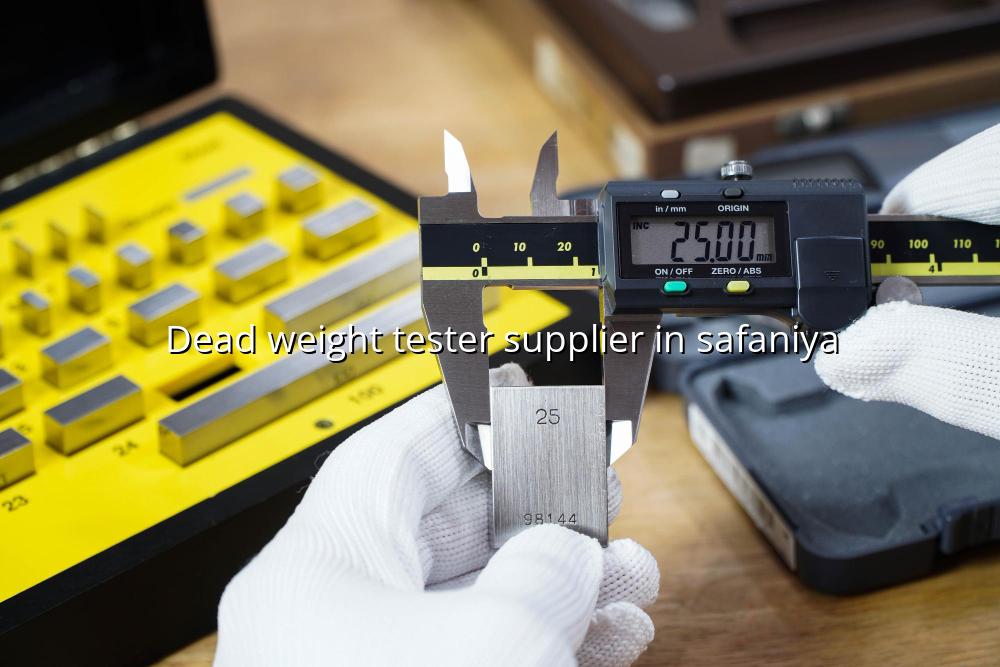
Dead weight tester supplier in Safaniya is the search most maintenance and QA teams make when they need pressure instruments they can trust in the field. We help you choose the right unit, match the pressure range to the job, and keep the paperwork traceable for audits and plant records.
Safaniya sits in the heart of Saudi oil and gas work, where pressure control matters on skids, manifolds, test benches and service bays. Our team supports that reality with ISO/IEC 17025:2017-compliant calibration, onsite work, and mobile-lab support for sites that need instruments handled with care.
Dead weight tester supplier in Safaniya for dependable calibration work
When a plant team asks for a dead weight tester, they usually need more than a box on a truck. They need a unit that suits the pressure class, the medium, the site conditions, and the way the calibration record will be used later. In Safaniya, that often means oil and gas maintenance crews, shutdown teams, instrument workshops, and inspection groups working to tight permit windows.
What buyers usually need from the supplier
We see three common jobs. First, companies want a new dead weight tester for routine verification of gauges, transmitters and pressure switches. Second, they need a matching comparator or accessory set so the tester can be used properly on site. Third, they want support after delivery, because a pressure standard is only useful when it stays in condition and remains traceable.
Why pressure traceability matters in Safaniya
In Saudi facilities, the calibration chain is often reviewed during internal audits, vendor assessments and project handovers. A dead weight tester supplier in Safaniya should understand that the instrument is not being bought as a display item. It has to support repeatable pressure generation, stable readings, and a document trail that QA teams can file without chasing missing data.
- Define the pressure range — confirm the working range for gauges, transmitters or test manifolds before choosing the tester.
- Check the working medium — select oil or pneumatic use based on the application, test environment and cleanliness needs.
- Match the accessories — choose adapters, fittings and comparators that suit the instruments already on site.
- Review traceability needs — make sure the equipment can be supported by calibration and documents that fit ISO/IEC 17025:2017 expectations.
- Plan service support — set a routine for verification, repair or pickup and delivery when the instrument needs controlled handling.
- Choose a unit that matches the pressure span you actually use, not a broad figure that looks impressive.
- Ask for traceable calibration support so the tester can stand up to audit questions.
- Keep the fittings and adapters organized; loose parts slow down field work.
- For remote jobs, mobile-lab support can save a lot of back-and-forth.
- If the tester is stored between shutdowns, protect it from dust, moisture and rough transport.
Dead weight tester options and how teams compare them
| Buyer need | Typical equipment focus | What to verify |
|---|---|---|
| Routine gauge checking | Pressure range, piston-cylinder set, calibration support | Traceability, range match, stable operation |
| Field maintenance in Safaniya | Portable setup, transport-safe accessories | Mobility, clean fittings, storage care |
| Workshop test bench use | Comparator compatibility, repeatable loading | Connection types, ease of setup, maintenance plan |
| Audit-ready documentation | Calibrated standard with records | Certificate details, asset ID, review cycle |
How to reduce pressure test errors before they spread
Most pressure issues we see start small. A dirty connector, a worn seal, or an instrument stored with the wrong fittings can throw off a test and waste half a shift. For teams in Safaniya, the better habit is simple: check the tester before deployment, confirm the setup against the instrument list, and keep a spare kit ready for the common adapters.
What good support looks like
A solid supplier does not just hand over equipment. They help with calibration, repair, and a sensible maintenance plan so the tester stays usable between shutdowns. That matters for oil and gas crews, petrochemical plants, power utilities, and service contractors who can’t afford repeated setup mistakes.
Useful in more than one plant area
We often support pressure work linked to gauges, transmitters, relief testing, commissioning checks and workshop verification. The same team may also need mechanical services, valve support, or calibration of adjacent instruments, so one supplier contact saves time.
What a Safaniya team should ask before placing an order
Before you buy, ask for the pressure range, the intended media, the accessory list, and the service path if the unit needs calibration after use. If the tester will move between a workshop and a field location, say that up front. It changes the way we think about packaging, handling and pickup.
We also recommend that procurement teams keep the end use clear. A tester for a rental fleet, for example, gets handled differently from one sitting in a plant instrument room. That sounds basic, but in practice it decides whether the equipment stays ready or becomes a shelf item nobody wants to touch.
Practical buying notes from our side
If the job is tied to a shutdown, align the order with the maintenance plan and the permit schedule. If the job is tied to long-term operation, focus on traceability, upkeep, and how easy it is to get the unit rechecked later. Those details save trouble when the first audit comes around.
- Confirm the application — gauge verification, transmitter testing, workshop checking or commissioning support.
- List the interfaces — fittings, adapters and any existing pressure equipment it must connect to.
- Ask for support scope — calibration, pickup and delivery, repair, or mobile-lab service.
- Keep the file complete — asset tags, serial numbers and calibration records should stay together.
- A local Saudi supply path is useful when schedules shift during shutdowns.
- Mobile support helps when equipment cannot leave site easily.
- Traceability is not optional for most QA and inspection teams.
- Accessories matter as much as the main unit.
- Repair and maintenance support keeps the tester in service longer.
How Mayon Industrial Services Can Help
We support pressure calibration work with ISO/IEC 17025:2017-compliant calibration, mechanical services, repair and maintenance, and mobile-lab capability for onsite jobs. If your Safaniya team needs a dead weight tester, we can help with supply guidance, calibration support, related pressure products, and the paperwork side that keeps QA people happy.
We also work with clients across Saudi Arabia and the Middle East from our Dammam Industrial City 2 base through SMC Engineering Services / Sixfaces Maintenance Co, and we support Indian operations from Chennai too. If you want to talk through the application, start with us.
Call +91 99447 80844 (India) or +966 59 633 8012 (Saudi Arabia), email services@mayonservices.com, or message us on WhatsApp.
Frequently Asked Questions
You can work with a supplier that understands both pressure equipment and calibration support, not just stock supply. For Safaniya teams, that usually means someone who can help with range selection, traceability, and onsite or pickup-based support when the instrument needs attention.
Start with the pressure range, the working medium, and the fittings you already use in the plant. After that, ask how the unit will be calibrated and what documents you’ll receive for your QA file.
Yes. For many projects, onsite support is the better fit because it reduces transport handling and keeps work moving inside the plant. We also use mobile calibration capability where the situation calls for it.
Yes, if the tester is being used for QA, maintenance verification or audit-linked work. The records help show traceability and make it easier to defend the readings later if someone asks questions during an inspection.
Yes. We support calibration services, pressure and mechanical work, repair and maintenance, and related products such as pressure comparators and hydrotest equipment. That helps when one project needs more than a single instrument purchase.
Ready to specify the right pressure equipment?
Send us the application details and we’ll help you choose a dead weight tester setup that fits your site, your range, and your records.
Contact Mayon