
Electrical Field Services Company in Hail
Onsite electrical testing and commissioning support for plants, utilities and project teams working in Hail and northern Saudi Arabia.
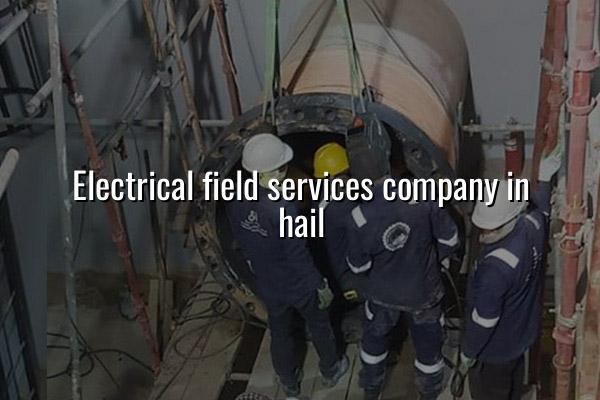
Electrical field services company in Hail support is what you need when a plant can’t wait for workshop guesswork. We handle onsite testing, commissioning, troubleshooting and documentation so your team gets clear results, not loose assumptions.
Our crew works around the realities of northern Saudi sites, from industrial facilities near Hail to remote project locations where shutdown windows are tight and access needs planning. We bring practical field experience, calibrated instruments and the kind of reporting maintenance and QA teams can actually use.
Electrical Field Services Company in Hail for Critical Systems
When a breaker trips, a relay misbehaves or a substation panel needs a final check before energising, the detail matters. We support LV, MV, HV and EHV work across protection relays, current transformers, circuit breakers, cables, panels and substations, with field methods built around ISO/IEC 17025:2017 traceability where calibration is part of the job and ISO 9001:2015 process control where documentation matters. That matters in Hail because many sites serve oil and gas, power, construction and manufacturing operations that can’t afford repeat visits.
What we usually handle onsite
Most calls start with a practical issue: a new system that needs testing before handover, an older feeder that’s showing abnormal behaviour, or a protection scheme that has to be verified after maintenance. We work with site engineers, E&I teams and shutdown planners, and we’re used to coordinating around permit systems, isolation plans and live plant restrictions. If needed, we can pair field work with calibration support from our temperature-controlled laboratory or our mobile calibration lab.
Why field service is different from workshop service
Field work is messy by nature. Cable routing, environmental heat, access limits and site-specific interlocks all affect the result, so the technician needs to read the plant, not just the test sheet. In practice, that means proper pre-job checks, verified instruments, careful isolation and a report that tells you what was found, what was tested and what should happen next.
- Site review — we check the equipment list, voltage class, access path and any shutdown constraints before the team arrives.
- Isolation and safety setup — lockout, tagging and test boundaries are confirmed with your site contact before any live testing begins.
- Field testing — relays, breakers, transformers, panels and associated circuits are checked using suitable methods and calibrated tools.
- Results and action list — you receive clear findings, pass/fail observations and practical recommendations for repair, retest or commissioning closeout.
- Keep a recent single-line diagram and protection settings file ready before the visit.
- Share breaker, relay and transformer nameplate data so the test team brings the right setup.
- Allow time for pre-energisation checks after major maintenance or panel replacement.
- Ask for traceable documentation when the work affects compliance, handover or warranty records.
Common Electrical Field Work We Carry Out in Hail
| Work area | Typical equipment | What the site gains |
|---|---|---|
| Protection testing | Relays, CTs, trip circuits, control wiring | Confidence that the scheme trips and alarms as intended |
| Switchgear commissioning | LV, MV and HV breakers, panels, interlocks | Safer energisation with documented checks |
| Substation verification | Feeder bays, auxiliary systems, earthing points | Clear closeout before start-up or takeover |
| Fault troubleshooting | Panels, cables, controls and field wiring | Faster isolation of the real problem, not the symptom |
What Good Electrical Field Service Should Protect
Good field service protects people first, then equipment, then schedule. In our experience, the sites that run best are the ones that treat electrical testing and commissioning as part of the handover discipline, not a box to tick at the end. That means proper isolation, instrument traceability, as-found records and a report the operations team can file without rewriting it.
Where the standards matter
For calibration-linked work, ISO/IEC 17025:2017 gives you the competence and traceability expected by industrial clients. For broader quality control, ISO 9001:2015 supports repeatable process handling. When lifting or inspection tasks sit alongside electrical work, BS EN standards apply to those activities, and EURAMET CG-15 is relevant for electrical calibration discipline.
Built for shutdown windows and live plants
We know how fast a handover can slip if one relay setting, one CT ratio or one control loop is left unclear. That’s why we focus on site-ready paperwork, practical communication and testing that fits the plant rhythm, not the other way around.
When Teams in Hail Call Us for Electrical Field Work
New installation handover
Before energisation, clients want proof that the system behaves as designed. That usually includes protection checks, breaker verification and a final review of site records.
Recurring nuisance trips
Intermittent faults waste time. We look for wiring issues, mis-set relays, failed auxiliaries and poor terminations that can hide behind a temporary reset.
Maintenance shutdowns
Shutdown periods are where disciplined planning pays off. Field work has to be accurate, documented and sequenced so mechanical and electrical teams stay in step.
How Mayon Industrial Services Can Help
We support electrical field jobs in Hail with practical onsite testing, commissioning support and fault-finding backed by our wider industrial team. If your job also needs calibration, condition monitoring, inspection, mechanical work or lab support, we can keep the scope under one roof and keep the paperwork straight. That saves your team time during shutdowns and handover periods.
Call +91 99447 80844 (India) or +966 59 633 8012 (Saudi Arabia), email services@mayonservices.com, or message us on WhatsApp.
Frequently Asked Questions
Usually it covers onsite testing, commissioning, troubleshooting and verification for equipment like relays, breakers, panels and substations. In a place like Hail, that often means working around live plant conditions and planned shutdown windows. We also help with the documentation side, which many site teams need for handover and maintenance records.
Yes, we support field work across LV, MV, HV and EHV systems depending on the job scope and the site conditions. The exact test list depends on the equipment, the voltage class and the stage of the project. We plan the visit after checking your site data so the right instruments and people arrive together.
Yes, protection relay checks are a common part of our field work. We review the scheme, verify settings where required and check the trip path so the relay behaves the way the plant expects. If the issue sits outside the relay itself, we look at CTs, wiring, auxiliaries and control logic too.
We use calibrated instruments, record the site conditions and keep the findings tied to the equipment under test. When the job involves calibration-linked work, ISO/IEC 17025:2017 traceability is part of our process. That makes the final report easier for QA, maintenance and client handover teams to use.
We support industrial clients in oil and gas, petrochemical, power, construction and manufacturing environments, along with related utility and project sites. The work often sits around substation upgrades, start-up checks and maintenance shutdowns. Those projects need clean coordination, because one missed step can hold up the whole release.
Ready to get your electrical site work checked properly?
If you need onsite testing or commissioning support in Hail, we’re ready to talk through the job and set the right scope.
Contact Mayon