
Electronic Instruments Calibration Company in Abqaiq
Accurate calibration support for instruments used in oil, power, maintenance and QA work across Abqaiq and the Eastern Province.
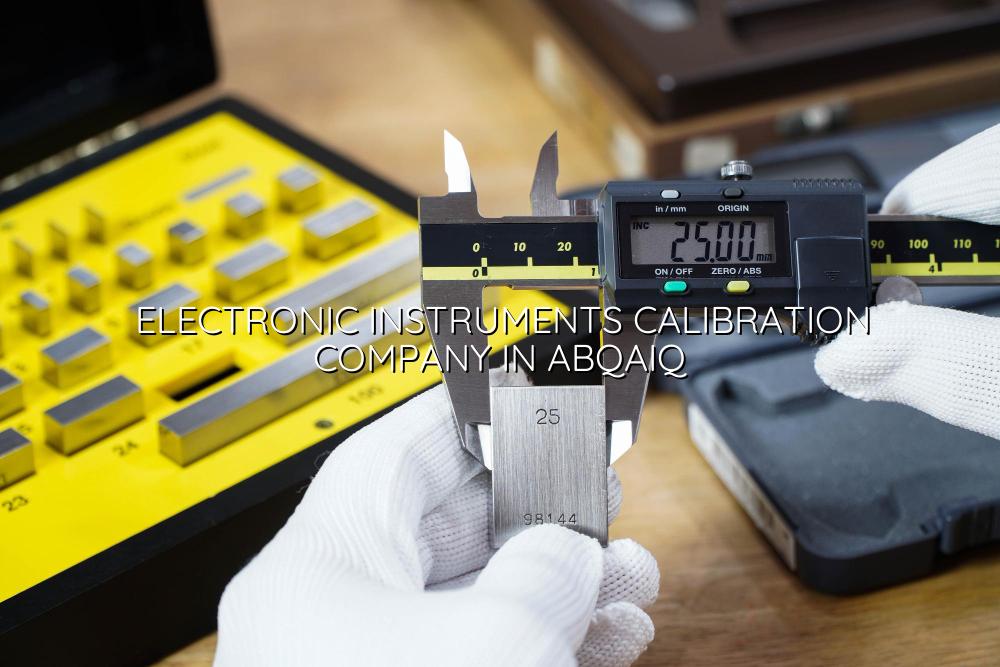
Electronic instruments calibration company in Abqaiq searches usually come from teams that need a dependable answer fast: who can verify test equipment, keep traceability in order, and reduce the risk of bad readings on site? That’s the real job here. You want instruments that hold their numbers under pressure, not paperwork that looks fine on a shelf.
We work with industrial teams across Saudi Arabia and the wider Middle East who rely on accurate electrical and electronic measurements in maintenance, inspection, commissioning and QA work. From our in-house laboratory and mobile calibration capability, we help keep instruments aligned with ISO/IEC 17025:2017 expectations and the practical demands of oil and gas sites around Abqaiq, Dammam and the Eastern Province.
Why electronic instruments calibration in Abqaiq matters
In Abqaiq, many sites run around the clock and depend on test instruments that quietly influence safety, uptime and handover quality. A clamp meter that drifts, a megger that reads off, or a process indicator that isn’t checked properly can cause extra troubleshooting, wasted time and avoidable rework. We see this most often in maintenance shutdowns, substation work, rotating equipment jobs and instrument room audits where people suddenly realise the test gear itself needs attention.
What we calibrate most often
Our electronic calibration work typically covers instruments used by electrical, instrumentation and maintenance teams: multimeters, clamp meters, insulation resistance testers, loop calibrators, process indicators, power-related test equipment and similar devices used for commissioning and fault finding. Where the job calls for it, we handle onsite work with our mobile lab, or we collect instruments for controlled conditions in our temperature-managed facility. That helps when the equipment is sensitive, needs special handling, or has to be managed away from dust, vibration and heat.
How traceability helps your team
Traceability is not just a certificate line. It gives your QA, maintenance and procurement teams a clear record that the reading came from a controlled process linked to recognized standards. For companies working in Saudi industrial zones, and for Indian and GCC operations that need disciplined records, this matters during audits, vendor checks and internal shutdown reviews. We keep the process straightforward: check the condition, confirm the measurement point, compare against known references, document the result and return the instrument ready for use.
- Identify the instrument and its use — we start with the model, range, serial number and the work it supports, because a meter used in a substation is not treated the same as a bench device.
- Check condition before testing — visual damage, battery issues, worn leads and missing accessories can change how the instrument should be handled.
- Compare against reference standards — the instrument is measured against calibrated references under controlled conditions, with results recorded for each relevant point.
- Review out-of-tolerance findings — if the device is outside acceptable limits, we mark it clearly so your team can decide whether to repair, replace or restrict use.
- Issue the documentation and return the unit — you receive the calibration record needed for internal control, audit support and maintenance tracking.
- Keep a list of every electronic instrument used during shutdown and commissioning work.
- Separate field-use devices from bench-use devices so you can plan onsite or lab calibration properly.
- Flag instruments used for safety-critical checks as soon as readings start to drift.
- Ask for collection or mobile-lab support when the instrument needs special handling or controlled transport.
- Keep calibration records with the asset file, not in a separate folder nobody opens during audits.
Choosing the right calibration route for electronic instruments
| Instrument type | Typical use case | Best service route |
|---|---|---|
| Multimeters and clamp meters | Electrical fault finding, verification and routine maintenance | Onsite or in-lab, depending on condition and site access |
| Insulation resistance testers | Cable checks, motor work and pre-energization testing | Controlled in-lab calibration with reference verification |
| Loop calibrators and process indicators | Instrumentation loop checks and commissioning work | Onsite calibration is often practical for active projects |
| Power-related test devices | Substation and electrical maintenance support | Case-by-case review based on range, condition and handling needs |
What good calibration support changes on site
Good calibration support cuts down on arguments about readings. That sounds simple, but it matters during plant start-up, shutdown planning and troubleshooting, especially where one bad reading can send technicians in the wrong direction. A clear calibration record gives your supervisors confidence to release equipment back into service and helps procurement teams justify why some devices must stay on a tighter control cycle.
Why Abqaiq teams ask for onsite work
Onsite support saves time when the instrument is already part of an active job or when removing it would slow the whole crew down. Our mobile calibration lab is useful for field environments across Saudi Arabia where teams want practical support without losing sight of traceability. When an instrument needs a stable environment, we bring it back to the lab and handle pickup and delivery in a controlled way.
Built for maintenance, QA and commissioning teams
We support sites in oil and gas, petrochemical, power and manufacturing where electronic test instruments are part of everyday work. The aim is plain: keep the devices trusted, the records tidy, and the next inspection easier to pass.
What else we support around electronic calibration
Onsite and in-lab options
Some instruments are fine to calibrate in the field. Others need more controlled conditions. We choose the route that suits the device, the site and the work schedule.
Supporting records
We keep the calibration trail clear so your team can file the result against the asset, inspection record or maintenance pack without extra sorting later.
Related industrial needs
When the job involves more than calibration, our team also handles mechanical services, inspection support, lab setup, orbital welding and repair work across industrial sites.
How Mayon Industrial Services Can Help
We support electronic instruments calibration for teams that need dependable measurements in Abqaiq and across Saudi Arabia. That includes onsite calibration where it makes sense, in-lab work for instruments that need controlled conditions, and practical pickup and delivery for devices that shouldn’t be moved casually. If your work also involves maintenance shutdowns, commissioning or inspection, we can line the calibration plan up with the rest of the job.
Call +91 99447 80844 (India) or +966 59 633 8012 (Saudi Arabia), email services@mayonservices.com, or message us on WhatsApp.
Frequently Asked Questions
Honestly, the best fit is the one that can handle your actual site conditions, not just the instrument model. For Abqaiq work, that usually means a team that can do onsite or lab calibration, keep traceability clear, and respond properly to oil, gas and maintenance environments. That is the standard we work to.
Yes. We support onsite calibration where the instrument and site conditions allow it, and we also use a mobile calibration lab for field work. If the device needs a more controlled setting, we can bring it into our temperature-managed lab instead.
We commonly handle multimeters, clamp meters, insulation resistance testers, loop calibrators and similar devices used in electrical and instrumentation work. The exact scope depends on the model, measurement range and how the instrument is used on site. If you send the list, we can advise on the right route.
Yes, that’s part of the job. The point is to give your team a clear record that supports internal control, audits and maintenance history. We keep the paperwork tied to the instrument so it’s easier to track later.
We can arrange pickup and delivery for instruments that shouldn’t be moved casually or that need special conditions. That is often useful for sensitive devices, sealed cases or equipment that’s part of a busy shutdown schedule. It keeps the job moving without forcing your team to manage transport themselves.
Ready to put your test instruments back under control?
If you need an electronic instruments calibration company in Abqaiq that understands field work, records and industrial schedules, speak with our team.
Contact Mayon