
Electronic Instruments Calibration Company in Riyadh
Traceable calibration support for plant teams, QA managers, and maintenance crews working across Riyadh and the wider Saudi industrial corridor.
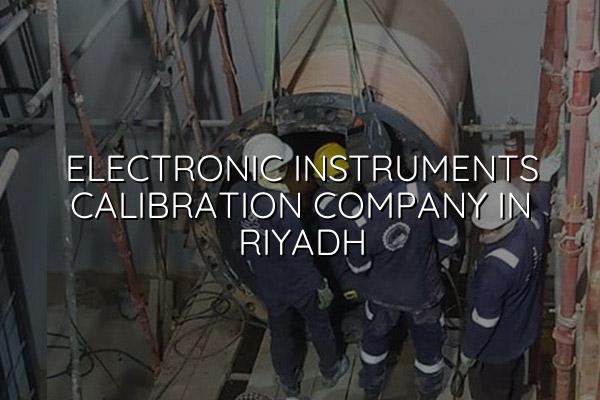
Electronic instruments calibration company in Riyadh support matters when your test gear is tied to production, safety checks, or handover paperwork. We help you keep meters, controllers, transmitters, recorders, and related electronic devices within traceable limits so your team can trust the reading before it reaches a report.
From Riyadh industrial zones to project sites across Saudi Arabia, our work is built around real plant conditions. We use an ISO/IEC 17025:2017 compliant approach, a temperature-controlled lab, and a mobile calibration lab for onsite jobs, so your instruments can be handled the way your schedule and environment demand.
Electronic instruments calibration company in Riyadh for plant and project work
Most calls we get from Riyadh are practical. A plant has a batch of handheld testers, a maintenance team has a drift issue on a pressure loop, or a contractor needs evidence that the instrument used for commissioning was checked against traceable references. That is the sort of job we handle every day. We work with electronic calibration requirements for electro-technical instruments, pressure-related devices, thermal equipment, biomedical items, and other plant-side tools that sit between a machine and a decision.
What makes the work usable on site?
Good calibration is not just a sticker. You need a clear result, a sensible method, and a team that understands the environment you work in. In Riyadh, that often means heat, dust, tight shutdown windows, and equipment spread across workshops, substations, utilities, and production lines. Our mobile calibration lab helps with onsite work, while the in-house lab takes care of instruments that need controlled conditions or pickup and delivery.
Why traceability matters to your records
When your QA or maintenance team reviews a certificate, the first question is simple: can we rely on the result? ISO/IEC 17025:2017 gives that process structure. For electrical calibration tasks, EURAMET CG-15 is the kind of reference that keeps the work grounded in accepted practice, while ISO 9001:2015 supports the wider quality system around it. That mix is useful when a client, auditor, or internal reviewer wants the paperwork to stand up later.
- List the instruments by use — separate production tools, safety-related devices, and general maintenance equipment.
- Check the condition before dispatch — note damage, battery issues, probe wear, missing accessories, or unstable readings.
- Choose the right handling route — onsite calibration, in-lab calibration, or pickup and delivery for sensitive items.
- Match the certificate to the job — make sure the data can be traced back to the specific instrument and serial number.
- Plan the next cycle early — avoid letting critical instruments drift past their review date.
- Keep calibration intervals tied to actual usage, not just calendar habit.
- Use onsite service for instruments that are hard to remove from panels or process skids.
- Ask for pickup and delivery when the item needs controlled transport or special handling.
- Separate emergency breakdown support from planned calibration jobs in your maintenance log.
Common calibration categories for Riyadh operations
| Instrument group | Typical site use | What the team checks |
|---|---|---|
| Multimeters and clamp meters | Electrical maintenance, troubleshooting, commissioning | Readout stability, measurement accuracy, lead condition, function range |
| Process transmitters | Pressure, level, temperature, and loop verification | Signal response, span, zero point, and output consistency |
| Temperature indicators and controllers | Ovens, chambers, cold rooms, and process heating | Setpoint tracking, display accuracy, sensor response, and alarm function |
| Biomedical electronic devices | Healthcare equipment and support systems | Display accuracy, electrical checks, operating response, and safe use condition |
How we keep the process practical for busy sites
Electronic equipment often arrives with mixed history. Some items are well cared for. Others have been used through two shutdowns, moved across sites, or stored in a cabinet near a workshop floor. Our process starts there. We look at the instrument as it is, not as the label hopes it is. That helps us decide whether onsite work will do the job or whether controlled lab conditions are the safer route.
For managers who need clean records
Our clients usually want more than a passing reading. They want records that fit audit review, vendor handover, and internal maintenance sign-off. We prepare calibration work so the result ties back to the instrument, the method, and the service scope. That is especially helpful for facilities in Riyadh that deal with utilities, power, petrochemical systems, healthcare equipment, and cold-chain operations.
Built for industrial reality
We work with plant teams that cannot afford guesswork on a controller, meter, or loop calibrator. If the instrument is critical, we treat it that way. If it needs special transport, we use pickup and delivery. If it can stay in place, we bring the mobile lab to you. Simple as that.
Simple checks that save time before calibration starts
Small prep steps make the visit smoother. They also cut down the back-and-forth that slows a service job. In our experience, the best-managed sites in Riyadh keep a clear register, a working contact person, and a defined place for incoming and outgoing instruments. That helps whether the work is onsite, in the lab, or through a courier handover.
Document the basics first
Start with the serial number, asset tag, current location, and the last known calibration date if you have it. Then note any problem you’ve seen in the field. A drifting reading, unstable output, or dead display is useful information, not a nuisance. The more exact the note, the easier it is to plan the right method and avoid delay.
Match the route to the risk
Not every device should be pulled off site. Some are safer staying in place because they are mounted in panels, exposed to process connections, or tied to a live line-up. Others are better handled in a controlled lab because temperature or vibration can disturb the result. Riyadh sites with shutdown pressure often mix both routes in the same week, and that is normal.
- Confirm the exact model and serial number before handover.
- Keep cables, probes, adapters, and accessories together with the main unit.
- Share any fault history, even if the device still powers on.
- Separate instruments that need urgent attention from routine inspection items.
Where this service fits in Saudi industry
Riyadh projects often sit inside larger Saudi industrial activity. We support teams working in oil & gas, petrochemical, power, construction, healthcare, pharmaceutical, cold chain, food & beverage, manufacturing, and engineering. The exact instrument may change, but the need is the same: reliable readings, traceable records, and a team that can handle the job without making the site stop for longer than needed.
For some clients, calibration is only one part of the maintenance picture. They also need repair, commissioning support, inspection, temperature mapping, or help setting up a lab. That is where having one industrial partner helps. You do not have to split the work among five vendors just to keep the paperwork aligned.
A few services that often sit beside calibration
Condition monitoring, electrical testing and commissioning, PAT testing, inspection services, orbital welding, and lab design all come up in the same programs. When an operation grows, the instrument list grows with it. We see that pattern often in Riyadh, especially in facilities that are expanding maintenance systems or standardising across multiple sites.
One team, less chasing
It helps when the people doing calibration understand the wider plant picture. A meter issue may point to a wiring problem. A controller drift may sit beside a heat source or a worn sensor. We look at those things with the same practical eye our clients use on the floor.
How Mayon Industrial Services Can Help
If you’re looking for an electronic instruments calibration company in Riyadh, we can handle the mix that busy sites usually face: onsite work with our mobile calibration lab, controlled in-house calibration for sensitive items, and pickup and delivery when the instrument needs special care. We also support surrounding work such as mechanical services, inspection, electrical testing and commissioning, orbital welding, lab setup, and training, so your maintenance plan stays under one practical roof.
Call +91 99447 80844 (India) or +966 59 633 8012 (Saudi Arabia), email services@mayonservices.com, or message us on WhatsApp.
Frequently Asked Questions
Usually the instruments tied to process control, safety checks, and maintenance decisions. That includes multimeters, clamp meters, transmitters, controllers, recorders, and related testing devices. If the reading affects quality, uptime, or handover paperwork, it should be checked on a proper schedule.
Yes. We have a mobile calibration lab for onsite work, which is useful when the instrument is fixed in place or the site wants less movement of equipment. If the item needs controlled conditions, we can also take it to our in-house laboratory.
Our calibration services are built around ISO/IEC 17025:2017. For quality system context we also work within ISO 9001:2015, and for electrical calibration reference we use EURAMET CG-15. Those are the standards and references we keep to, without inventing extras.
Yes, we do. That option helps when an item needs controlled transport, special handling, or a lab environment before testing. It is also handy for Riyadh teams that have multiple instruments spread across different work areas.
We support oil & gas, petrochemical, power, construction, healthcare, pharmaceutical, cold chain, food & beverage, manufacturing, and engineering teams. In Riyadh, that usually means a mix of production facilities, utility sites, and project work under tight documentation needs.
Send us the instrument list, location, and contact details for the site person who will hand over the items. If you already know which units must stay onsite and which can travel, tell us that too. From there, we can help plan the route that suits your schedule.
Ready to keep your electronic instruments under control?
Send your list, tell us where the instruments are, and we’ll help you choose the right calibration route for Riyadh or any other Saudi site.
Contact Mayon