
Equipment Repair Service Company in Safaniya
Onsite repair support for industrial equipment in Safaniya, with practical maintenance help for oil, gas and plant operations.
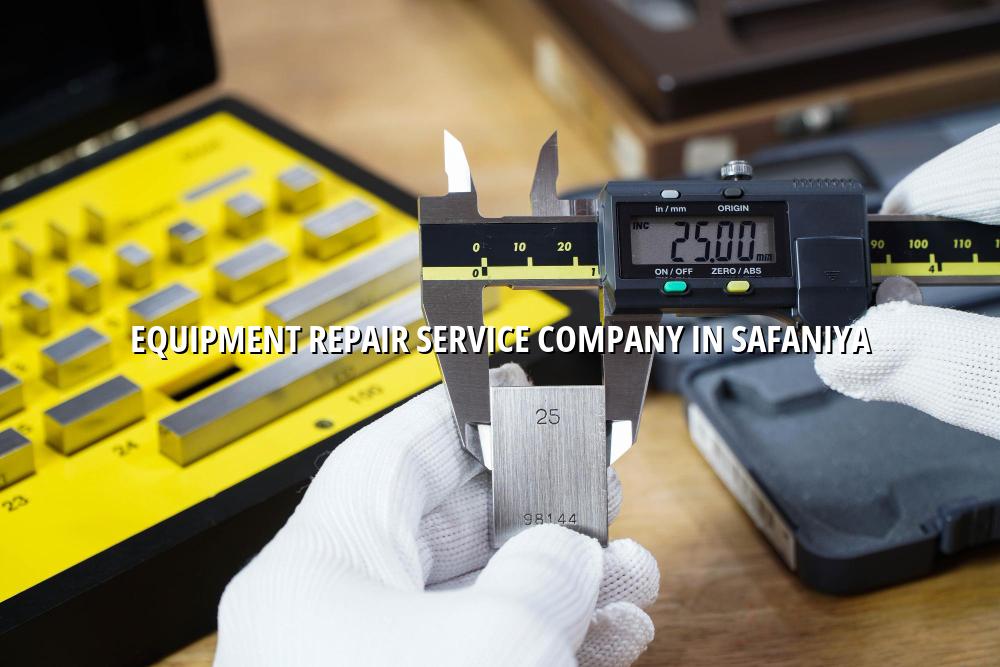
Equipment repair service company in Safaniya support should be practical, local, and built for the kind of equipment failures that stop work fast. If you're dealing with a pump that won't hold pressure, a compressor that keeps tripping, or a generator that needs fault finding before the next shift, we help you get to the problem without guesswork.
We work with maintenance teams across Saudi Arabia, including oil and gas sites around Safaniya, where every call usually starts with one question: is this a repair, a commissioning issue, or a deeper mechanical fault? Our team handles that kind of split-second triage every day, and we bring the right tools, testing methods, and field experience with us.
What an Equipment Repair Service Company in Safaniya should cover
When plant teams search for an equipment repair service company in Safaniya, they usually need more than a workshop contact. They need someone who can inspect the unit on site, isolate the fault, and decide whether the fix belongs in the field, in a controlled shop area, or during planned downtime. That is where repair discipline matters, because the wrong first move wastes time and can damage the asset further.
What we typically repair
Our repair and maintenance work covers generators, air compressors, pumps, hydrotest pumps, hydraulic cylinders, filtration pumps, and related industrial equipment. In Safaniya and nearby operating areas, we often see recurring issues like seal wear, coupling misalignment, pressure loss, vibration, overheating, and electrical trips. A good repair plan starts with measurement, not assumptions.
Why diagnosis comes before parts
Most equipment failures do not begin with a broken component. They start with contamination, poor alignment, unstable power, or a maintenance gap that stayed hidden too long. We use condition monitoring methods, inspection checks, and practical teardown review to separate the visible symptom from the root cause. That usually saves the client from replacing parts that were never the real problem.
- Step 1: Check the operating symptom — confirm what changed, when it started, and which alarms or abnormal readings appeared.
- Step 2: Inspect the unit in place — look for leaks, abnormal noise, vibration, temperature rise, loose fittings, and power issues.
- Step 3: Test the critical function — measure pressure, flow, alignment, continuity, insulation or mechanical condition as needed.
- Step 4: Repair and verify — carry out the repair, then re-test under working conditions before handing the asset back.
- Use one team for fault finding and repair so the handover is cleaner.
- Ask for a repair plan that includes test readings, not just a verbal update.
- Keep calibration and inspection records with the asset file, especially for regulated sites.
- If the unit is safety-critical, confirm the testing method before work begins.
- For pressure and hydraulic equipment, insist on a proper post-repair verification check.
Common repair jobs and the checks that go with them
| Equipment | Common fault signs | Typical verification |
|---|---|---|
| Pumps | Low flow, noise, seal leak, overheating | Pressure test, alignment check, visual inspection |
| Air compressors | Frequent trips, poor discharge, vibration | Electrical check, vibration review, mechanical inspection |
| Generators | Starting fault, unstable output, fuel or cooling issue | Load-related testing, wiring review, functional check |
| Hydraulic cylinders | Drift, pressure loss, scoring, uneven movement | Leak inspection, pressure hold, dimensional check |
Repairs work better when the test trail is clean
In industrial settings, especially around oil and gas and petrochemical operations in Saudi Arabia, repair work is only useful if the result can be trusted. That means the team doing the job should know the equipment history, understand the process load, and leave behind a clear record of what was checked and what was changed. For calibrated instruments and plant assets, that habit matters just as much as the repair itself.
Where our standards help
Mayon Industrial Services operates with ISO/IEC 17025:2017 competence for calibration and testing, plus ISO 9001:2015 quality management. For lifting and inspection-related work we align with BS EN standards, and for electrical calibration we follow EURAMET CG-15 where it applies. That gives maintenance teams a cleaner basis for acceptance, especially when multiple contractors have touched the same system.
Field repairs with workshop-level checks
We bring the repair mindset, but we also bring measurement discipline. That combination is useful when you need a hydraulic unit, pump set, or generator assessed in Safaniya, then verified before it goes back into service.
How maintenance teams in Safaniya usually use repair support
Most clients do not call us for a single broken part. They call because the asset is part of a larger line, and one failed unit can affect production, safety, or logistics. In Safaniya, that often means supporting oil and gas operations, utility systems, workshop equipment, and support machinery that cannot sit idle for long.
We also see jobs where repair has to sit beside calibration, inspection, or commissioning. A pressure system may need mechanical repair, then calibration of the associated gauge or comparator. A generator may need maintenance plus electrical testing before handback. That joined-up approach avoids the common problem of sending one team after another to the same machine.
For procurement and maintenance managers, the real value is simple: fewer repeat visits, clearer records, and a repair decision that is easier to defend internally.
- Onsite support helps reduce unnecessary equipment removal.
- Repair and commissioning can be planned together when the asset needs both.
- Clear test results help supervisors approve the asset faster.
- Pick-up and delivery are useful for units that need controlled handling.
How Mayon Industrial Services Can Help
We support repair work with the same practical approach we use across calibration, mechanical services, inspection, orbital welding, lab setup and training. If your Safaniya site needs troubleshooting on pumps, compressors, generators or hydraulic equipment, we can help assess the fault, carry out the repair, and verify the result with proper testing. That gives your team a cleaner handback and less uncertainty on the next shift.
Call +91 99447 80844 (India) or +966 59 633 8012 (Saudi Arabia), email services@mayonservices.com, or message us on WhatsApp.
Frequently Asked Questions
We commonly support pumps, compressors, generators, hydraulic cylinders, filtration pumps and related industrial units. If the asset has mechanical, electrical or pressure-related faults, we can usually start with a site check and decide the right repair path. The aim is to get to the cause first, not just change parts.
Yes. Onsite support is often the best starting point when a machine is still installed and the problem may be tied to alignment, wiring, pressure loss or operating conditions. If the unit needs special handling, we can also plan pick-up and delivery where that makes sense.
Yes, and that is often the cleaner way to handle a plant shutdown. A pressure system may need repair plus gauge calibration, while electrical equipment may need maintenance and testing before handover. Combining the work avoids repeated mobilization and keeps the records together.
For calibration and testing competence, we work to ISO/IEC 17025:2017. Our quality management follows ISO 9001:2015, and where inspection work applies, we align with BS EN standards. For electrical calibration tasks, EURAMET CG-15 is used where relevant.
Usually the first step is to inspect the fault trend, the age of the unit, and whether the issue is isolated or repeating. In many cases a repair is sensible if the frame, casing, windings or core structure is still sound. We normally advise based on condition, operating risk and the cost of repeated downtime, not on a guess.
Need repair support for equipment in Safaniya?
Tell us what failed, where it sits, and what the machine is doing right now. We’ll help you decide the next step and keep the repair process practical.
Contact Mayon