
Equipment Repair Service Company in Taif
Practical repair support for plants, utility rooms and production teams that need dependable mechanical work in Taif and nearby industrial areas.
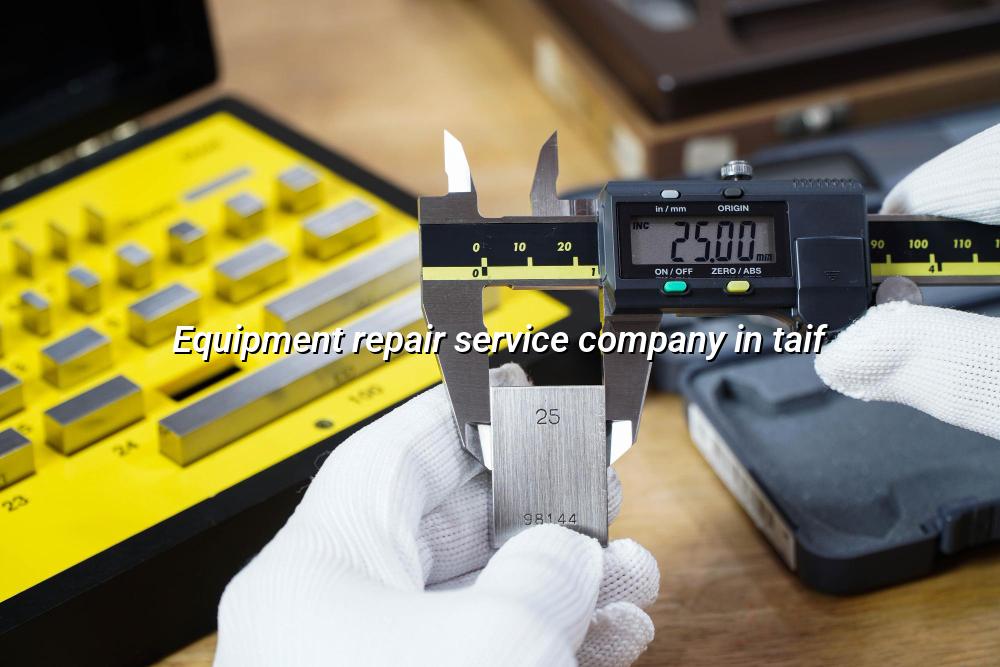
Equipment repair service company in Taif is what many plant teams search for when a generator trips, a compressor starts overheating, or a pump begins to lose pressure. If that's your situation, this page shows how we handle repairs in a way that keeps operations moving and gives your team clear next steps.
We work with industrial clients across Saudi Arabia from Dammam Industrial City 2, and we regularly support facilities in the western region that need practical mechanical help, electrical checks and commissioning support. In Taif, that matters for hotels, cold rooms, utilities, workshops and production sites that can't afford guesswork.
What an Equipment Repair Service Company in Taif should cover
Most repair calls start with a symptom, not a diagnosis. A motor is humming, a hydraulic cylinder is drifting, a pump is leaking at the seal or a generator is refusing to hold load. A proper industrial repair team looks past the visible fault, checks the working environment, confirms the failure mode and then fixes the source. That is how we approach equipment in Taif, whether the asset sits in a utility room, a workshop bay or a remote site with limited shutdown time.
Mechanical faults we see most often
In our work, the same problems appear again and again: worn bearings, misalignment, seal failure, blocked lines, damaged couplings and overheating caused by poor ventilation. We also handle flange work, hydrotest pump issues, bolt torquing and tensioning, cold cutting and testing and commissioning support. These jobs need a steady hand. A rushed repair can bring the same fault back in a few days.
Electrical and rotating equipment checks
When the issue is not purely mechanical, we test the electrical side too. That can include protection relays, current transformers, circuit breakers and substation-related equipment across LV, MV, HV and EHV systems. For rotating machines, vibration readings, infrared thermography and shaft alignment often tell the story before the final strip-down starts. This helps avoid repeating a repair just because the real cause was never found.
- Inspect the failure symptoms — we start with leak points, noise, temperature rise, abnormal vibration and operating history.
- Confirm the likely cause — the team checks alignment, electrical condition, fluid paths and wear patterns before dismantling anything unnecessary.
- Repair or replace the worn parts — seals, bearings, couplings, hoses, electrical components and damaged fittings are addressed as needed.
- Test under working conditions — we verify performance after repair so your team can return the asset to service with confidence.
- Keep the machine tag number, model and fault history ready before the callout.
- Share whether the issue began after a shutdown, overload, power dip or maintenance activity.
- If the asset is critical, ask for condition monitoring as part of the repair visit.
- For pumps, compressors and generators, ask for post-repair testing on site, not just bench work.
- If the site is in Taif or nearby industrial zones, onsite support is usually the fastest way to reduce downtime.
Typical repair needs, checks and results
| Equipment type | Common fault signs | What we check |
|---|---|---|
| Generators | Starting trouble, unstable output, overheating | Electrical condition, load behavior, cooling and rotating parts |
| Air compressors | Pressure loss, abnormal noise, excess heat | Drive alignment, seals, valves, vibration and control operation |
| Pumps | Low flow, leakage, cavitation, seal wear | Impeller condition, suction path, bearings, seals and shaft alignment |
| Hydraulic cylinders | Drift, slow movement, external leaks | Rod condition, seals, pressure integrity and contamination signs |
Why Taif sites need repair teams that test, not guess
Industrial equipment rarely fails for one reason. Heat, dust, poor alignment, load changes, vibration and previous patch repairs can all play a part. That's why we prefer to pair repair work with condition monitoring and calibration where needed. If a pump is running hot or a generator is tripping, the fault may be obvious. The cause often isn't.
Where calibration fits into repair work
When instruments, gauges, temperature devices or electrical test tools are part of the problem, calibration matters before and after the repair. Our ISO/IEC 17025:2017 compliant lab and mobile calibration lab help keep test results traceable for clients who need evidence for QA files, maintenance logs or audit records. For many plants, that is the difference between a one-off fix and a controlled maintenance program.
Built for active industrial sites
We support oil and gas, petrochemical, power, cold chain, food and beverage, healthcare, manufacturing and construction teams that need practical repair work with clear documentation. Our team can also support orbital welding, lab setup, inspection and testing if the repair scope extends beyond one machine.
How we handle a repair visit in Taif
The process begins with the equipment history. We ask what changed, when the fault started and whether the machine has already been opened by site staff. Then we move into inspection, testing and isolation. If the asset can be fixed onsite, we do that. If it needs workshop work, special conditions or pick-up and delivery, we plan the move without creating more damage.
Practical points that keep repair work controlled
One thing we tell clients often: save the failed part. A worn seal, broken contact or damaged bearing tells the truth faster than a vague description. Photos help too, especially when the equipment is in a tight plant room or above a production line. That makes our visit shorter and usually keeps the repair focused on the real fault instead of a broad teardown.
- Receive the fault report — we note the machine type, site location and operating conditions.
- Carry out inspection — visual checks, measurements and condition monitoring guide the next step.
- Repair and verify — parts are corrected or replaced, then the equipment is tested again.
- Document the work — useful records are kept for maintenance teams and QA files.
- Onsite work is useful when dismantling would interrupt production or create transport risk.
- Mobile calibration support helps when repair work depends on instrument checks.
- Preventive checks can reduce repeat failures on compressors, pumps and generators.
- Documentation matters when your team needs to explain downtime to management or contractors.
Related services that support equipment repair work
Condition monitoring
Vibration analysis, laser shaft alignment, ultrasound monitoring and infrared thermography help us catch the fault pattern early and verify the fix.
Mechanical services
Cold cutting, flange facing, bolt torquing, hydrotesting and commissioning support are useful when a repair crosses into broader mechanical work.
Repair and maintenance
Generators, air compressors, pumps, hydraulic cylinders and filtration equipment all need hands-on repairs that respect the plant's operating limits.
How Mayon Industrial Services Can Help
If you need an equipment repair service company in Taif, our team can support the full job from fault finding to final testing. We handle mechanical repairs, electrical testing and commissioning, calibration checks, orbital welding, inspection and lab support for industrial clients that need one reliable point of contact. If the equipment is stopping work, send us the details and we'll help you plan the next step.
Call +91 99447 80844 (India) or +966 59 633 8012 (Saudi Arabia), email services@mayonservices.com, or message us on WhatsApp.
Frequently Asked Questions
We do, and those are some of the most common callouts we see. Generators often need electrical and mechanical checks together, while pumps usually need alignment, seal and bearing inspection. The useful part is that we can test the fault, repair it and check the machine again before you put it back into service.
Yes, onsite support is often the best first step. If the machine can be safely opened and tested at site, that saves time and avoids extra transport risk. If the repair needs special conditions, we can arrange pick-up and delivery for equipment that can't be handled on the floor.
Yes. A mechanical repair alone won't solve a fault if the trigger is electrical. We can look at protection relays, current transformers, circuit breakers and related system issues, then coordinate the repair with testing and commissioning.
We look for the pattern, not just the broken part. Vibration readings, infrared checks, alignment data, wear marks and operating history usually show whether the issue is heat, load, contamination or poor installation. That makes repeat failures easier to stop.
Yes, and that is often the cleaner way to manage a shutdown. If instruments, gauges or test devices are part of the repair scope, our ISO/IEC 17025:2017 compliant lab and mobile calibration lab help keep the work traceable for your records. It saves your team from coordinating separate vendors for one problem.
Need a repair team that understands industrial assets?
Send us the fault details, and we'll help you decide whether onsite repair, testing or workshop support is the right next move.
Contact Mayon