
Field Training Service Provider Company in Al Hasa
Practical onsite training for technicians, engineers and QA teams who need skills they can use on shift.
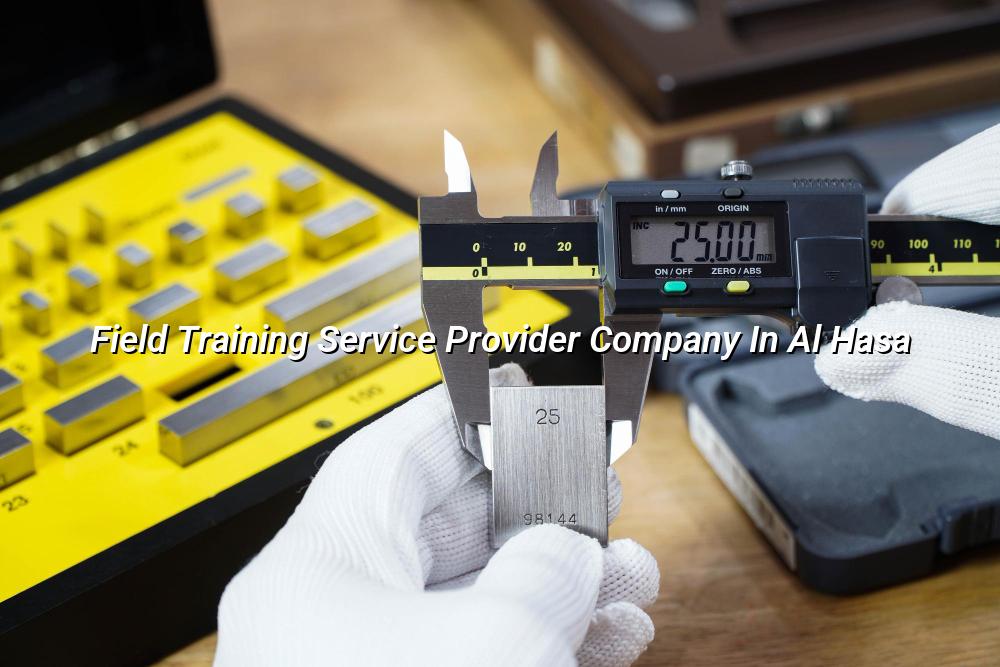
Field training service provider company in Al Hasa teams call us when they need more than a classroom talk. They want technicians who can measure, inspect, align and report with confidence on real equipment, real schedules and real production pressure.
We build that training around the work your team already does in Saudi Arabia and the wider Gulf. That can mean calibration basics for site engineers, maintenance routines for rotating equipment, inspection habits for QA staff, or a practical refresher for crews who need to work cleanly around ISO/IEC 17025 traceability and plant rules.
Field training service provider company in Al Hasa for industrial teams
In Al Hasa, the training need is usually practical. A production team in oil and gas may need a better handle on pressure instruments, a warehouse crew may need temperature discipline for cold storage, and a maintenance group may need hands-on exposure to alignment, electrical checks or condition monitoring. Our field sessions are designed to match that sort of site reality, not generic theory that disappears after the slide deck ends.
What the field session covers
We tailor the session to the equipment and job roles in front of us. That might include calibration awareness for gauges and transmitters, safe handling of instruments, visual inspection steps, or the basic logic behind vibration analysis, infrared thermography and laser shaft alignment. For teams in Saudi Arabia, we also keep the language plain and the examples local, because a good technician learns faster when the example looks like the asset in his own plant.
Why companies ask for on-site training
Most managers want fewer repeat mistakes. They also want cleaner handovers between shifts, better care of instruments, and fewer arguments over pass/fail decisions. On-site training helps because people learn beside the machine, the bench, or the warehouse door they work at every day. That is where the habits stick.
- Site review — we look at the equipment list, job roles and the gaps your supervisors already see on shift.
- Topic selection — we shape the session around calibration, maintenance, inspection, commissioning or lab practice.
- Hands-on delivery — the trainer works through examples at the site, using the actual tools or similar instruments.
- Feedback and close-out — we review weak points, answer questions and leave the team with a clearer way of working.
- Use the same instruments your team handles daily, not demonstration-only tools.
- Keep the group size small enough for live questions and direct correction.
- Include supervisors, because field habits usually change fastest when the lead is in the room.
- Ask for training notes that match your own asset tags, forms and site procedure names.
Field training options for Al Hasa workplaces
| Training format | Best suited for | Typical focus |
|---|---|---|
| Toolbox-style workshop | Small maintenance crews | Short, practical instruction on one task or one asset group |
| Supervisor refresh session | Shift leads and QA staff | Decision-making, records, checks and handover discipline |
| Equipment-specific session | Operators and technicians | How to use, inspect and protect a particular instrument or machine |
| Multi-topic site program | Mixed departments | Calibration awareness, maintenance basics and safety habits in one plan |
Training that supports compliance and better field discipline
Good field training does more than build confidence. It helps teams handle instruments carefully, keep records in order and spot faults before they become downtime. In a region like Al Hasa, where industrial work often sits close to oil and gas, petrochemical, power and cold-chain operations, that discipline matters. We keep the content aligned with ISO/IEC 17025 thinking, ISO 9001:2015 quality practice, BS EN lifting and inspection expectations, and EURAMET CG-15 where electrical calibration knowledge is part of the job.
Where the method makes a difference
We see the best results when the training follows the plant’s own workflow. A technician who learns on the same panel, bench or compressor line he uses every week usually remembers more, asks better questions, and makes fewer careless errors. That is also why managers often ask us to train the team before a project handover, a maintenance shutdown, or a new lab setup.
Practical learning on the floor
We keep sessions grounded in the same tools, forms and safety steps your team already uses. That makes the lesson easier to apply the next morning, not just easier to pass in a classroom.
How we shape a field training program in Al Hasa
We start by asking what the team actually needs to do better. Sometimes the answer is careful instrument handling. Sometimes it is better awareness of calibration intervals, documentation, or basic fault finding. And sometimes it is a mix of all three. We then trim the session to fit the site, because a team working in a warehouse, plant room or mechanical workshop does not need a lecture that sounds like a university course.
Our trainers can also connect the session to other services Mayon already provides, such as calibration services, condition monitoring, mechanical services, inspection services, electrical testing and commissioning, PAT testing, temperature mapping, orbital welding, and lab design and setup. That matters when you want one partner who understands the full chain from equipment condition to record keeping.
In many jobs, the real issue is not lack of talent. It is inconsistent practice. One operator checks, another skips, and a third writes the reading in a way nobody can follow later. Field training helps standardise that behavior without making the work feel slow or heavy. The goal is a team that works neatly, asks the right questions and treats measurements with respect.
We can also link the training to products and support equipment where needed, including pressure comparators, dead weight testers, temperature baths, hydrotest manifolds, accumulators, hydraulic cylinders, filtration pumps and hydraulic power packs. That keeps the discussion practical and close to the tools your operation may already use.
How Mayon Industrial Services Can Help
Our team plans field training around the work your people do every day, so the session feels relevant from the first hour. We can support calibration teams, maintenance crews, inspection staff and supervisors with practical training that fits with site procedures and industrial expectations in Saudi Arabia. If you want a partner who can also back that training with calibration, inspection, mechanical and engineering services, we should talk.
Call +91 99447 80844 (India) or +966 59 633 8012 (Saudi Arabia), email services@mayonservices.com, or message us on WhatsApp.
Frequently Asked Questions
We train your team where the work happens, so the lesson matches your plant, workshop or warehouse. That can include calibration awareness, maintenance habits, inspection steps, equipment handling and basic fault recognition. The point is to make the crew more consistent on the floor.
Yes. We regularly shape sessions for mixed groups such as technicians, supervisors and QA staff, because they all look at the same equipment from different angles. That usually works better than sending everyone into separate general sessions.
Yes, and that is one of the most common requests. We can cover safe instrument use, record discipline, calibration basics and practical maintenance habits that help reduce avoidable mistakes. If your team also needs support with actual calibration or testing, we can align the training with those services.
It is. Those sites usually need very practical sessions because the margin for sloppy practice is small. We keep the examples grounded in industrial work, and we can tailor the pace to the plant’s safety rules and operating style.
Yes. That is often a good fit when a client is building a new lab, improving documentation, or tightening inspection discipline. We can link the training to the real workflow so the team understands both the task and the reason behind it.
Ready to train your team on the floor, not just on paper?
Send us your site location, team size and the equipment you want covered, and we’ll shape a field training plan that fits your operation.
Contact Mayon