
Flange Facing Service Company in NEOM
Precision flange surfacing for plant shutdowns, tie-ins, and leak-prone joints across NEOM and the wider Saudi industrial corridor.
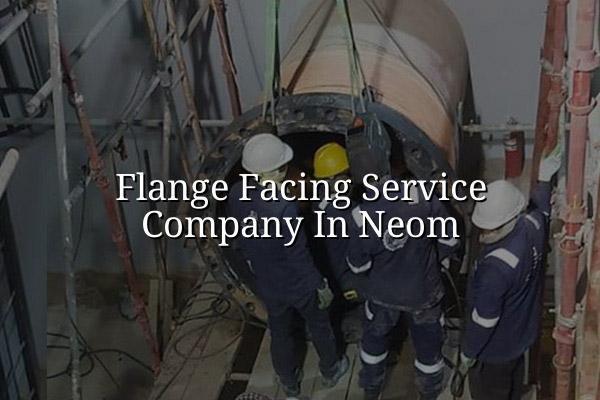
Flange facing service company in NEOM work is about more than a shiny sealing surface. It’s the difference between a joint that settles cleanly and one that keeps weeping after the first pressure cycle, especially on process lines, utilities, and tie-ins that can’t afford repeat shutdowns.
We support project teams and maintenance crews working around NEOM and the Saudi industrial belt with controlled, on-site flange facing, machining support, leak-focused inspection, and finishing work that fits real shutdown windows. If you need a clean sealing face before assembly, reassembly, or commissioning, we plan the job around the plant, not the other way around.
Why flange facing matters in NEOM projects
On large industrial jobs, the sealing problem is often not the gasket alone. A flange can be scored by old gasket material, pitted by corrosion, distorted after a hot shutdown, or left out of tolerance after hurried maintenance. In NEOM, where new build packages, utilities, and package skids move fast, those small surface defects can turn into delays, bolt retightening, or a leak that shows up right after commissioning.
What we check before facing starts
We look at the flange condition first, then choose the method. That means checking surface damage, alignment, bolt-hole condition, and whether the face needs a light cleanup or a deeper corrective cut. For weld neck, slip-on, blind, and companion flanges, the approach changes a little, and the tool setup needs to match the joint, the material, and the available access.
Where this service helps most
We’re often called when a line is already open and the clock is running. That happens on cooling water headers, hydrotest returns, firewater systems, utility skids, compressor packages, and piping that must be ready for pressure testing or final hook-up. In our experience, the best jobs are the ones where the team calls early, before the gasket ever goes back in the box.
- Inspect the joint — confirm the flange type, visible damage, access limits, and whether the face can be corrected in place.
- Set up the machine — mount the facing tool securely so the cut stays true and the machine doesn’t wander under load.
- Take a controlled cut — remove damaged material gradually, keeping the sealing surface even and suitable for the gasket style.
- Verify the finish — check the face after machining, clean the joint, and make sure it’s ready for assembly or hydrotest.
- Helps reduce repeat leaks caused by damaged flange faces
- Supports shutdown, turnaround, and tie-in work without removing the whole spool
- Useful for new construction, brownfield maintenance, and pre-commissioning
- Fits mechanical scopes where alignment, bolt tensioning, or hydrotesting follow next
Common flange facing scenarios and what they need
| Scenario | Typical issue | What the facing job focuses on |
|---|---|---|
| New tie-in at a process skid | Surface marks from handling or storage | Light cleanup cut and face verification before gasket fit-up |
| Shutdown repair on a leaking line | Grooves, corrosion, or uneven contact | Controlled resurfacing to restore a clean sealing plane |
| Pre-hydrotest preparation | Old gasket residue and minor damage | Surface conditioning so the joint can be assembled properly |
| Brownfield maintenance in tight access | Limited clearance around pipework | On-site setup with minimal disturbance to nearby equipment |
How a proper facing cut helps the whole job
A good flange face does a simple thing well: it gives the gasket an even, dependable contact area. That sounds plain, but on site it can save a lot of trouble. When the surface is clean and true, bolting behaves better, pressure testing is less stressful, and the maintenance team spends less time chasing the same joint twice.
Why project teams ask for on-site machining
Project managers usually ask for field-facing because removing a spool or sending a flange away isn’t always practical. A mobile setup keeps the work near the line, which matters on modular packages, utility corridors, and plant areas where access is tight. We also see this a lot during expansion work in Saudi Arabia, where coordination between mechanical, QA, and commissioning teams has to stay tight.
Field-ready machine setup
Our work is planned around the actual joint, the available clearance, and the condition of the flange. That makes it easier to keep the cut controlled, finish the face properly, and move on to bolting, inspection, or hydrotest prep without dragging the job out.
What often goes with flange facing service company in NEOM work
Flange facing rarely sits by itself. It’s often part of a wider mechanical scope that includes bolt torquing, tensioning, flange weld testing, hydrotesting, and final commissioning checks. If the line is tied into a wider package, we’ll often work with the maintenance lead to make sure the sequence makes sense: face, clean, inspect, assemble, tighten, then test.
That sequence matters because a perfect machined face can still fail if the next step is careless. Wrong gasket handling, poor bolt pattern discipline, or rushing the assembly will undo the benefit. Teams in oil & gas, power, desalination, construction, and manufacturing usually know this already; they just need a contractor who treats the whole joint as one system.
- Bolt torquing and tensioning support
- Hydrotest preparation and follow-up
- Flange weld testing and fit-up checks
- On-site coordination with commissioning teams
How Mayon Industrial Services Can Help
We handle flange facing as part of practical mechanical support for plant teams that need the joint done right the first time. If your scope in NEOM also needs calibration, inspection, bolt tensioning, hydrotesting, or related mechanical work, we can line up the service around the shutdown plan and the access you actually have. We work with industrial clients across Saudi Arabia and the Middle East, and we keep the focus on traceable, job-ready results.
Call +91 99447 80844 (India) or +966 59 633 8012 (Saudi Arabia), email services@mayonservices.com, or message us on WhatsApp.
Frequently Asked Questions
We resurface the flange sealing face so it’s suitable for gasket contact again. That usually means setting up portable machining equipment on site, taking a controlled cut, and checking the finish before the joint is reassembled. It’s common on maintenance work, tie-ins, and pre-test preparation.
Yes, in many cases it can. That’s one of the main reasons teams call for field machining in the first place. If access, alignment, and the flange condition allow it, the work can be done where the line is installed, which saves a lot of handling and reassembly time.
Ask for it before assembly if the face is visibly damaged, has old gasket residue, or was exposed during storage or construction. That way the joint can be prepared once, then assembled and tested without a last-minute strip-down. On busy sites, that saves a lot of back-and-forth.
Yes. We support clients in Saudi Arabia from Dammam Industrial City 2 and work with industrial teams across the wider Middle East. NEOM projects often need quick coordination with mechanical and commissioning crews, and we’re used to working in that kind of schedule.
A damaged face can stop a gasket from seating evenly, which often leads to leakage, uneven bolt loading, or repeated maintenance after the line is back in service. In practice, that can affect pressure testing and create avoidable delay. A proper facing cut is a clean way to reset the joint.
Need the flange face right before the next shutdown step?
Send us the flange details, the site location, and the access limits, and we’ll help you plan the machining scope around your job.
Contact Mayon