
Flange Weld Testing Service Company in Dammam
Check flange joints before startup with field-ready testing that suits shutdown work, new piping runs and tight QA handovers.
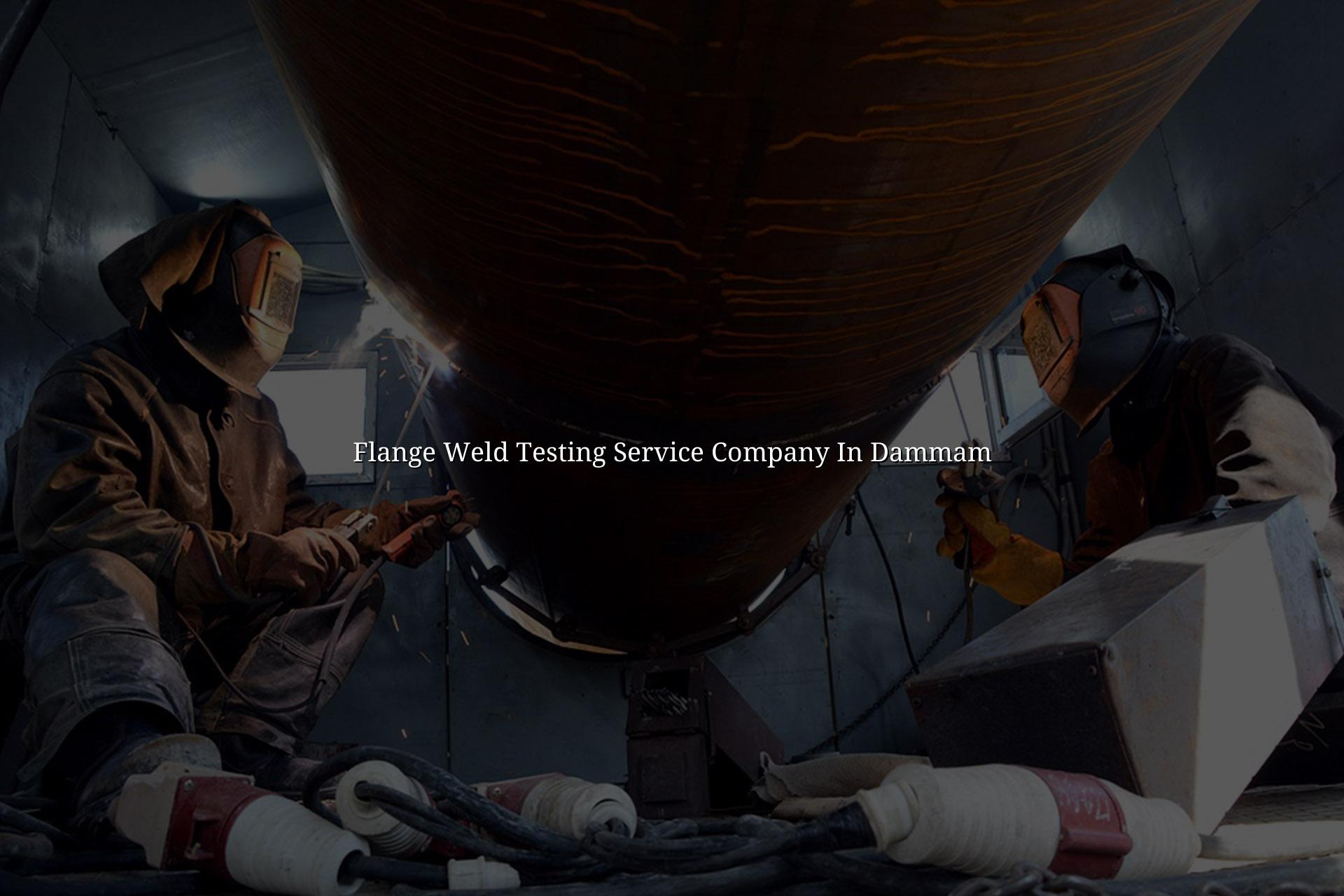
Flange weld testing service company in Dammam is the kind of search people make when a piping job is close to hydrotest, startup, or client handover and nobody wants a weld defect hiding inside a flange joint. We help you check that joint properly, so the line can move forward with evidence, not guesswork.
Our team works with industrial clients across Saudi Arabia, including Dammam Industrial City 2, where flange work often sits beside shutdown schedules, pressure systems, and heavy QA sign-off. We combine field inspection, mechanical services and ISO/IEC 17025:2017 calibration support when your project needs traceable readings and clean documentation.
What this flange weld testing service company in Dammam checks
For flange joints, the real risk is rarely the flange itself. It is the weld prep, fit-up, root condition, heat input, bolt alignment and the way the line behaves once pressure starts moving through it. We test with that in mind, because a joint that looks fine from a distance can still fail under load, leak at the gasket face, or throw alignment off during commissioning.
Why Dammam projects ask for weld testing early
In oil and gas, petrochemical and power work around Dammam, flange welding often happens in tight spaces and under schedule pressure. That is when the small things matter: pipe end condition, face parallelism, weld penetration, and whether the joint was checked before insulation, painting or pressure testing locked it in place.
What we typically verify
Depending on the scope, we can support visual weld inspection, dimensional checks, NDT coordination and pressure-related mechanical checks before handover. If the job also needs hydrotesting, bolt torquing or flange facing, we can line those up as part of the same shutdown plan, which saves a lot of back-and-forth on site.
- Review the joint list — we confirm line numbers, flange sizes, material type and the inspection scope before anyone starts on site.
- Check fit-up and weld condition — our team looks at alignment, visible defects, root area condition and any obvious mismatch that could affect integrity.
- Carry out the selected test — this may include visual inspection, NDT coordination, dimensional verification or support before pressure testing.
- Record the findings — results are documented so your QA team, client rep and commissioning crew can work from the same set of facts.
- Check flange faces before final tightening, not after the line is already buried in supports.
- Confirm weld access and NDT access together; one bad arrangement can waste a full shift.
- Use traceable measuring tools for critical dimensions and verify calibration status first.
- Plan testing before insulation, painting or cladding makes rework expensive.
- Keep the weld map, flange list and line history ready for handover and client review.
Common checks for flange weld testing jobs
| Check | What we look at | Why it matters |
|---|---|---|
| Visual weld inspection | Surface condition, bead profile, obvious cracking, undercut and weld finish | Finds visible problems before pressure testing or coating work |
| Fit-up verification | Alignment, gap consistency, flange orientation and pipe position | Helps stop leakage and stress issues at the joint |
| NDT support | Coordination for suitable non-destructive testing based on the job scope | Gives more confidence on internal weld quality |
| Dimensional checks | Critical measurements tied to flange and piping layout | Supports proper assembly, bolt load and commissioning |
Why flange weld testing is worth doing before hydrotest
Hydrotest is not the place to discover a weak flange weld. Once pressure is on the line, a missed defect can mean cleanup, delay, retesting and a lot of paperwork no one wants to repeat. We see this often on shutdown work in Saudi plants, where one verified joint early can save a much bigger problem later.
What good testing gives your team
It gives maintenance managers, QA leads and project engineers something simple: confidence. That confidence comes from clean evidence, calibrated instruments, and a process that respects the realities of industrial piping, not just a checklist on paper. If the line also needs bolt tensioning, flange facing or hydrotesting, we can coordinate those mechanical steps around the weld inspection sequence.
Built for shutdown work
Our teams are used to working around live project constraints in Dammam, across the Eastern Province, and on client sites in India and the wider Middle East. That matters when access windows are short and every re-inspection costs time.
How we keep the paperwork useful, not just present
Most of the time, the technical side is only half the job. The other half is making sure the inspection record is clear enough for your client rep, your QA file and your commissioning team. We write reports with practical job details, so you can match the flange weld testing result to the line number, location and site condition without digging through loose notes.
What a good file should show
At minimum, the file should tell you what was checked, where it was checked, what method was used, and what action followed. For regulated industrial work, that traceability matters. It is even more useful when the same project also needs calibration evidence for gauges, pressure tools or temperature instruments used during the job.
- Line or spool identification that matches the site drawing.
- Clear test method selection based on the job scope.
- Notes on any rework, retest or hold point agreed with the client.
- Equipment traceability where calibration records are part of the package.
Who usually asks for flange weld checks in Dammam?
We hear from oil and gas contractors, petrochemical maintenance teams, fabrication shops, power plant crews and project engineers handling piping packages. Cold-chain and industrial utility jobs ask too, especially when the line sits near critical service points and the client wants proper sign-off before operation.
Typical project moments
It is often right before pressure testing, after a spool modification, or after a shutdown repair where the old joint was cut out and rebuilt. In those moments, people do not need vague reassurance. They need a testing partner who can show up, check the weld, and keep the handover moving.
Mechanical support when the job grows
If flange testing exposes a fit-up issue or a mechanical defect, we can support cold cutting, flange facing, bolt torquing, hydrotesting and testing & commissioning as part of a wider field scope.
How Mayon Industrial Services Can Help
We support flange weld testing with field inspection, mechanical services, calibration-backed measurement checks and practical reporting that fits real project work. If your scope also needs NDT coordination, hydrotesting, flange facing or bolt tensioning, we can bundle the work so your team deals with one provider instead of three. Tell us what line you have, and we’ll help you plan the next step.
Call +91 99447 80844 (India) or +966 59 633 8012 (Saudi Arabia), email services@mayonservices.com, or message us on WhatsApp.
Frequently Asked Questions
We check the weld condition, fit-up, visible defects and the practical details that affect joint integrity. On many jobs, that also means coordinating NDT, dimensional checks or pressure-related work so the flange line is ready for the next hold point. The goal is simple: catch issues before the line is boxed in or pressurised.
Yes. That is one of the most common reasons clients call us, because hydrotest should confirm integrity, not reveal avoidable welding or fit-up problems. We help you check the joint first so the pressure test has a better chance of going smoothly.
Yes, we do on-site work in Saudi Arabia, including Dammam Industrial City 2 and surrounding industrial areas. Our field setup lets us handle inspection and mechanical support where the project is happening, which is usually what teams need during shutdowns or tight commissioning windows.
For calibration and testing competence, we work to ISO/IEC 17025:2017, and our quality approach aligns with ISO 9001:2015. For lifting and inspection work, we refer to BS EN standards, and for electrical calibration we mention EURAMET CG-15 where it applies. We do not invent extra certifications.
Yes. In practice, that is often the smarter way to run the job. We can combine testing with flange facing, bolt torquing, hydrotesting, cold cutting and testing & commissioning when the scope calls for it, so you’re not coordinating separate teams for one piping package.
Ready to check your flange welds before the next hold point?
Send us the line details and we’ll help you plan inspection, mechanical support and the right field approach for your Dammam project.
Contact Mayon