
Flange Weld Testing Service Company in Riyadh
Get field-tested support for flange joints that need clear records, sound weld integrity and practical inspection on Saudi projects.
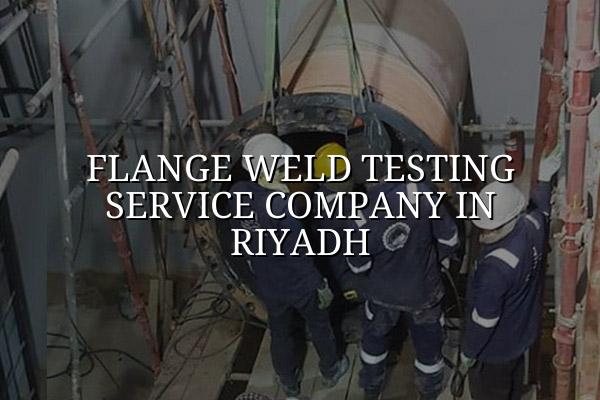
Flange weld testing service company in Riyadh support starts with one thing: knowing that the joint has to hold under real service, not just pass a quick visual look. We help you verify weld integrity, fit-up, and inspection records so your team can move toward hydrotest, shutdown handback, or commissioning with fewer surprises.
That matters in Riyadh because plant work there is rarely simple. Oil and gas skids, power packages, utility lines, process piping and tie-ins all need clear traceability, and Saudi project teams usually want evidence they can file, review and defend. We work with that expectation every day from our Saudi operation in Dammam Industrial City 2 and our ISO/IEC 17025:2017 calibrated approach in India.
What a flange weld needs before it goes live
A good flange weld test is never just one check. We usually look at weld profile, joint alignment, root condition where access allows it, visible surface defects, supporting NDT findings and the paperwork around the joint. For Saudi work, the QA file often matters just as much as the weld itself, because the client wants a clean handover trail for the piping spool or package.
Why Riyadh projects ask for tighter evidence
Riyadh sites often sit inside larger project ecosystems, so one small flange issue can delay a whole string of work. A leakage point on a process line, a misaligned flange face or poor bolt-up prep can stop pressure testing, then the schedule starts sliding. We see the same pattern on utility systems, packaged skids and maintenance shutdowns: the weld may look acceptable to the eye, but the joint still needs proper inspection before anyone signs off.
Where our inspection team adds value
Our team works alongside mechanical and QA staff, not over them. If the job needs visual inspection, dimensional checks, NDT coordination, bolt torque verification or follow-up support before hydrotest, we keep the scope practical. That fits the way most Riyadh contractors actually work. They need a service partner who can get to site, understand the pressure on the job and leave behind records that make sense to the client and the consultant.
- Review the weld and joint context — confirm flange class, piping service, material and the reason the joint matters in the system.
- Inspect fit-up and workmanship — check alignment, weld bead condition, heat-affected area and obvious surface defects before loading the joint.
- Carry out the right test mix — visual inspection, NDT where specified and related checks that support pressure test readiness.
- Record the result clearly — capture findings, note any hold points and keep the traceability needed for handover files.
- Use inspection before hydrotest, not after a leak forces rework.
- Match the method to the job: visual, NDT or dimensional checks as required.
- Keep flange face condition and bolt-up prep in the same conversation as the weld.
- Ask for records that your QA manager can file without rewriting them.
Typical checks used for flange weld testing
| Check | What we look for | Why it matters |
|---|---|---|
| Visual inspection | Bead profile, surface defects, obvious porosity, alignment and workmanship | Quickly flags issues before more testing or pressure loading |
| NDT support | Surface or sub-surface indications as specified by the job | Helps confirm weld soundness where visual checks are not enough |
| Dimensional review | Flange alignment, gap control, fit-up and mating condition | Reduces leakage risk and bolt-up problems during assembly |
| Documentation review | Traceability, hold points, test records and sign-off sheets | Keeps the QA file ready for client review and handover |
How to reduce flange weld problems before shutdown work starts
The easiest way to cut rework is to build inspection into the job plan early. On Riyadh maintenance work, we often find that the flange itself was installed in a hurry, then the team expected the weld to solve a fit-up issue. It rarely does. Good preparation means clean edges, the right torque sequence, sensible access for inspection and a test plan the client already understands.
Small faults that cause big delays
In practice, the delays usually come from details people skip. A slightly off-center joint can turn into gasket damage. Poor surface condition can make post-weld checks harder. Missing traceability can stall sign-off even when the weld looks fine. That is why our inspectors stay focused on the whole joint, not only the weld bead.
Built for plant work in Riyadh
We support oil and gas, petrochemical, power, construction and manufacturing teams that need practical inspection on real schedules. If the job is part of a skid, a utility rack or a shutdown package, we keep the scope clear and the reporting usable. That is what site teams ask for most.
Inspection methods that fit flange weld jobs
We choose the inspection method around the risk, the piping service and the client specification. Visual inspection is the first line, but it should not be the last line when the joint carries process pressure or critical utility flow. For more sensitive work, we coordinate NDT and related checks with the site team so the joint is assessed without creating extra handling or confusion.
That approach works well on brownfield work in Saudi Arabia. The line may already be tied into a live system, access may be tight and the job window may be short. In that setting, a service company has to be organised, document-driven and careful with the sequence of work. That is the part we like. It keeps the job moving without pretending the risks are smaller than they are.
We also look at the practical side of joint readiness. Bolt-up sequence, gasket seating, flange face condition and final assembly checks all sit close to weld testing in real life, even if they are listed in different method statements. When those pieces line up, the chance of rework drops. When they do not, pressure testing often becomes the place where the problem finally shows up.
Our team has seen this across Riyadh, Dammam and other industrial locations in the Middle East. The same lessons keep repeating: good preparation, clear responsibility and evidence that the QA lead can trust.
When a local partner makes the job easier
If your project team is handling turnaround work, new construction or package commissioning in Riyadh, having a flange weld testing service company in Riyadh that understands regional project habits saves time. Saudi clients often expect fast coordination, neat records and clear communication between site, QA and procurement. We have learned to work that way.
Our Saudi operation in Dammam Industrial City 2 helps us stay close to the market, while our India head office in Medavakkam, Chennai supports lab-backed calibration and engineering depth. That combination is useful when you need both field support and disciplined documentation. It also helps when the job expands into related work like mechanical support, pressure testing assistance or inspection of associated equipment.
What you can expect from our reports
We keep reports straightforward. They should show what was checked, what was accepted, what needs attention and who reviewed the work. QA managers do not want marketing language in a test file. They want facts. So that is what we write.
- Clear job scope before we arrive on site.
- Practical coordination with mechanical and QA teams.
- Inspection records that suit handover and project filing.
- Support for maintenance shutdowns and commissioning work.
How Mayon Industrial Services Can Help
We support flange weld testing through inspection, calibration-backed measurement, mechanical services and related QA support for plants and contractors in Riyadh and across Saudi Arabia. If your scope includes weld checks, hydrotest readiness, bolt torquing, flange work or wider commissioning support, we can fit in where the project actually needs help. Tell us what the joint is, what the system does and what the client expects, and we’ll take it from there.
Call +91 99447 80844 (India) or +966 59 633 8012 (Saudi Arabia), email services@mayonservices.com, or message us on WhatsApp.
Frequently Asked Questions
We usually check the weld condition, the flange fit-up, visible surface defects and the records that support acceptance. If the job calls for NDT or a pressure-test-ready review, we line that up with the site team. The goal is simple: stop a small joint issue from turning into a larger shutdown problem.
Yes, and that is usually the better time to do it. Once the system is filled and pressure testing starts, a hidden weld or fit-up issue becomes more expensive to fix. We help clients catch those problems earlier so the hydrotest stage runs with fewer surprises.
We do. Our work regularly sits around oil and gas, petrochemical, power and industrial maintenance scopes where weld integrity and traceability matter. We keep the inspection practical for site conditions and report in a format that suits project QA.
Ask for a clear inspection report, any NDT records used on the job, the acceptance or rejection notes and the traceability details tied to the joint. If the client or consultant has a specific format, send that early. It saves back-and-forth later and makes handover easier.
Yes. Many jobs need more than one discipline, especially when the flange work sits next to bolt torquing, flange facing, hydrotesting or commissioning. We can coordinate the inspection with related mechanical support so the team is not dealing with three vendors for one job.
Ready to get the flange joints checked properly?
If your Riyadh project needs inspection that stands up to QA review, talk to us and we’ll help you plan the next step.
Contact Mayon