
Flow Meter Calibration Company in Saudi Arabia
ISO/IEC 17025 flow calibration support for process lines, utility systems and custody-critical measurement across Saudi industrial sites.
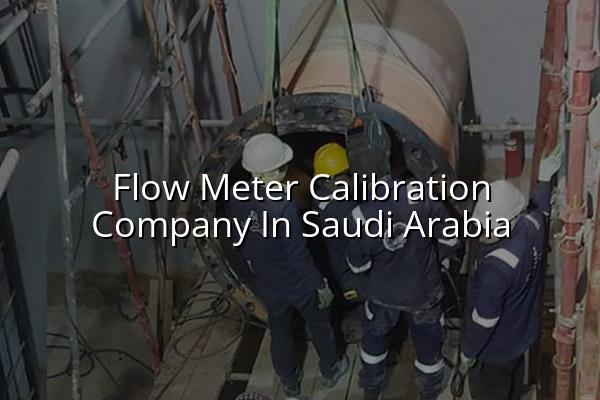
Flow meter calibration company in Saudi Arabia searches usually come from a simple problem: the meter is installed, the process is running, and the readings no longer feel trustworthy. We help you get back to traceable numbers you can use for billing, batching, utilities and process control.
Our team works across Dammam Industrial City 2, Jubail, Ras Al Khair and other Saudi industrial zones, with onsite support and a fully equipped laboratory setup for instruments that need controlled conditions. That matters in oil & gas, petrochemical, power and cold-chain work, where a small drift can throw off losses, production data or audit files.
Flow Meter Calibration Company in Saudi Arabia for Process Confidence
When a flow meter starts drifting, the problem is rarely just the meter. Temperature, pressure, installation conditions, straight-run issues, fouling and transmitter behaviour can all affect the reading, so we look at the instrument in the context of the line it lives on. For teams in Saudi Arabia, that usually means a mix of custody-related checks, utility verification and maintenance validation before shutdown work is signed off.
What we check before calibration starts
We review the meter type, service media, range, tag number, installed location and the condition of the loop or spool. In many cases, our customers ask us to verify whether the issue is with the meter itself, the transmitter, or the process side. That saves time, and it keeps maintenance teams from chasing the wrong fault.
Why traceability matters in Saudi facilities
Saudi plants expect measurement that stands up in audits, internal QA reviews and contractor handovers. That is why ISO/IEC 17025:2017 traceability is so important, especially for sites working with production reporting, water systems, HVAC, fuel handling or dosing lines. If you need a meter calibrated onsite in the plant or removed for controlled in-lab work, we can plan around the site conditions.
- Identify the flow service — confirm whether the meter handles liquid, gas, steam, air or a dosing application, then match the verification method to the duty.
- Inspect the installation — check orientation, upstream and downstream conditions, wiring, impulse lines and any obvious mechanical damage.
- Compare against reference equipment — use the right standard, prover, comparator or calibration setup to see how far the reading has shifted.
- Record results and corrective action — issue documented findings, highlight deviations and advise whether the meter needs adjustment, repair or replacement.
- Keep the meter tag, range and service details ready before the visit.
- Share any recent maintenance history, especially sensor replacement or transmitter work.
- For critical lines, plan calibration around shutdown windows and permit requirements.
- If the meter is sensitive to process conditions, ask for onsite verification first.
Reference Points for Flow Meter Calibration and Verification
| Meter type | Typical Saudi application | Common calibration focus |
|---|---|---|
| Magnetic flow meter | Water, slurry and utility lines | Zero check, signal stability, installed condition review |
| Ultrasonic flow meter | Large pipelines and non-intrusive measurement | Transducer alignment, path settings, reading comparison |
| Mass flow meter | Chemical dosing, process control, transfer systems | Density response, repeatability, transmitter behaviour |
| Turbine flow meter | Fuel, clean liquid and lab service lines | Spin response, linearity, bearing condition and wear signs |
Onsite or in-lab flow meter calibration, depending on the job
Some meters are best checked where they are installed. Others need a controlled environment, especially when the instrument has tight tolerances or special handling needs. We use a temperature-controlled in-house laboratory plus a mobile calibration lab so Saudi clients can choose the route that fits the risk, the site access and the measurement duty.
What this means for maintenance teams
You get fewer surprises during shutdowns, fewer arguments over readings and a cleaner maintenance record. For bulk measurement, chemical transfer and process utilities, that can make a big difference when operations, QA and procurement all want the same answer.
Built for demanding industrial sites
Saudi projects often need documentation that is easy to review, traceable and tied to the actual instrument on the floor. Our calibration work is aligned to ISO/IEC 17025:2017, and where electrical or related verification is part of the scope, we also work with the EURAMET CG-15 approach for relevant electrical calibration contexts.
More Than Flow Meter Calibration
Condition monitoring
Sometimes the meter is only part of the story. Vibration analysis, laser shaft alignment and infrared thermography can help uncover pump or line issues that change flow behaviour and create unstable readings.
Mechanical support
For plants that need flange work, hydrotesting, bolt torquing or cold cutting, we can support the surrounding mechanical scope so the calibration team is not working around unresolved site problems.
Inspection and commissioning
When a new system is being handed over, third-party inspection and testing & commissioning help confirm that the line is ready before the flow readings become part of the operating record.
How Mayon Industrial Services Can Help
We handle flow calibration work alongside wider industrial services, so you don't have to coordinate three or four vendors for one line. If your meter sits in a production loop, utility network or transfer system, we can look at calibration, installation condition, mechanical constraints and related verification in one visit.
That mix matters on Saudi sites where uptime, traceability and clear documentation all matter. Call +91 99447 80844 (India) or +966 59 633 8012 (Saudi Arabia), email services@mayonservices.com, or message us on WhatsApp.
Frequently Asked Questions
Start with traceability, local service capability and whether the team understands your meter type and process. For Saudi work, onsite support matters a lot because many meters are tied to operating lines, and pulling them out just to inspect can create more downtime than you want.
Yes, for many applications we can work onsite, especially where the meter is installed on a live system or the removal risk is high. We also have a mobile calibration lab for field work, which helps on industrial sites that need practical measurement support without moving every instrument to a fixed lab.
We work to ISO/IEC 17025:2017 for calibration competence and traceability. Depending on the scope, the method may also be shaped by the meter type, the process condition and the related equipment used for the verification.
Yes, those are common environments for us in Saudi Arabia and the wider Middle East. We support process lines, utilities and transfer systems where measurement accuracy affects production data, maintenance records and internal QA checks.
Send the meter type, tag number, service media, location, range and any known fault history. If you have previous calibration records or maintenance notes, those help us decide whether onsite verification, lab work or a mixed approach makes more sense.
Yes, and that often helps. If pumps, alignment, vibration or mechanical issues are affecting the line, our condition monitoring and mechanical teams can look at those parts too, so you're not treating the symptom instead of the cause.
Ready to check your flow readings?
If you need a Saudi-based flow meter calibration company that understands plant realities, send us the meter details and we'll help you plan the next step.
Contact Mayon