
Gas Detector Calibration Company in Hawiyah
Traceable gas detector calibration for oil, gas, and industrial sites in Hawiyah, with onsite support and controlled lab checks when needed.
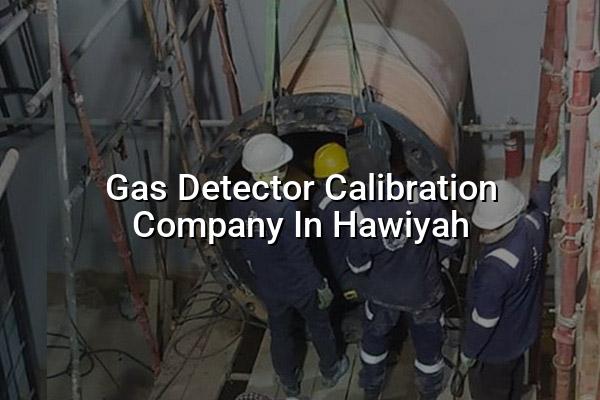
Gas detector calibration company in Hawiyah searches usually come from teams that need a real answer fast: who can check the instruments, confirm they still respond correctly, and keep the site ready for work. We help you do exactly that, with traceable calibration and practical support for detectors used in oil, gas, utilities, and maintenance shutdowns.
From Hawiyah industrial operations to nearby Saudi and GCC facilities, we work around the conditions your team already deals with. Some instruments can be handled onsite, some need controlled lab checks, and some need pick-up and delivery because the environment or sensor type calls for it. That mix matters when you’re trying to keep safety systems honest.
What a Gas Detector Calibration Company in Hawiyah Should Check
Gas detection is not a paperwork exercise. A proper calibration job checks the sensor response, alarm setpoints, bump test behavior, zeroing, and the condition of the display, battery, probe, filters, and sample path. For fixed or portable units used on Saudi industrial sites, the question is simple: will the detector respond in the field the way the safety procedure expects?
Portable and fixed detectors need different attention
Portable single-gas and multi-gas units often need careful exposure checks against the right test gas, plus verification that the instrument returns to zero cleanly after the test. Fixed detectors usually need a wider review of the transmitter, cabling, controller interface, alarm logic, and the physical condition of the sensing head. We see a lot of problems that start as small drift issues and show up later as nuisance alarms or missed warnings.
Traceability is what gives the record weight
In Hawiyah and across Saudi Arabia, maintenance and HSE teams often ask for calibration records that are easy to defend during audits. That’s where ISO/IEC 17025:2017 matters. It gives the calibration record a clear metrological chain, and it helps your team show that the reading was checked against a controlled process rather than a casual shop test.
- Identify the detector type — confirm whether it is portable, fixed, single-gas, or multi-gas, because each one needs a different test setup.
- Inspect the instrument first — check the sensor condition, battery, sample ports, filters, alarms, and visible damage before calibration starts.
- Apply the correct test gas — use the right concentration and exposure method so the response check reflects the detector’s actual use.
- Verify zero, span, and alarm points — confirm the detector reacts properly, settles back to normal, and triggers alarms where it should.
- Calibrate after sensor replacement, even if the unit still powers on normally.
- Keep bump tests and calibration records together for each asset ID.
- Watch for slow response time, unstable readings, and recurring zero shift.
- Use onsite service when instruments are installed in racks, panels, or hard-to-move areas.
Common Gas Detector Calibration Situations in Hawiyah
| Situation | Typical Check | Best Service Mode |
|---|---|---|
| Portable multi-gas detector | Zero, span, alarm response, sensor health | Onsite or in-lab, depending on site access |
| Fixed gas detection loop | Sensor input, controller signal, alarm relay function | Onsite service at the installed location |
| Detector after long storage | Battery condition, drift, response stability | In-lab check before redeployment |
| Critical shutdown area | Full functional verification and records review | Planned onsite visit with documentation |
Why Calibration Records Matter for Shutdowns and Audits
When a plant in Hawiyah is preparing for a shutdown, a maintenance campaign, or a third-party review, the gas detector list is one of the first things people ask for. A neat calibration record helps your team show which units were checked, which ones were rejected, and what happened to the ones that needed service. That sort of record keeps arguments short.
We also see value in clear asset grouping
Teams that group detectors by area, gas type, and responsible department usually find it easier to plan service rounds. It sounds basic, but in real plants it saves time. You can spot patterns too, like one compressor area where sensors drift faster than the rest because of heat, dust, or process exposure.
Built for Industrial Safety Teams
Our calibration work supports oil and gas, petrochemical, power, construction, and cold-chain sites across Saudi Arabia and the wider Middle East. We keep the process practical, documented, and suitable for real plant conditions.
How We Handle Different Detector Types
Some detectors are simple enough for a controlled bench test. Others need a mobile setup because they’re installed in cabinets, confined spaces, or live operations where removal would create another problem. We bring a mobile calibration lab for onsite work, and we also support instruments that need special handling in our temperature-controlled in-house laboratory.
That flexibility matters in Hawiyah
Sites in and around Hawiyah often run on tight maintenance windows. If a detector can stay in place, we’ll work that way. If it needs pick-up and delivery to protect the instrument or the sensor, we can arrange that too. The goal is to keep your safety system dependable without making your maintenance team juggle avoidable delays.
Onsite Where It Helps, Lab Where It Counts
That balance is useful for portable and fixed gas detectors, especially where access, environmental conditions, or instrument sensitivity make one method better than the other.
Common Problems We See Before a Detector Fails a Check
Most calibration issues are not dramatic. The detector reads a little low, the response gets slower, or the zero drifts after warm-up. Sometimes the problem is outside the sensor itself, like a blocked inlet, contaminated filter, weak battery, or a technician who has skipped the pre-use bump test for too long. Small signs, big consequences.
We also see instruments that look clean but still behave badly because the environment has been rough on them. Dust, heat, moisture, vibration, and chemical exposure all leave a mark. In industrial Hawiyah, that matters more than people think, especially on mobile units carried between job areas and control rooms.
- Slow alarm activation
- Unstable zero reading
- Damaged inlet or tubing
- Battery issues during field use
How Mayon Industrial Services Can Help
We calibrate gas detectors as part of a wider industrial support line that includes ISO/IEC 17025:2017 calibration, condition monitoring, inspection, mechanical services, and lab setup. If your site in Hawiyah needs portable detector checks, fixed detector verification, or a planned calibration round for a larger shutdown, we can support it with the right setup and records. If the instrument needs a controlled environment, we handle that too.
Call +91 99447 80844 (India) or +966 59 633 8012 (Saudi Arabia), email services@mayonservices.com, or message us on WhatsApp.
Frequently Asked Questions
Honestly, the best fit is usually the team that can work onsite for fixed detectors, handle portable units properly, and give you a traceable record after the job. For industrial sites in Hawiyah, that usually means a provider that understands oil and gas safety expectations and can support planned maintenance without creating extra handling risk.
The interval depends on the manufacturer’s instructions, the gas type, the site environment, and your internal safety procedure. Some teams set a regular cycle and still do bump checks before use, especially for detectors exposed to heat, dust, vibration, or heavy daily handling.
Yes — onsite calibration is often the practical choice for fixed detectors, installed systems, and instruments that are hard to remove. We also use a mobile calibration lab for onsite work, which helps when the site wants the instrument checked without sending it off unnecessarily.
For calibration work, ISO/IEC 17025:2017 is the key standard we work to for competence and traceability. If your site is already built around quality management, ISO 9001:2015 often sits around the same record-keeping process, while field inspection work may also involve BS EN standards depending on the job.
Take it out of service, tag it clearly, and review whether the issue is the sensor, battery, inlet, or the whole unit. In many plants, a failed detector is either repaired or replaced before being returned to safety duty, because leaving it in rotation can create a false sense of protection.
Yes — we support clients across Saudi Arabia and the wider Middle East, and we also serve customers in India. That matters for groups with multiple sites, because you can keep one calibration approach across several facilities instead of managing different vendors and record styles.
Ready to keep your gas detectors audit-ready?
If your Hawiyah site needs calibration support, send the instrument list and we’ll help you plan the next step without making it complicated.
Contact Mayon