
Hydrotest Pressure Gauges Supplier in Qassim
Get calibrated gauges, traceability and practical support for hydrotesting jobs across Qassim and nearby industrial sites.
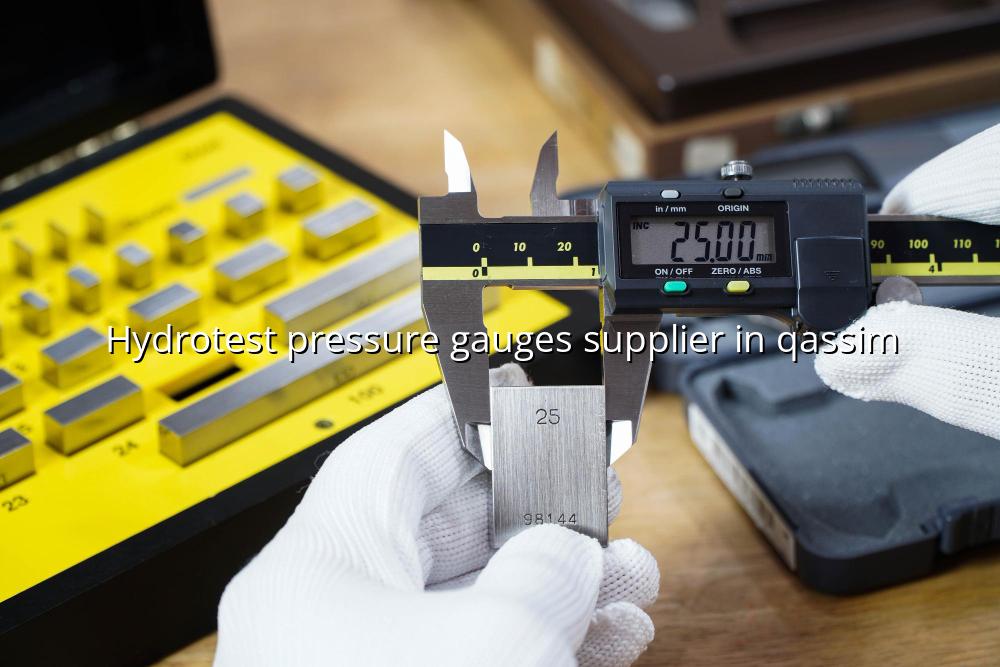
Hydrotest pressure gauges supplier in Qassim is usually the search people make when a pressure test is waiting on a missing, unverified gauge. If that's your situation, we help you get the right gauges, ready for use, with traceable calibration and practical support for hydrotesting work.
Our team works with contractors, maintenance crews and inspection teams across Saudi Arabia and the wider Middle East. We support pressure testing for pipelines, vessels, manifolds and fabricated skids, and we do it with the kind of care Qassim sites need when the job has to hold up under scrutiny.
What You Need from a hydrotest pressure gauges supplier in Qassim
For hydrotesting, the gauge is not just a dial on the pump skid. It has to match the pressure range, the test medium, the reading resolution and the job's acceptance requirements. In real projects, teams often need more than one gauge size, plus a spare, because no site manager wants a test to stop over a damaged needle, a sticky movement or an unreadable face.
Why gauge condition matters on site
A worn gauge can mislead the crew, and that creates risk during pressure build-up. We see this often on fabrication yards, compressor packages and piping packages where the same instrument gets moved from one job to another. A clean face, intact glass, readable scale and current calibration record make the work easier to explain during QA checks and client witness points.
What buyers usually ask us first
Most buyers start with range and thread size, then they ask about calibration traceability and how the gauge will be delivered. That makes sense. A hydrotest set in Qassim may need a gauge for controlled workshop testing, while another crew needs one ready for field work in heat, dust and transport vibration. We keep that reality in mind when we recommend a gauge.
- Confirm the test pressure — match the gauge range so the operating point sits comfortably in the middle of the scale.
- Check the connection type — verify thread size, bottom mount or back mount, and any adaptor needs before the job starts.
- Review the calibration record — make sure the certificate is current and the instrument can be traced to the right standard.
- Prepare a spare gauge — keep one on hand so a single damaged instrument does not stop the pressure test.
- Use a gauge range that keeps normal test pressure away from the upper limit.
- Ask for calibration documentation before the gauge reaches site.
- Keep the dial clear and protected during transport between the workshop and field.
- Confirm whether the test plan needs a digital or analogue display.
- Replace gauges with bent pointers, broken lenses or erratic readings immediately.
Common gauge choices for hydrotest work in Qassim
| Gauge type | Best fit | What buyers check |
|---|---|---|
| Analogue pressure gauge | General hydrotesting on piping, vessels and skids | Range, dial size, thread type, calibration record |
| Liquid-filled gauge | Sites with vibration from pumps or mobile test rigs | Case sealing, pointer stability, readable scale |
| Digital pressure gauge | Jobs needing easier reading and recorded values | Battery status, display clarity, sensor range |
| Reference gauge | QA checks and verification of working gauges | Traceability, certificate status, handling condition |
Why calibrated gauges reduce hydrotest headaches
Hydrotesting is hard enough without arguing over whether the gauge can be trusted. When a gauge is calibrated under ISO/IEC 17025:2017 conditions, the reading history is documented and the instrument is tied back to a traceable reference. That matters in Saudi industrial work, where many clients expect clean records and clear handover packs.
Useful for more than one trade
We regularly support teams that handle mechanical packages, inspection hold points and commissioning. If the job involves flange work, pressure retention checks or vessel testing, the gauge has to be fit for purpose from the start. A properly selected and calibrated instrument is easier to defend during client review, and it reduces rework on the day.
Built for field and workshop use
Our mobile calibration lab can support onsite work, while our temperature-controlled in-house lab handles instruments that need a steadier environment. For special cases, we can arrange pick-up and delivery, which helps when the gauge needs careful handling before it goes back into service.
How we support hydrotest jobs across Qassim and nearby industrial areas
Some clients only need a replacement gauge. Others want support for a full hydrotest setup, including pressure comparators, manifolds and related calibration checks. We work with industrial teams that cannot afford a lot of back-and-forth, so we keep the process practical: confirm the need, match the instrument, provide the documentation and get the gauge where it needs to be.
Qassim projects often sit between workshop conditions and field conditions. That means the same gauge may need to travel, face heat and still remain legible during the test. We keep that in mind when we advise on case style, fill type and handling. If your crew is testing regularly, it also helps to standardise the gauge family so maintenance teams do not waste time learning a new scale every week.
When a mobile lab makes the difference
Onsite verification helps when the gauge cannot be removed easily or when the schedule is tight around other trades. Our mobile calibration lab is useful for field-based work in Saudi Arabia and the wider Middle East, especially where instrument movement risks damage or where the site prefers a quick check before the test starts.
- Suitable for workshop hydrotesting, commissioning and maintenance shutdowns.
- Documentation can support QA review and client handover packs.
- Mobile lab support helps when instruments should not be moved far from site.
- Pick-up and delivery are available for instruments needing special handling.
Simple checks before you place an order
Before you buy, check the job card and the test pack. The pressure range should suit the test point, and the gauge should be readable from the operator position. If the gauge will live on a skid, ask for the mounting orientation and make sure the connection matches the rest of the setup. Small details matter here, because a mismatch usually turns into a delay on the day of testing.
We also recommend checking whether the site wants analogue simplicity or a digital display. Analogue gauges remain common because they're easy to read at a glance, while digital units can help when you need a clearer value or easier verification. Either way, the instrument should arrive ready for use, not as a surprise.
- Confirm the operating pressure and test pressure before choosing the range.
- Match bottom or back connection to the actual installation point.
- Ask for a current calibration certificate with traceability details.
- Keep one spare gauge in store for urgent hydrotest work.
How Mayon Industrial Services Can Help
We support hydrotest pressure gauge supply with calibration, verification and practical field support for industrial teams that need dependable instruments, not guesswork. If your work in Qassim is tied to piping, pressure vessels, mechanical completion or commissioning, we can help you choose the right gauge and keep the paperwork in order. Our team also handles related calibration, mechanical services and inspection work, so you can keep one contact for more than one job.
Call +91 99447 80844 (India) or +966 59 633 8012 (Saudi Arabia), email services@mayonservices.com, or message us on WhatsApp.
Frequently Asked Questions
You can contact Mayon Industrial Services for hydrotest pressure gauge supply and related calibration support. We work with Saudi clients from Dammam Industrial City 2 and support jobs in Qassim and nearby industrial areas. If you need a gauge for a specific pressure range, send the test details and we'll guide you from there.
Choose a range that places the expected test pressure in the mid-range of the dial, not near the top edge. That keeps the reading easier to see and helps the gauge behave better during the test. If you're unsure, send us the test pressure and connection details and we'll help you match the gauge.
Yes, most industrial buyers expect a current calibration certificate, especially on client-facing or QA-controlled work. It helps show that the reading is traceable and that the gauge was checked under controlled conditions. For regulated projects, that record can save time during handover.
Yes, we support onsite work in Saudi Arabia using our mobile calibration lab where the job suits field verification. That helps when instruments are already installed or when moving them could create damage or delay. If onsite isn't the right fit, we can also handle instruments through our in-house lab.
Stop using it and replace it right away. A bent pointer, cracked lens, sticky movement or jumping reading is enough reason to take it out of service. We can help assess whether it should be recalibrated, repaired or replaced, depending on its condition.
Yes, we also handle related products such as pressure comparators, dead weight testers, hydrotest manifolds and hydraulic equipment used in pressure testing. That makes it easier for teams to source compatible items from one place. If you have a larger package, send the list and we can review it with you.
Ready to sort out your hydrotest gauges?
Send us the pressure range, connection type and site location, and we'll help you line up the right gauge for the job.
Contact Mayon