
Hydrotest Pressure Gauges Supplier in Spark
Get calibrated hydrotest gauges for pressure testing, commissioning and maintenance work across industrial sites in Spark.
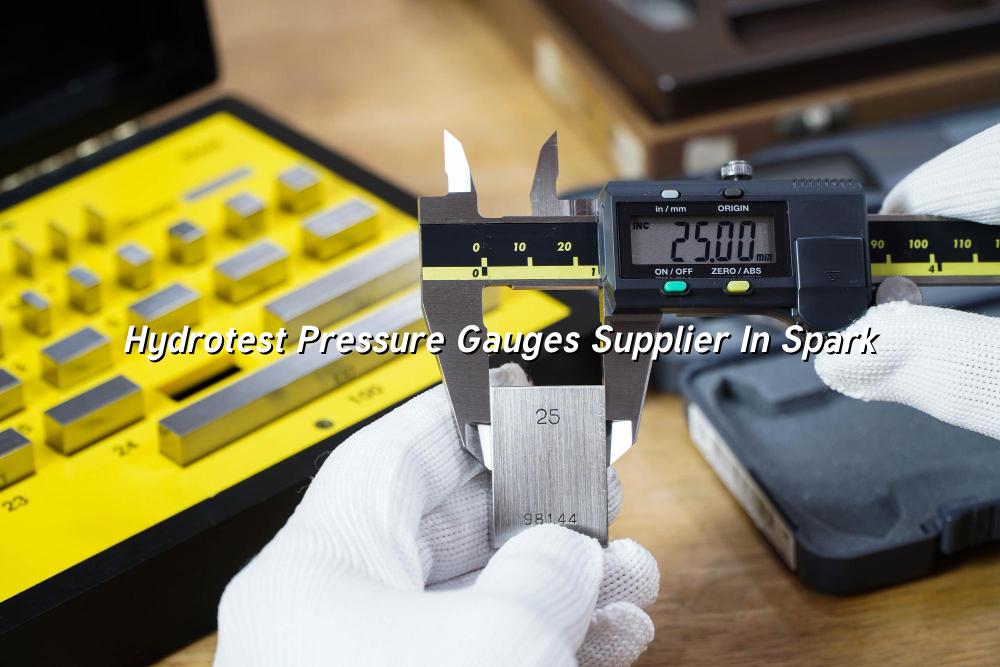
Hydrotest pressure gauges supplier in Spark support starts with the right instrument, not just a box on a shelf. If you're running pressure testing on pipes, vessels, manifolds or packaged skids, you need gauges that read cleanly, hold calibration and suit the test range you actually use.
We work with teams that want dependable gauges for site testing, hydrostatic commissioning and maintenance shutdowns across India, Saudi Arabia and the Middle East. In practice, that means helping you choose the right range, supplying calibrated instruments, and backing the work with the kind of traceability industrial buyers expect from ISO/IEC 17025:2017 aligned calibration.
Hydrotest Pressure Gauges Supplier in Spark for Site Work
Most hydrotest jobs fail for simple reasons: the gauge range is wrong, the dial is hard to read from the pump skid, or the instrument has drifted since the last verification. A good supplier should help you avoid that. For hydrostatic testing, the gauge has to match the working pressure band, fit the connection size, and stay readable when the crew is wearing gloves and working around water, hoses and test manifolds.
What we look at before supplying a gauge
We start with the test medium, pressure range and site condition. If the job is in a hot plant area, a refinery yard, a fabrication bay or a cold-chain utility room, the gauge choice is not the same. We also check whether you need a dry gauge, glycerin-filled gauge, a panel-mounted option, or a portable unit for a hydrotest manifold.
Where Spark teams usually use them
In our experience, Spark buyers ask for hydrotest gauges for new piping runs, pressure vessel checks, skid fabrication, pump discharge testing and maintenance shutdowns. The same gauge may be used with a pressure comparator, a dead weight tester or a hydrotest manifold depending on how your QA team prefers to verify readings. That is why the supply side needs to understand the test setup, not just the product code.
- Confirm the test range — choose a gauge that places normal test pressure in the middle third of the dial, not near the end stop.
- Check the mounting style — verify bottom entry, back entry or panel fit so the gauge connects cleanly to the manifold.
- Match the process media — water-based hydrotest work can call for corrosion-aware selection, clean fittings and simple maintenance access.
- Verify calibration status — ask for traceable calibration or onsite verification before the gauge enters service.
- Use a gauge range that supports clear mid-scale reading during test hold.
- Keep spare gauges on hand for shutdown work and multiple test lines.
- Ask for calibration support under ISO/IEC 17025:2017 when your QA team needs traceability.
- Pair the gauge with a hydrotest manifold for safer line control and cleaner isolation.
Hydrotest Gauge Options and Where They Fit
| Gauge type | Common use | What to check |
|---|---|---|
| Dry pressure gauge | General hydrotest and workshop checks | Dial clarity, range match and connection size |
| Glycerin-filled gauge | Vibration-prone pump skids and mobile test rigs | Seal integrity and visibility under site lighting |
| Panel-mounted gauge | Permanent hydrotest manifold installation | Rear fit, bezel type and operator viewing angle |
| Calibrated reference gauge | Verification against a master or comparator | Traceability, certificate and calibration interval |
Why calibrated gauges matter on a hydrotest rig
When a pressure test is tied to commissioning or handover, the gauge becomes part of your evidence trail. If the needle is sluggish, the scale is crowded, or the instrument is out of calibration, the readings get questioned and the test record loses weight. That creates rework, and nobody wants that on a live project.
What QA and maintenance teams usually ask for
They usually want a readable dial, a sensible pressure range, a clear calibration record and a supplier who can support both supply and verification. We see this across fabrication yards, utility packages, oil and gas jobs, and plant maintenance stops in Chennai, Dammam and other industrial hubs. For those teams, the gauge is not a commodity. It's a control point.
Built for field pressure testing
We support hydrotest work with calibrated pressure gauges, hydrotest manifolds, pressure comparators and onsite calibration through our mobile lab. That helps you keep the test setup aligned with the job, especially when the work sits between fabrication, pre-commissioning and final sign-off. It also keeps the QA file cleaner when the client asks for traceability.
What a supplier should provide beyond the gauge
Range guidance
We help match the gauge to the test pressure so the crew isn't trying to read the edge of the dial during a critical hold period.
Mobile-lab support
Our mobile calibration lab helps with onsite verification when instruments need to stay near the project, especially on shutdown work and turnaround jobs.
Traceable records
We keep the paperwork aligned with the instrument history so your team can file test results with more confidence.
How Mayon Industrial Services Can Help
We supply and support hydrotest pressure gauges as part of a broader industrial service line that includes calibration, mechanical work, inspection and lab setup. If you need onsite verification, a calibrated replacement gauge, or a pressure testing solution tied to a hydrotest manifold, our team can help you keep the job moving without losing traceability.
Call +91 99447 80844 (India) or +966 59 633 8012 (Saudi Arabia), email services@mayonservices.com, or message us on WhatsApp.
Frequently Asked Questions
Yes, we supply hydrotest pressure gauges for industrial use in Spark and nearby project sites through our India and Saudi Arabia operations. The usual starting point is the test pressure range, the connection style and whether you need onsite verification or a calibrated spare. That keeps the gauge choice practical instead of generic.
Pick a range that places your normal test pressure in the middle portion of the dial. That makes it easier to read and gives your crew a clearer view during the pressure hold. If you already have a hydrotest manifold, we can check the setup and suggest a better match.
For QA-controlled jobs, yes, a traceable calibration record is usually expected. It helps when the client reviews the pressure test file or when the instrument history gets checked later. We can support that through our ISO/IEC 17025:2017 aligned calibration services and mobile lab capability.
Yes, we can support onsite work where the gauge needs to stay near the project or where removing it would slow the job. Our mobile calibration lab is a good fit for that kind of work, especially on turnaround and commissioning sites. It also reduces handling for instruments that need to remain in a controlled environment.
We do support hydrotest setups with related equipment like hydrotest manifolds, pressure comparators and dead weight testers. That matters because the gauge is only one part of the test chain. If the rest of the system is mismatched, the readings and the workflow both suffer.
Ready to sort out your hydrotest gauges?
Tell us the pressure range, connection type and site location, and we'll help you choose a gauge that fits the test properly.
Contact Mayon