
Hydrotest Pressure Gauges Supplier in Taif
Get dependable hydrotest gauges for pressure testing teams working in Taif and nearby industrial sites.
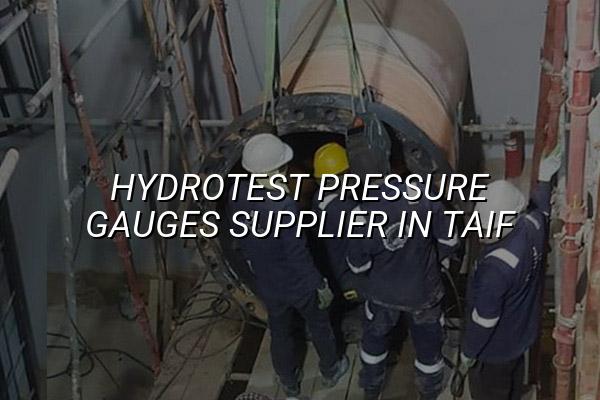
Hydrotest pressure gauges supplier in Taif is the kind of search people make when the job is already live and the test package can’t wait. If you’re handling pipework, tanks, valves, or skid testing, you need gauges that read cleanly, stay traceable, and hold up under site use.
We support pressure testing teams that work across Saudi Arabia, including Taif and nearby project sites, with calibrated gauges, supporting instruments, and practical guidance for field conditions. That usually means less guesswork, fewer rejected readings, and better control during hydrostatic testing.
Hydrotest Pressure Gauges Supplier in Taif for Site Testing
When a maintenance team asks for hydrotest gauges, they usually mean more than a dial and a thread size. They want a gauge with the right range for the test pressure, a clear face for the operator, and traceability that fits client QA files. In our experience, the most common mistake is buying a gauge that looks fine in the store room but reads poorly once it’s at the pump skid or test manifold.
What to check before you place an order
Start with the working range. For hydrostatic testing, the gauge should sit in the middle part of its scale during the actual test, not pushed near the top. That makes readings easier to trust. You should also confirm connection type, face size, media compatibility, and whether the instrument will be used in a clean test bay or on a rough field set-up where vibration and handling are part of the day.
Why traceability matters in Saudi projects
Project teams in Taif, Makkah Province, Jeddah, and the broader GCC often ask for documentation because the test package travels through several hands. A gauge backed by calibration records helps QA teams close the loop on pressure verification. For regulated work, that paper trail matters as much as the instrument itself. We support that need through our ISO/IEC 17025:2017 calibration capability and temperature-controlled in-house lab.
- Confirm the test pressure — match the gauge range to the actual hydrotest requirement, not the maximum number stamped on the drawing.
- Check the connection and mounting — verify thread, diameter, and whether you need a direct mount, panel mount, or test manifold arrangement.
- Review the certificate trail — make sure the gauge has current calibration records and the customer file can show traceability.
- Inspect the site conditions — look at vibration, moisture, handling, and storage so the gauge choice fits the real work area.
- Use a gauge scale that keeps normal test pressure near the middle of the dial.
- Ask for calibration support tied to ISO/IEC 17025:2017.
- Keep a spare gauge on hand for field work, especially when pressure testing runs on tight schedules.
- Store gauges in a dry case, away from shock and contamination.
- If the job is in a mobile spread, choose a gauge that can handle transport and quick setup.
Reference Points for Hydrotest Pressure Gauges
| Test Situation | What to Look For | Why It Helps |
|---|---|---|
| Pipe spool pressure testing | Mid-scale readability and secure mounting | Reduces operator error during a live test |
| Tank or vessel testing | Stable pointer movement and clear dial face | Makes pressure control easier to monitor |
| Valve and manifold testing | Correct thread and compact body | Fits tight assemblies without awkward adapters |
| Mobile field hydrotest work | Durable housing and documented calibration | Supports repeated site use and QA records |
What a good supply partner should deliver
A reliable supplier does more than ship instruments. You should expect help with selection, calibration support, and advice on whether a gauge belongs in the lab or on the site cart. That matters for oil and gas, petrochemical, power, construction, and manufacturing jobs where a single wrong reading can slow the whole test schedule.
Field service should be practical
We see a lot of requests from teams that need onsite support because the gauge has to work around shutdown windows or project handover milestones. In Saudi Arabia and across the Middle East, mobility is a real advantage. A temperature-controlled lab is useful, but a fully equipped mobile calibration lab makes it easier to support pressure testing where the work is happening.
Built for test packages, not shelf display
Hydrotest gauges should be selected with the test rig, the operator, and the QA file in mind. That’s where practical advice saves time and helps the team avoid rework, especially on jobs that need clean documentation and repeatable pressure readings.
How Mayon Industrial Services Can Help
We supply pressure testing support through calibration, inspection, mechanical services, and industrial engineering work, so your hydrotest gauges are not just bought — they’re checked against a real job requirement. If you also need test manifolds, pressure comparators, dead weight testers, or mobile calibration support, our team can help you plan the full setup.
For teams working in Taif, Dammam, Jeddah, or other industrial areas in Saudi Arabia, we can support field use, lab verification, and related pressure-testing needs without making the process complicated. If you want a gauge supply discussion tied to your test package, reach out and we’ll help you sort the details.
Call +91 99447 80844 (India) or +966 59 633 8012 (Saudi Arabia), email services@mayonservices.com, or message us on WhatsApp.
Frequently Asked Questions
Yes — you can source them through suppliers that understand pressure testing, calibration, and site use, not just general hardware sales. For Taif projects, the big thing is making sure the gauge range and connection match your test package before it reaches site. That saves time when the rig is already set up.
Pick a range that places the working pressure in the middle part of the dial. If the test point sits too close to the top end, the reading is harder to judge and the pointer has less useful travel. The final choice should follow the actual test pressure, not a guess from the store room.
For most QA-controlled projects, yes, they do. A calibration certificate gives the pressure reading a traceable basis and helps the test file stand up during review. That’s especially useful when the gauge is part of a handover package for oil and gas, petrochemical, or power work.
We can support onsite work through our mobile calibration capability, depending on the instrument and the job conditions. That’s useful when the gauge is already installed in a test spread or when the client wants to reduce handling between the site and the lab. It also helps when access to equipment is tight.
We support related calibration and hydraulic products such as pressure comparators, dead weight testers, hydrotest manifolds, accumulators, hydraulic cylinders, filtration pumps, and hydraulic power packs. If the job needs more than a gauge, we can help you think through the whole setup. That’s often the smarter route for recurring field work.
Need the right gauge for the next hydrotest?
Send us your test pressure, connection type, and site location, and we’ll help you choose a gauge that fits the work, the file, and the field.
Contact Mayon