
Hydrotesting Service Company in Arar
Pressure testing for pipes, vessels and systems with controlled methods, clear records and onsite support in Arar.
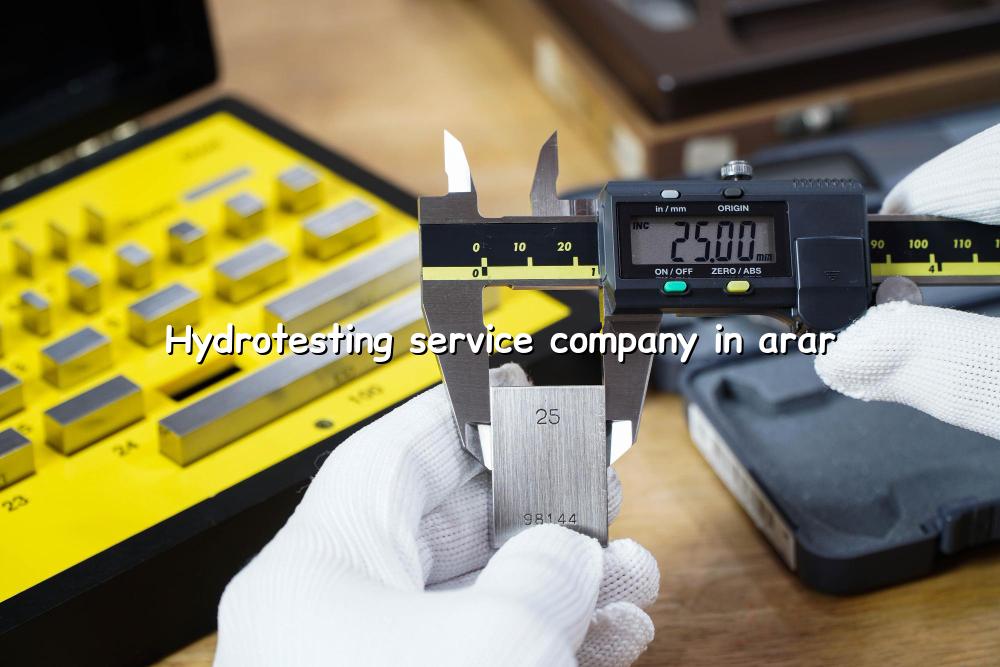
Hydrotesting service company in Arar searches usually come from people who need one thing done properly: a pressure test that tells the truth about the system. We help you check integrity before start-up, after repair, or before handover, so your team can move ahead with clearer risk control and cleaner records.
From Arar and the wider Northern Borders region, industrial teams often need practical support for piping, tanks, vessels, hoses and fabricated skids. Our work is shaped for oil & gas, utilities, maintenance shutdowns and plant upgrades across Saudi Arabia, with mobile-lab support and the same disciplined approach we use for clients in India and the Middle East.
What a hydrotesting service company in Arar should deliver
A proper hydrotest is more than filling a line with water and watching a gauge. You need correct isolation, controlled pressurisation, stable hold time, safe venting and a report that your QA or maintenance file can stand behind. In our experience, the weak point is often not the test itself but the preparation: dirty lines, missing blinds, poor calibration of instruments, or unclear test boundaries.
Where hydrotesting fits in plant work
We see hydrotesting used most often before commissioning, after piping repair, during turnaround work, and for fabricated items that need proof of strength and tightness. In Arar, that can mean field piping tied to oil and gas assets, utility skids, pressure vessels, pump discharge lines, and shop-built assemblies that are being prepared for installation. The aim is simple: spot leakage, confirm integrity, and document the result in a way that matches site requirements.
What we check before pressurising
Preparation decides the quality of the test. We look at test medium suitability, expected test pressure, temporary blanks, vent points, drain points, and the condition of fittings and seals. If an instrument or safety device needs calibration traceability, we bring that same discipline from our ISO/IEC 17025:2017 work into the field so the numbers you rely on are sound.
- Review the scope — we confirm the line, vessel or assembly, the test medium, the target pressure and the boundaries before any connection is made.
- Prepare the system — the item is isolated, cleaned where needed, vented correctly and fitted with the right blanks, gauges and accessories.
- Pressurise in stages — pressure is raised in a controlled way so the system can settle and any issue can be spotted early.
- Hold and inspect — the test is held for observation, with checks on joints, welds, valves, seals and any suspected leak points.
- Record and release — readings, observations and pass/fail results are documented for your QA, commissioning or handover file.
- Use calibrated gauges and test accessories with traceable records.
- Keep test boundaries clear so no one mistakes the scope.
- Check for temporary fittings, loose flanges and damaged seals before pressurising.
- Document the result in a form your site QA team can file without rework.
- Plan safe venting and draining before the job starts, not after.
Common hydrotesting setup points for site teams in Arar
| Item to check | Why it matters | Typical field concern |
|---|---|---|
| Test boundaries | Defines exactly what is under pressure | Missing blinds or unclear isolation points |
| Pressure instruments | Shows the actual test pressure and hold stability | Gauge condition, range match and traceability |
| Connections and seals | Most leaks appear at joints, gaskets and temporary fittings | Worn seals, loose bolts or poor assembly |
| Drain and vent arrangement | Prevents trapped air and unsafe release after the hold period | Poor venting or water left in the line |
Why traceability matters in hydrotesting
Hydrotesting is often used as a go/no-go check, but your records may be reviewed long after the job is done. That means the pressure source, measuring devices, and inspection notes should be clear enough for engineering and QA teams to trust. For regulated plants and major contractors, especially in Saudi Arabia and GCC oil & gas work, traceability is not extra paperwork; it is part of the job.
What good documentation usually includes
We normally expect a test record to show the item tested, date, location, equipment used, observed pressure behaviour and the final result. If the job is tied to a larger commissioning package, the file should also make it easy to link to related mechanical or electrical work. That keeps the handover cleaner and reduces the back-and-forth between site, QA and client representatives.
Field jobs are rarely identical
One week we may be dealing with a short fabricated spool in a workshop; the next, a larger site system with access limits, live plant constraints and tight shutdown windows. Good hydrotesting service means adapting the method without compromising safety, sealing checks or record quality.
How we handle hydrotesting for different equipment types
Pipelines and process lines
Piping tests usually demand careful isolation, attention to branch lines and clean control of the hold period. A line that passes visually may still show a slow pressure drop if a small seal issue is missed, so we stay patient and check the system as a whole, not only the obvious joints.
Vessels and fabricated assemblies
Vessels and shop-built items need the same pressure discipline, but the preparation can be different. Support points, temporary fittings and any prior repair work all need review, especially if the item is about to move from workshop to site in Arar or another Saudi location.
Maintenance and turnaround work
Shutdown jobs move quickly, and people are tempted to skip checks. That is where mistakes happen. We keep the job practical: confirm scope, check the test accessories, pressurise carefully, then document the result in a way that supports recommissioning and client sign-off.
Small errors that can spoil a pressure test
Most hydrotest problems are preventable. A lot of the trouble starts before pressure is applied, when the team is rushing to meet a shutdown deadline or a handover date. A few minutes spent on the basics saves a lot of trouble later.
We often see the same issues repeat: a gauge with the wrong range, a vent left closed, a loose temporary connection, or a drawing that does not match the actual installed system. That is why our team approaches each job with the same habit every time — verify, test, record.
What our field team pays attention to
We check the obvious things first, then the awkward ones. If the job needs related support, we can also help with mechanical services, inspection work, and calibration of instruments used on the same site. That gives you one team, fewer handovers and less confusion.
- Wrong gauge range for the test pressure.
- Trapped air because venting was rushed.
- Temporary fittings left loose after setup.
- Missing or unclear test boundaries on the site drawing.
How Mayon Industrial Services Can Help
We support hydrotesting alongside calibration, mechanical services, inspection, orbital welding and lab setup, so your project team doesn’t have to coordinate five different vendors for one package. Our work suits industrial sites that need practical pressure testing in Arar, across Saudi Arabia, and across the wider Middle East. If you want a team that treats the test as part of the whole system, not just a checkbox, talk to us.
Call +91 99447 80844 (India) or +966 59 633 8012 (Saudi Arabia), email services@mayonservices.com, or message us on WhatsApp.
Frequently Asked Questions
We test pressure-containing items such as pipelines, vessels, fabricated assemblies and related systems to check for leakage and pressure integrity. The point is to confirm that the item can hold the specified test pressure without problems. The exact method depends on the item, the site conditions and the test documentation you need.
We review the scope, isolate the system, confirm the blanks and vents, and check the instruments that will be used during the test. If the setup is rushed, the test usually shows it. Good preparation is what keeps the job safe and the results useful.
Yes, onsite work is common for field piping, installed systems and plant equipment that can’t be moved easily. We also support jobs using mobile calibration and field equipment where the site setup allows it. That helps reduce handling and keeps the work closer to the actual installation.
Because the gauge or measuring device is what supports your pass/fail decision. If that device is not suitable or traceable, your record can be questioned later. That is why we treat measurement discipline seriously on every hydrotest job.
Yes. We work from Dammam Industrial City 2 for Saudi projects and also support clients across India and the wider Middle East. That suits industrial work where the project team needs a practical partner for testing, documentation and related engineering support.
Ask for the test record showing the item tested, the pressure applied, the equipment used and the final result. If the job is part of a bigger handover package, keep the record with the project files so it is easy to review later. Clear paperwork saves time when QA or the client asks for evidence.
Ready to get your pressure test done properly?
If you need hydrotesting support in Arar, send us the scope and we’ll help you plan the right field method.
Contact Mayon