
Laser Shaft Alignment Company in Hafar Al Batin
Field alignment support for pumps, motors and rotating equipment in Hafar Al Batin and nearby industrial sites.
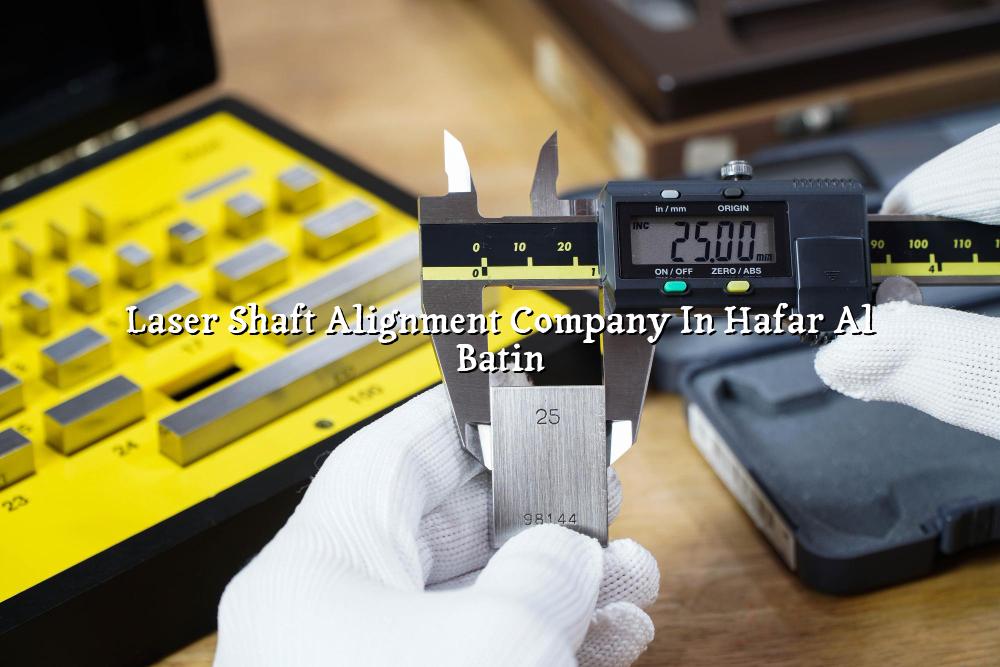
Laser shaft alignment company in Hafar Al Batin services help you stop repeating failures on pumps, motors and other rotating assets. If your team is dealing with hot bearings, coupling wear or stubborn vibration, this page shows how we approach the job and what you should expect from a proper alignment visit.
We work in the same industrial reality you do: desert heat, long operating hours, tight maintenance windows and equipment that has to come back into service cleanly. For teams in Saudi Arabia, and for operations linked to oil & gas, power, petrochemical and manufacturing sites, alignment has to be accurate, traceable and practical on the floor.
Laser shaft alignment company in Hafar Al Batin for real plant conditions
A good alignment job is not just about placing a laser head and reading a screen. We start by checking soft foot, pipe strain, baseplate condition, coupling wear and the machine's running history, because if any of those are off, the final alignment can look fine and still fail in service. That is why maintenance managers in Hafar Al Batin often ask for alignment after seal changes, bearing replacement, pump overhaul or repeated coupling issues.
What we look at before we touch the machine
We want the machine to be mechanically sound before the final correction. In practice, that means checking hold-down bolts, shims, motor feet, piping load, thermal growth assumptions and whether the machine has enough access for a clean sweep of the laser beam. On skid-mounted pumps and packaged equipment, the small stuff matters a lot.
Why laser methods beat eyeballing the coupling
Dial indicators still have a place, but laser systems give faster and more repeatable readings, especially when the crew needs a reliable record for the next shutdown. The method helps reduce human interpretation errors, and it is easier to show the result to operations, QA and reliability teams. Most plant teams want proof that the correction was measured, not guessed.
- Inspect the machine train — we check base stability, soft foot, coupling condition and obvious mechanical defects before any alignment correction.
- Record the as-found condition — laser readings show the starting offset and angular error, which helps explain why the machine was running poorly.
- Make controlled corrections — shimming, movement and re-checks are done in small steps so the target is reached without chasing numbers.
- Verify the final result — we confirm the corrected position, review bolt tightening and leave you with a result your maintenance team can trust.
- Better fit for pumps, motors, gearboxes and compressor trains
- Useful when vibration, seal failure or bearing heat keeps coming back
- Works well during planned shutdowns and urgent corrective maintenance
- Gives a documented as-found and as-left record for your maintenance file
What plant teams usually compare before and after shaft alignment
| Check point | Before correction | After proper alignment |
|---|---|---|
| Vibration trend | Often unstable, with a repeat pattern at coupling or bearing points | Usually calmer and easier to trend during routine rounds |
| Bearing load | Can rise because the shaft train is fighting itself | Typically more even, which helps service life |
| Seal condition | Seal leakage risk increases on pumps with offset or angle error | Correct alignment supports better seal performance |
| Maintenance record | May show repeated coupling changes or short-interval repairs | Often becomes easier to plan, with fewer avoidable stops |
How alignment supports uptime, safety and equipment life
When a rotating machine sits out of line, the load moves into places it was never meant to take. Bearings run harder, couplings wear faster, and pumps can start to show leakage or heat long before anyone expects it. That is why alignment sits right next to vibration analysis, infrared checks and shaft condition work in a decent maintenance programme.
What we usually see on site
In Hafar Al Batin and across Saudi industrial sites, the common pattern is simple: a machine is repaired, put back quickly and left with a hidden offset. A few weeks later the team hears the noise again. If the base, piping and bolt condition are not handled during the same visit, the issue keeps coming back.
Good alignment is never isolated work
It often sits beside cold cutting, flange work, hydrotesting, testing and commissioning, or a vibration follow-up. If the machine train has a deeper problem, we want to see it early, not after the coupling fails again.
What a shaft alignment visit usually includes
Most teams want a field crew that can work cleanly, explain the readings and leave the machine ready for operation. Our process is built around that. We bring the right laser tools, check the machine state, make the correction and confirm the result without turning the visit into a long guessing exercise.
When alignment should be on your list
If a pump has just had a seal change, if a motor was replaced, if a baseplate was disturbed or if a machine keeps showing coupling wear, alignment should be part of the response. The same applies after major foundation work, skid movement or any event that may have shifted the machine train. In our experience, skipping that step is one of the fastest ways to repeat a maintenance job.
Why documentation helps your team later
A written record of the as-found and as-left state makes the next shutdown easier. It helps the reliability engineer, the planner and the supervisor see what changed and where the machine sits now. That becomes even more useful in larger Saudi sites where several contractors may work on the same asset over time.
- Checks that support pump and motor reliability
- Suitable for single machines and linked machine trains
- Helpful after mechanical repair or foundation disturbance
- Gives maintenance teams a clear starting point for the next shutdown
Quick checks before you schedule laser shaft alignment
Before the crew arrives, the best jobs are the ones where the plant team has already gathered a few basics. Clear access to the machine, isolation permission, fresh gaskets if the equipment is being opened and enough time for correction all make a difference. If the site is busy, tell us what else is happening nearby, because nearby work can affect the readings or the final machine position.
For Hafar Al Batin facilities that run continuous service, it also helps to share the machine history. A last bearing change, a recent vibration spike or a recurring seal leak can point us to the real source of the issue. That context saves time and often prevents a poor reassembly from being mistaken for a simple alignment fault.
- Confirm machine tag number and train configuration
- Share last repair notes, vibration findings or failure history
- Make access safe around guards, couplings and foundation bolts
- Keep shims, tools and lifting support ready for controlled movement
How Mayon Industrial Services Can Help
We support rotating equipment work with laser shaft alignment, vibration analysis, infrared thermography and the mechanical repairs that often sit around the job. If your site in Hafar Al Batin needs a practical field team that understands pumps, motors, skid equipment and the maintenance pressures that come with industrial operations, we can step in and help you get the asset back on track.
Call +91 99447 80844 (India) or +966 59 633 8012 (Saudi Arabia), email services@mayonservices.com, or message us on WhatsApp.
Frequently Asked Questions
Plants with pumps, motors, compressors and gearbox trains usually need it the most. If you have repeat bearing issues, seal leaks or vibration after maintenance, alignment should be checked before the machine is left running for long.
A visual check can miss small offset and angular errors, and those errors are enough to create heat and vibration. Laser tools give measured values, so the correction is based on numbers, not guesswork.
Yes. That's one of the most common times to do it. After repair, replacement or base disturbance, alignment helps the machine come back into service with less mechanical stress.
Give us the machine tag, train layout, repair history and safe access to the equipment. If you already have vibration data or notes about seal leakage, share those too. That context helps the job start on the right footing.
We support clients across Saudi Arabia and the wider Middle East, along with India. For site work, we focus on where the machine is and what the plant needs, not on making the job bigger than it has to be.
Ready to put the machine back in line?
If the asset keeps shaking, heating or chewing through couplings, let's look at the alignment and the mechanical condition together.
Contact Mayon