
Mass Instruments Calibration Company in Hawiyah
Traceable mass calibration support for plants, warehouses, and project sites in Hawiyah and across the Eastern Province.
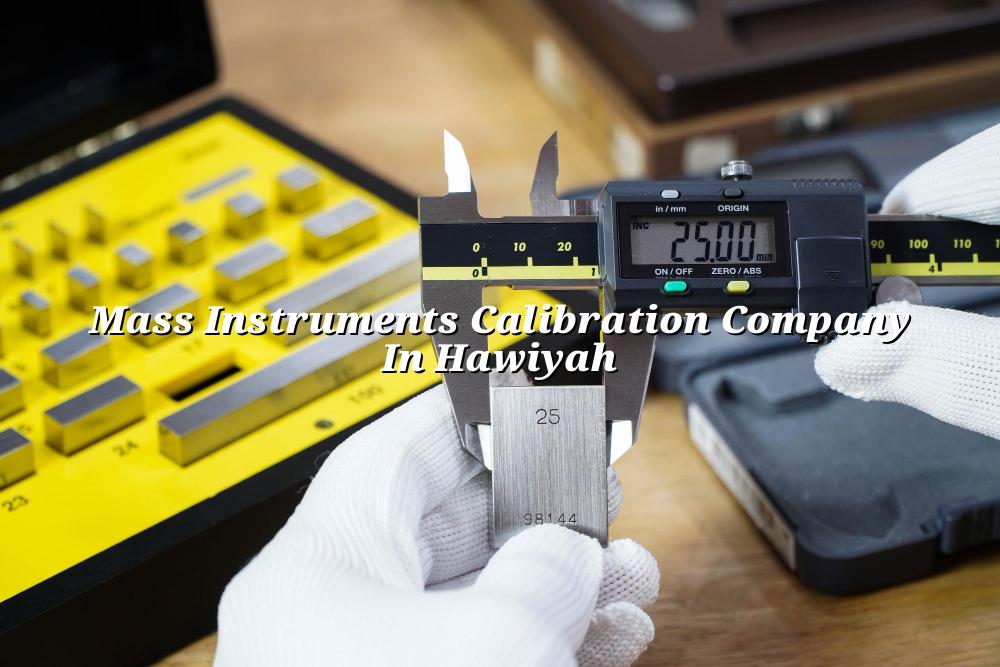
Mass instruments calibration company in Hawiyah support starts with getting the weights right and keeping them traceable. If your plant depends on weighing scales, test masses, load-bearing checks, or production batches that can't be left to guesswork, this page shows how we handle the job and what you should ask before you book anyone.
We work with industrial teams that need dependable mass calibration for receiving bays, workshops, warehouses, and maintenance stores. In Saudi Arabia, that often means field work around Hawiyah and the wider Eastern Province, plus lab-based verification when instruments need controlled conditions or special handling.
What a Mass Instruments Calibration Company in Hawiyah should cover
For most sites, mass calibration means more than a sticker on a scale. You need the right reference weights, the right method, and a record that your QA team can file without chasing missing details. We calibrate and verify mass instruments for industrial use, and our work fits the traceability expectations that common audit teams in Saudi Arabia and GCC projects tend to ask for, especially when weighing supports batch control, inventory checks, or shipping accuracy.
Where the work usually starts
We begin by checking the instrument type, capacity, readability, and where it's installed. A bench scale in a packing room doesn't need the same handling as a floor scale in a dusty yard or a platform scale used near loading activity. If the site is in Hawiyah or nearby industrial zones, we also look at access, dust, vibration, and whether onsite calibration makes more sense than removing the unit.
Why traceability matters in daily operations
Mass results are only useful when the reference chain is clear. That's why teams ask for ISO/IEC 17025:2017 aligned calibration, with records that show the instrument ID, the nominal capacity, the applied points, and the final status. In our experience, maintenance managers care about the same thing procurement does: if the reading is off, the whole batch, dispatch, or stock count gets messy fast.
- Confirm the instrument and use case — we identify the scale or mass set, the load range, the location, and how the team actually uses it.
- Check the site conditions — floor vibration, air movement, dirt, and handling space can all affect stable results, so we review them before starting.
- Apply suitable reference standards — the calibration uses appropriate test masses and a documented method, with readings taken at practical points across the range.
- Review results and issue records — we share the findings clearly so your team can decide on use, adjustment, or follow-up maintenance.
- Keep the scale level and free from floor contact with loose packing material.
- Tag each instrument with a unique ID before the visit; it saves time and avoids mix-ups.
- Tell us the maximum load you actually use, not just the nameplate rating.
- For dusty yards, plan calibration after a quick clean and inspection of the load platform.
Mass calibration planning for common Hawiyah site equipment
| Equipment type | Typical site concern | What we check |
|---|---|---|
| Bench scales | Packaging accuracy and repeatability | Load points, display stability, zero return |
| Platform scales | Uneven loading and floor movement | Corner response, level condition, capacity use |
| Test masses | Handling marks or missing identification | Condition, nominal value, traceable records |
| Floor scales | Dust, vibration, and heavy traffic nearby | Installation state, load behavior, practical access |
How we keep mass results usable for QA and operations
Good mass calibration is practical. Your operators need to trust the reading, and your quality team needs the paperwork to match what happened on the floor. We work to ISO/IEC 17025:2017 practices for calibration competence, and we keep the output straightforward so it fits maintenance logs, internal audits, and customer files without a lot of back-and-forth.
When onsite work makes sense
Onsite calibration is often the right choice when the instrument is fixed in place, too heavy to move, or part of a production flow that can't stop for long. For instruments that need a controlled environment or special handling, our in-house laboratory and pickup-and-delivery options are a better fit. That balance matters for plants in Hawiyah, where downtime can ripple through receiving, packing, and dispatch.
Built for industrial weighing, not just lab bench checks
We support oil & gas, petrochemical, power, construction, healthcare, pharmaceutical, cold chain, food & beverage, manufacturing, and engineering teams. The environment changes, but the need is the same: a result you can rely on when someone signs off stock, safety, or shipment data.
Questions that help you choose the right mass calibration partner
A lot of teams only ask if the provider can "calibrate scales." That's too loose. Ask what reference masses they use, how they handle onsite work, what conditions they check, and whether the certificate or report clearly identifies the instrument. If you're comparing options for a Hawiyah site, also ask whether they can support both local field work and lab-based jobs, because not every mass item should be treated the same way.
Details that make the service useful
We find that better questions lead to better outcomes. For example, if your scale is tied to product release, a certificate that lacks instrument ID or load points doesn't help much later. If the job is for a cold storage or warehouse environment, you also want a provider who understands temperature, floor loading, and the practical limits of working around live operations.
Who usually needs this in Hawiyah
Plant engineers, QA managers, warehouse supervisors, and procurement teams are the usual callers. In Saudi industrial work, especially around oil & gas and supporting services, mass traceability often ends up connected to more than one process at a time. A small error on a scale can mean a bigger problem in inventory, dispatch, or batch control.
- Ask for the instrument serial number on the report.
- Confirm whether onsite or lab work is the better fit.
- Check that the method covers usable load points, not just a single reading.
- Make sure the provider can support your QA and audit file with clear records.
How Mayon Industrial Services Can Help
We support mass instruments calibration with onsite visits, in-lab verification, and practical handling for instruments that need special conditions. If your Hawiyah operation also needs mechanical support, inspection, temperature mapping, or related calibration disciplines, our team can coordinate the job so your site doesn't have to juggle multiple vendors for one shutdown.
Call +91 99447 80844 (India) or +966 59 633 8012 (Saudi Arabia), email services@mayonservices.com, or message us on WhatsApp.
Frequently Asked Questions
Honestly, the best fit is the provider that can handle your actual site conditions, not just the instrument itself. For Hawiyah industrial work, that usually means traceable calibration, clear reporting, and the ability to work onsite when the scale can't be moved.
Yes, many instruments can be checked onsite if the space is safe and the scale can be tested properly. We often do this for fixed platform scales, warehouse units, and instruments tied to live operations. If the job needs tighter environmental control, we may suggest in-lab work instead.
You should get a clear record showing the instrument identity, the measured points, the result, and the pass or fail status. That makes it easier for QA, maintenance, and audit teams to follow the trail later. If the unit sits in a production area, keep the record with the equipment file.
Yes, we can support both, depending on the job and the condition of the equipment. That's useful when a site wants one vendor to handle the weighing system and the reference masses used to verify it. It keeps the records cleaner too.
We usually see demand from oil & gas, petrochemical, power, manufacturing, food, cold chain, and warehousing operations. Those sites depend on stable weighing for stock control, dispatch, batching, and maintenance work. The environment may change, but the need for traceable results stays the same.
Ready to get your mass instruments checked?
If you need dependable calibration support in Hawiyah, we can help you sort the instruments, the records, and the field work without adding noise to your schedule.
Contact Mayon