
Mass Instruments Calibration Company in Marjan
Traceable mass calibration support for Marjan sites, with onsite service and in-house laboratory capability when instruments need controlled handling.
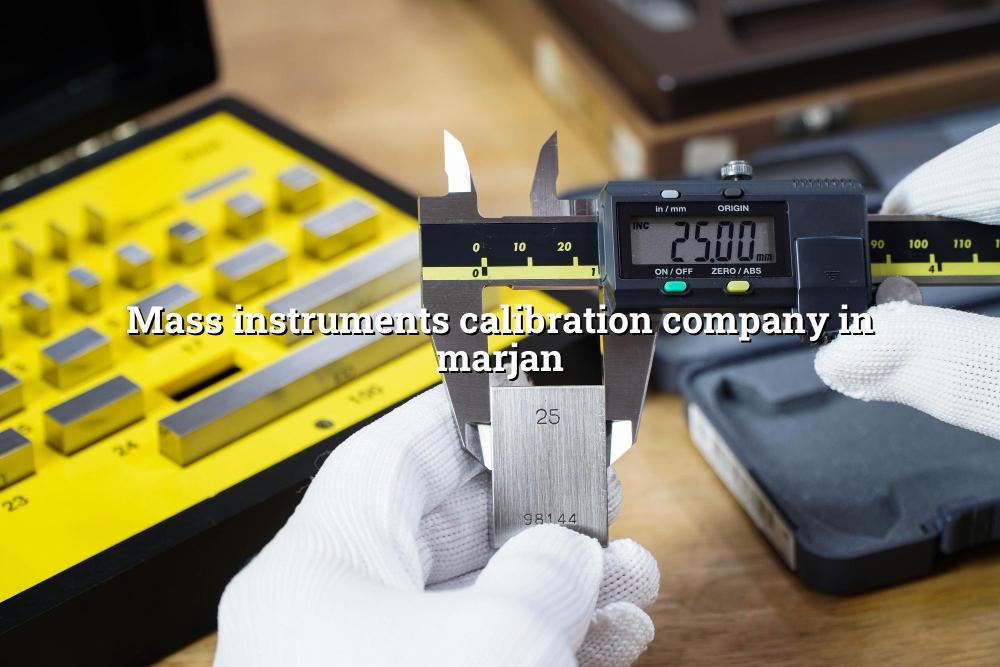
Mass instruments calibration company in Marjan searches usually come from a practical need: you need balances, weights or related mass instruments checked against traceable standards before they start affecting production, batching or QA records. We help you get that sorted with clear documentation, proper handling and a route that fits your site setup.
Our team works with industrial users in Saudi Arabia and the wider Middle East, especially sites tied to oil & gas, petrochemical, power, manufacturing and cold-chain operations. If your instruments stay on site, can be brought to our temperature-controlled lab, or need controlled pickup and delivery, we plan the work around that reality.
What a mass instruments calibration company in Marjan should handle
For most plant teams, mass calibration is about more than a certificate. You want traceability, consistent repeatability and a technician who knows the difference between a bench balance in a QA room and a rugged scale living near a production floor. That matters in Marjan, where shutdown windows are tight and the equipment mix can include weighing balances, test weights, platform scales and process-linked mass instruments.
Where the work usually starts
We normally begin by checking the instrument type, range, readability and the way it is used on site. A balance in a laboratory area needs a different handling approach from a floor scale used for material movement or dispatch. If the device is sensitive, we can arrange controlled pickup and delivery so it reaches the lab in better condition than if it were moved casually by site staff.
Why traceability matters in Saudi industrial sites
Saudi operators, especially in oil & gas and petrochemical environments around Marjan, usually expect clear traceability and clean paperwork. Our ISO/IEC 17025:2017 compliant calibration process is built for that expectation. When an audit asks how the reading was verified, you want a record that makes sense, not a vague note and a stamp.
- Identify the instrument family — we confirm whether you're dealing with balances, weights, scales or another mass-related device.
- Check the use condition — we review the site, mounting, cleaning state and any obvious damage before testing begins.
- Apply traceable comparison points — the calibration is carried out against suitable reference standards under controlled conditions.
- Record the result clearly — you receive the findings with pass/fail information and the data needed for QA files or audit review.
- Best for plants that need onsite support during running operations
- Useful when instruments must be kept in a controlled environment before testing
- Fits ISO/IEC 17025:2017 traceability expectations
- Helps QA teams keep weighing records aligned with internal procedures
- Works for Marjan and nearby Saudi industrial locations without unnecessary downtime
Typical mass instruments and how they’re handled
| Instrument type | Common site use | Typical handling need |
|---|---|---|
| Analytical balance | Laboratory QA and formulation work | Careful transport, clean bench area and stable conditions |
| Platform scale | Production, dispatch and receiving | Onsite verification and load-point checking |
| Test weights | Internal checks and routine confirmation | Controlled comparison and condition review |
| Bench balance | R&D, inspection and process support | Lab or onsite calibration depending on sensitivity |
How we keep the calibration process practical
In our experience, the best calibration jobs are the ones that fit the site instead of forcing the site to fit the job. That can mean onsite work for heavier equipment, in-lab handling for sensitive instruments, or a split approach where pickup and delivery protect the item from rough movement. We also keep the communication plain, because most QA and maintenance teams don’t need drama — they need the facts.
What your team usually gets
You can expect a process that respects ISO/IEC 17025:2017 traceability, clean documentation and a technician who understands industrial environments. If the instrument is part of a larger weighing system, we look at the setup, not just the number on the display. That helps avoid false confidence from a good-looking reading on a bad installation.
Built for real plant conditions
Marjan sites often mix field equipment, workshop tools and lab instruments in one maintenance program. Our calibration approach is shaped for that mix, with support from an in-house temperature-controlled laboratory and a mobile calibration lab when onsite service is the better call.
Where mass calibration helps most
Production and batching
When weighing affects raw material movement or batching consistency, even a small drift can create disputes between operations and QA. Regular calibration helps keep those numbers believable.
Laboratory rooms
Balances in labs need clean handling and a stable setup. We work with that environment carefully, because a rough move can cause more trouble than the original drift.
Inspection and audit cycles
Before audits, many teams want mass instruments checked so the records are ready. That’s a common ask in Saudi industrial sites with strict internal review cycles.
How Mayon Industrial Services Can Help
If you need a mass instruments calibration company in Marjan, we can support you with onsite calibration, lab-based work, controlled pickup and delivery, and the documentation your QA team expects. We also handle related industrial services like inspection, condition monitoring, mechanical work and lab setup, so you’re not dealing with five different vendors for one maintenance plan.
Call +91 99447 80844 (India) or +966 59 633 8012 (Saudi Arabia), email services@mayonservices.com, or message us on WhatsApp.
Frequently Asked Questions
Honestly, the best fit is the team that can handle your actual instrument mix, not just one type of balance. In Marjan, that usually means a provider with onsite capability, lab support and traceable documentation under ISO/IEC 17025:2017. We work that way because industrial sites need the job done without creating extra handling risk.
Yes, many can. Onsite work is often the better choice for heavier scales, fixed installations and equipment that shouldn’t be moved twice. If the instrument is sensitive or needs controlled conditions, we can also bring it into our lab route instead.
You get the calibration results and the supporting record your team needs for QA and audit files. The exact format depends on the instrument and application, but the aim is always the same: clear, traceable information that your people can use without guessing.
We do when the instrument needs special handling or a controlled environment. That’s often useful for balances and lab items that shouldn’t be tossed in a vehicle with general workshop tools. It also reduces the chance of damage before the calibration even starts.
Oil & gas, petrochemical, power, manufacturing and cold-chain users all rely on accurate mass readings. We also see regular need in QA labs and maintenance stores where weighing affects stock control, process control or release decisions.
Yes, we serve clients across Saudi Arabia and the wider Middle East, in addition to India. Our setup is built for industrial users who need dependable calibration support across those regions, not just one location.
Ready to get your mass instruments checked properly?
If your Marjan site needs traceable mass calibration, we’re ready to help with onsite or lab-based support that fits your equipment and your schedule.
Contact Mayon