
NDT Services Company in Abqaiq
Onsite non-destructive testing support for Abqaiq plants, shutdowns and maintenance jobs across Saudi Arabia.
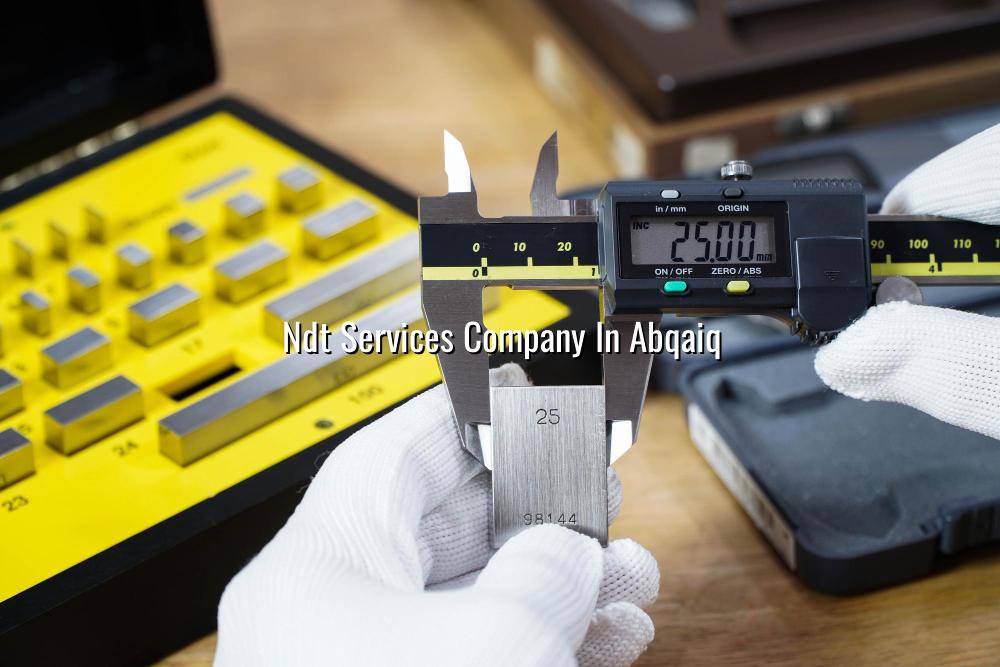
NDT services company in Abqaiq is the phrase plant teams use when they need inspection work that fits a shutdown window, a maintenance backlog, or a live asset check without opening the equipment unless they have to. We help you find flaws, measure condition and support repair decisions with usable evidence, not guesswork.
In Abqaiq and the wider Eastern Province, that usually means work around oil and gas assets, pressure equipment, storage tanks, piping, structural members and rotating equipment. Our team supports Saudi sites with onsite testing, reporting and coordination that lines up with the way plants actually run.
NDT services company in Abqaiq for plant inspections and shutdown support
Most enquiries start with a practical issue. A weld needs verification, a vessel has a suspect area, or maintenance wants to confirm the condition of a line before the team signs off a job. For that kind of work, you need a provider who can bring the right method, document the results clearly and work safely around operating assets. That is where our NDT team fits in.
Methods that suit real site conditions
We support visual testing, dye penetrant testing, magnetic particle testing, ultrasonic testing and radiography-based inspection arrangements where the job calls for them. The method depends on the material, the defect you are looking for and the access you have. A weld on carbon steel pipe is not treated the same way as a crack check on a machined component, and a good inspection plan respects that difference.
Why local coordination matters in Abqaiq
Abqaiq work often comes with tight access rules, permit controls and safety coordination across operations, maintenance and QA. Our team is used to that pace. We plan around the site rather than asking the site to bend around us, which helps reduce idle time for crews and avoids the messy handovers that can happen when inspection is treated like an afterthought.
- Review the asset and defect concern — we start with the component type, service history and the reason for inspection.
- Choose the test method — the team selects a method that suits the material, access and likely flaw type.
- Prepare the work pack — we align the scope, safety needs and site documents before mobilization.
- Carry out inspection and record findings — results are documented so your maintenance or QA team can act on them.
- Useful for welds, tanks, pressure parts and structural checks
- Supports shutdowns, turnaround work and routine integrity checks
- Helps maintenance teams decide repair, retest or return-to-service
- Works well when you need onsite testing with clear traceable records
Inspection method guide for Abqaiq jobs
| Method | Best used for | Typical site situation |
|---|---|---|
| Visual Testing | Surface condition, fit-up, obvious defects | First check before deeper testing on welds or structures |
| Liquid Penetrant Testing | Surface-breaking flaws on non-porous materials | Crack checks on accessible welds and machined areas |
| Magnetic Particle Testing | Surface and near-surface flaws on ferromagnetic parts | Welds, lifting components and steel fabrications |
| Ultrasonic Testing | Internal flaws, thickness and bond-related checks | Pipe, plate and pressure equipment where access is limited |
What good NDT reporting should give you
Good inspection work does more than mark a component as accepted or rejected. It should tell you what was examined, what method was used, what the indication means and where the limits of the method sit. That level of clarity helps QA, maintenance and procurement teams make better decisions, especially on assets that feed production or safety-critical systems.
Traceability that stands up during review
Where the job connects to calibration or measurement control, our ISO/IEC 17025:2017 discipline matters. It keeps the measurement side of the job disciplined, which is useful when you need evidence that can be reviewed by client teams, internal auditors or third-party inspectors. We also work with the practical realities of Saudi site documentation, which usually means fewer surprises later.
What we see on live sites
On Abqaiq-type work, the pressure is usually time and access. A good test plan keeps both in view. It avoids duplicate testing, avoids vague findings and gives your team enough detail to decide whether to repair, recheck or keep the asset in service.
Supporting NDT with repair, welding and mechanical work
Inspection often leads to action. A crack indication may need repair welding. A failed joint may need flange work, hydrotesting or bolt tensioning. A structure that fails a visual check may need cold cutting or controlled replacement. Because we handle mechanical services as well, you do not have to re-explain the site problem to a second contractor straight away.
That helps on turnaround work in the Eastern Province and other GCC industrial areas where coordination costs real time. It also helps when the job is split between inspection, repair and re-acceptance. One team sees the whole chain, so the handover is cleaner.
When the scope changes mid-job
That happens more often than people expect. An ultrasonic scan might reveal a deeper defect, or a visual inspection may point to a root issue that needs alignment or fabrication support. If that happens, our team can stay with the job and keep the documentation moving instead of leaving your crew to chase separate vendors.
- Combine inspection with repair planning when the defect needs action
- Keep one contact path for mechanical, welding and inspection coordination
- Reduce repeat mobilization on shutdown jobs
- Use onsite support for plants, workshops and fabrication yards
How Mayon Industrial Services Can Help
We support NDT projects alongside calibration, mechanical services, inspection, orbital welding and lab setup, so your team gets a practical route from finding a defect to closing the job. If you need onsite work in Abqaiq or another Saudi industrial location, we can discuss the scope, the method and the site conditions before mobilization.
Call +91 99447 80844 (India) or +966 59 633 8012 (Saudi Arabia), email services@mayonservices.com, or message us on WhatsApp.
Frequently Asked Questions
We usually inspect welds, piping, pressure equipment, tanks, structural items and selected rotating components. The exact method depends on the material, access and the defect concern. A site engineer will usually share drawings, the service condition and the reason for the check before we plan the work.
There isn't one single answer. Visual testing is often the first step, then penetrant, magnetic particle or ultrasonic testing may follow depending on the weld type and material. For critical work, we choose the method based on the defect you're trying to find, not based on habit.
Yes. Our team supports onsite inspection work where site access, permits and job conditions allow it. That matters on shutdowns and maintenance campaigns because moving the work to the asset often saves time and avoids unnecessary dismantling.
Yes, and that's a common sequence. NDT helps confirm the defect and define the repair area before welding starts. After repair, it can also be used again as part of the acceptance and return-to-service checks.
Oil and gas, petrochemical, power, construction and manufacturing are the big ones, with cold-chain and healthcare also calling for inspection on selected assets. In Saudi Arabia, the demand usually spikes around maintenance windows, outage work and asset integrity reviews.
Need NDT support you can trust on site?
Send us the scope and we'll help you shape the inspection plan, the method and the next step.
Contact Mayon