
Onsite Pipeline Hydrotesting Service Company in Yanbu
Onsite pressure testing for pipelines, manifolds and related systems in Yanbu, backed by field-ready equipment and traceable methods.
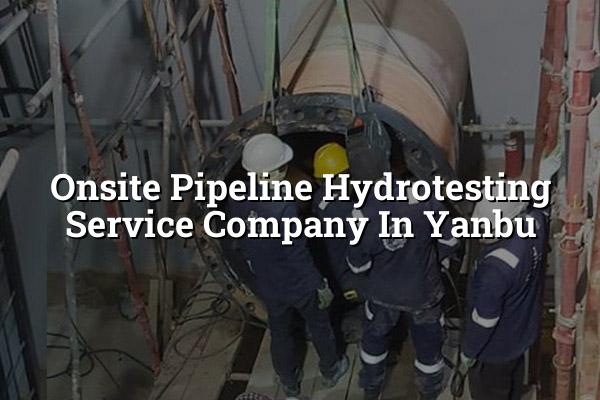
Onsite pipeline hydrotesting service company in Yanbu support matters when you need proof that a line, spool, manifold or repaired section will hold pressure before handover. We set up the test where the asset is, so you avoid unnecessary dismantling and still get a disciplined pressure test with clear records for your QA file.
In Yanbu, that usually means work around terminals, tank farms, industrial plants and marine-linked facilities where shutdown windows are tight and every connection has to be checked twice. Our team brings the field gear, the procedures and the people who know how to work around live plant rules, access limits and the practical pressure-testing issues that show up on real jobs in Saudi Arabia.
Why onsite pipeline hydrotesting matters in Yanbu
Hydrotesting is not just a box to tick. On a Yanbu job, it is often the last hard check before commissioning, reinstatement or a handover to operations. A good test confirms the line can sustain the intended pressure, helps expose weak joints, gasket issues and weld defects, and gives your team a record that can be tied back to the test pack, gauges and the actual site conditions. We work with pipelines, associated piping and fabricated skids where a water-based pressure test is the right method for the system and the plant rules allow it.
What we look at before pressure goes in
Before we fill a line, we review the scope with your site team. That includes the pipe size, material, test pressure, isolation points, test medium, venting and draining plan, and any nearby equipment that needs protection. In our experience, the jobs that go smoothly are the ones where the preparation is detailed and the line list matches what is actually installed on site. A small mismatch in blinds, temporary spools or valve positions can waste a shift fast.
How the onsite setup works
We mobilise the pump, manifolds, gauges, hoses and supporting accessories to the location and build the test arrangement around the asset. The setup is then checked for leaks at low pressure, vented properly, and taken up in controlled stages. On industrial sites in Yanbu, that approach helps reduce rework and keeps the test visible to the people who signed off the permit, the mechanical team and the QA representative. If the system needs special handling, we can plan the sequence around it instead of forcing a one-size-fits-all method.
- Confirm the test pack — we review the line scope, drawing references, test limits and isolation points with your team before anything is connected.
- Prepare the system — the line is cleaned, drained, blinded or isolated as required, and any temporary fittings are checked for fit and condition.
- Fill and vent — water is introduced in a controlled way, trapped air is removed, and the system is brought up to the test condition step by step.
- Hold, inspect and record — we monitor for visible leakage, pressure stability and gauge behaviour, then issue the job records needed for handover.
- Works onsite in Yanbu, so large pipework and skids do not need unnecessary removal.
- Suits pre-commissioning, maintenance shutdowns and post-repair verification.
- Uses pressure gauges and support equipment that can be tied into traceable calibration records.
- Helps mechanical, QA and commissioning teams close out the punch list with real evidence.
Hydrotesting checkpoints we usually review
| Checkpoint | What we verify | Why it matters on site |
|---|---|---|
| Line scope | Pipe route, tie-ins, blinds and excluded equipment | Prevents testing the wrong section or damaging sensitive items |
| Test medium | Water quality, filling method and drainage plan | Reduces contamination, staining and cleanup issues after the hold |
| Pressure instruments | Gauge range, condition and calibration traceability | Gives your team confidence that the reading reflects the actual test |
| Hold period | Stability, visible leakage and connection behaviour | Shows whether the line can maintain pressure without drift or seepage |
Controls that make a hydrotest defensible
A pressure test is only as strong as the records behind it. That is why we pay close attention to the instruments used, the test sequence, the isolated boundaries and the final sign-off trail. For industrial clients in Yanbu, especially in oil and gas or petrochemical environments, the value is not just in seeing pressure hold; it is in being able to show that the test was carried out in a controlled way with equipment and procedures that stand up during review.
Traceable gauges and practical field discipline
We use a field approach that respects both engineering and site safety. That means suitable gauges, steady pressurisation, clear communication with the permit holder, and no shortcuts around venting or leak checks. If a system needs a repair before it can pass, we say so plainly. Most maintenance managers prefer that honesty to a neat report that hides a problem for the next shutdown.
Built for industrial handover work
Yanbu projects often sit inside a bigger execution chain: fabrication, installation, testing, reinstatement and commissioning. We fit into that chain without forcing your team to rework the whole schedule. The goal is simple — get the system tested cleanly, documented properly and ready for the next step.
Frequently Asked Questions
We do, for industrial clients who need onsite pressure testing without moving the pipework off location. That includes pre-commissioning, repair verification and shutdown work where the line can be isolated safely and tested with water. The key is planning the test around the actual system, not around a generic checklist.
We check the test boundaries, the fill and vent arrangement, the pressure instruments, the stability during the hold and any visible leakage around joints, flanges and temporary connections. On real industrial jobs, the practical details matter just as much as the test pressure itself. If the line is not prepared properly, the test can give you noise instead of useful evidence.
Yes, and that is one of the most common reasons clients call us. After a repair, a test helps confirm that the weld, flange or replaced section is holding as intended before the system goes back into service. We often see this on maintenance shutdown jobs where the schedule is tight and the repaired item has to be cleared quickly but properly.
Yes. Yanbu has the kind of industrial environment where piping integrity has to be treated seriously, especially in oil and gas and petrochemical service. We work with those expectations in mind, using an onsite setup that fits the plant rules, the access conditions and the handover documentation your team needs.
Onsite testing saves handling effort and keeps the system in its actual installed condition. That matters for large lines, awkward routing, and assets that are difficult to move safely. It also keeps more of the decision-making in the hands of the site team, which usually leads to cleaner coordination during shutdowns.
How Mayon Industrial Services Can Help
We support onsite hydrotesting with the same practical mindset we use across calibration, mechanical services, inspection and commissioning work. If your Yanbu project needs pressure testing, supporting gauges, temporary setup, or a team that can work with field realities instead of paper-only assumptions, we can help you plan it properly. If the job also needs related support such as flange work, bolt torquing, repair checks or instrument calibration, we can keep that under one coordinated scope.
Call +91 99447 80844 (India) or +966 59 633 8012 (Saudi Arabia), email services@mayonservices.com, or message us on WhatsApp.
Ready to test your pipeline with confidence?
Send us the scope, and we'll help you line up the onsite hydrotest around your Yanbu project needs.
Contact Mayon