
Orbital Welding Service Company in Hawiyah
Onsite TIG orbital welding for pipe and tube work, with quality control that fits refinery, utility and process sites in Saudi Arabia.
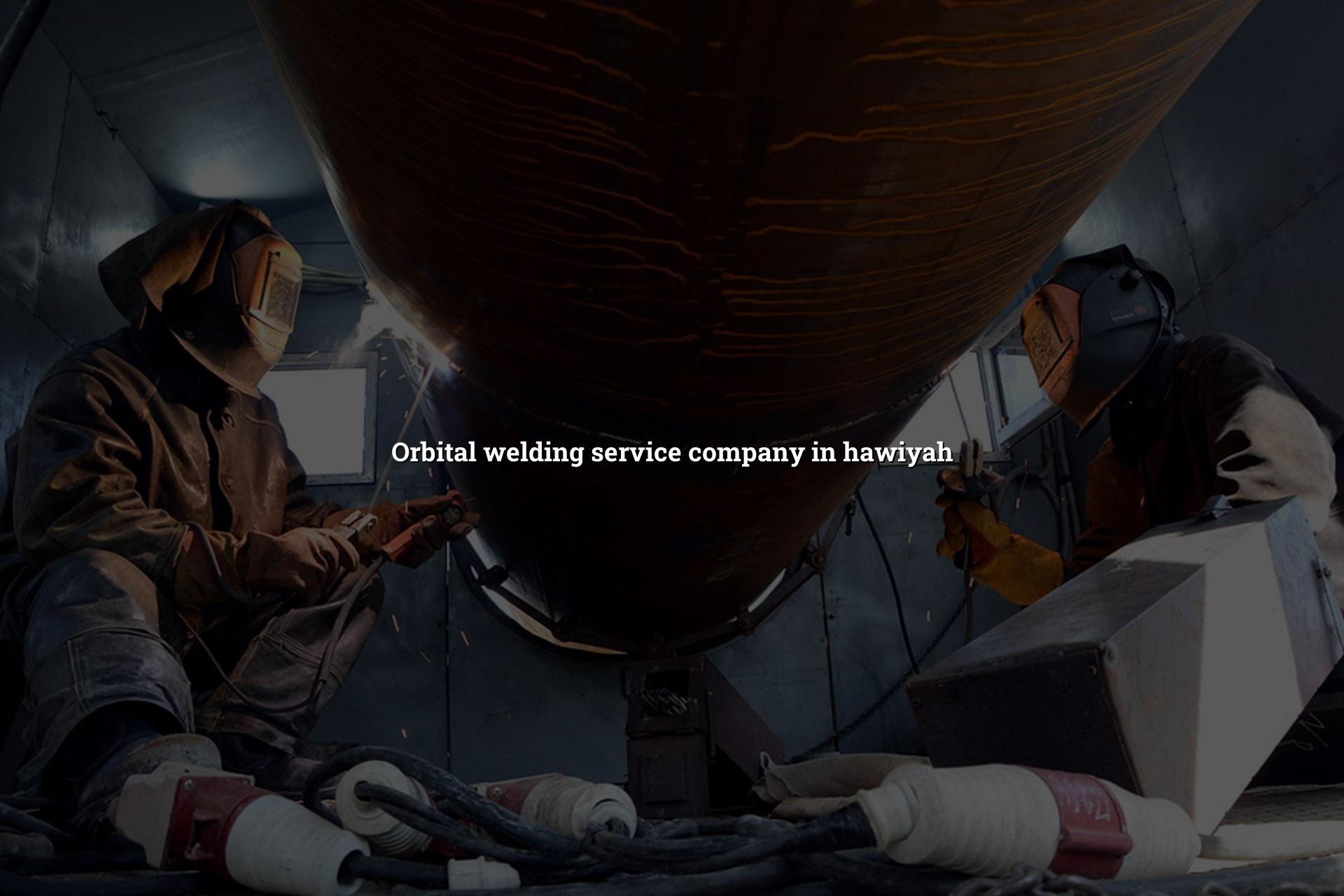
Orbital welding service company in Hawiyah is exactly what project teams search for when they need repeatable weld quality on pipe and tube runs without wasting time on rework. If you're handling stainless steel, high-purity lines, or any job where weld profile matters, we help you get a controlled result that suits site inspection and handover.
We work with industrial clients across Saudi Arabia from Dammam Industrial City 2, and Hawiyah teams often need the same thing: clean welds, traceable procedures, and a crew that understands shutdown windows, plant access, and the pressure of getting lines back into service. Our orbital TIG work fits that kind of job, especially where consistency and documentation matter more than speed for its own sake.
Why Orbital Welding Service Company in Hawiyah Searches Matter
Most people who type Orbital welding service company in Hawiyah are not just shopping for a welding crew. They need a dependable process for piping, tubing, and critical joints where manual variation can become a problem during inspection. That shows up in oil and gas packages, utility systems, process skids, and any line where weld uniformity affects cleanliness, pressure integrity, or restart risk.
Where orbital welding makes the most sense
We see the strongest demand on stainless steel pipe and tube work, especially where the client wants repeatable weld beads and minimal distortion. In Hawiyah and nearby industrial zones, that usually means process lines, instrumentation tubing, utility connections, and prefabricated assemblies that need predictable results before they go into service.
What our team checks before the torch starts
We don't start by welding. We check fit-up, edge preparation, cleanliness, purge arrangements, material grade, and whether the joint design really suits automated TIG. If the setup is wrong, the weld will tell you later. That's why site teams call us early, not after the first failed visual check.
- Review the line and joint details — we look at diameter, wall thickness, material, and access around the joint.
- Confirm preparation and cleanliness — tube ends, bevels, clamping, and purge setup must be right before welding begins.
- Set the orbital program — the welding head parameters are matched to the joint, filler approach, and pipe specification.
- Run the weld and inspect the bead — we check repeatability, profile, and any visible defect before release.
- Support handover documentation — when required, we keep the work aligned with the client's QA and inspection needs.
- Suitable for pipe and tube work that needs uniform weld appearance
- Helpful where rework would disrupt shutdown planning or commissioning
- Works well for stainless steel, high-purity, and process piping applications
- Fits site teams that want tighter control over repeatability and cleanliness
- Can be paired with inspection, testing, and commissioning support from the same team
Orbital Welding Checks Before You Approve the Work
| Project check | What we review | Why it matters |
|---|---|---|
| Material and diameter | Pipe or tube grade, size, and wall thickness | These determine head selection, heat input, and program setup |
| Joint preparation | Cut quality, bevel, gap, and surface cleanliness | Poor prep creates defects that show up during inspection |
| Purge control | Gas coverage and joint sealing during the weld | Needed for internal weld quality on critical lines |
| Access and clamping | Space for equipment, rotation, and stable fixturing | Stable positioning helps the weld stay consistent around the full circumference |
| QA handover needs | Inspection, traceability, and client document format | Prepares the job for site acceptance without avoidable delays |
How Orbital Welding Supports Safer Handover
When orbital welding is set up properly, the biggest advantage is control. The process gives you a more consistent bead around the joint, which helps on lines that will be inspected, pressure tested, or put through a tight commissioning sequence. That matters on Saudi industrial sites where shutdown time, cleanliness, and traceability are all under pressure.
Where the method helps most
We usually recommend it for repetitive joints, sanitary or clean-service piping, and work where manual weld variation could slow approval. It also helps on prefabricated spools and tube assemblies where the client wants a cleaner production pattern before installation. For many Hawiyah jobs, that means fewer surprises once the pipe reaches the field.
Built for process sites
Our team supports welding work where the client needs discipline, not guesswork. We can coordinate with mechanical scopes, inspection, and testing so the job moves as one package instead of three disconnected calls.
What Clients Usually Ask Us On Hawiyah Jobs
Clients often ask if orbital welding is only for clean-room work. It's not. We use it across industrial piping contexts when the joint geometry, material, and QA expectation justify the setup. In practice, the job may be on a utility line, a process skid, or a tube assembly that needs controlled repeatability rather than a hand-welded finish.
Another common question is whether the work can be paired with other scopes. Yes. Our team can coordinate orbital welding with mechanical services, flange work, testing and commissioning, and inspection support, which helps if your project needs one point of contact instead of several vendors.
We also get asked about documentation. For many clients, the answer depends on the package and the plant's own QA requirements. We work in a way that suits project records, site acceptance, and inspection follow-up, which is exactly what industrial buyers in Saudi Arabia expect when a welding vendor says they can support critical work.
That is why the first discussion is usually about the line itself. If the piping is clean, accessible, and properly prepared, the orbital process can save a lot of back-and-forth at inspection time.
How Mayon Industrial Services Can Help
Mayon Industrial Services supports orbital welding alongside calibration, mechanical works, inspection, and testing for clients across Saudi Arabia. If your Hawiyah project needs pipe or tube welding that fits inspection and commissioning work, we can help plan the job around the actual site conditions instead of forcing a generic setup. We also work from a wider industrial toolbox, so the welding scope can sit beside lab setup, repair, or commissioning support when your project needs it.
Call +91 99447 80844 (India) or +966 59 633 8012 (Saudi Arabia), email services@mayonservices.com, or message us on WhatsApp.
Frequently Asked Questions
We do, through Mayon Industrial Services, with support from our Saudi base in Dammam Industrial City 2. Our work is suited to industrial pipe and tube jobs where repeatability, cleanliness, and inspection readiness matter. We usually start by checking the joint details and the site conditions so the method fits the job instead of forcing the job to fit the machine.
For many stainless steel tubing jobs, yes, because the process gives you a more consistent weld around the joint. That helps when the client wants less variation in bead profile and fewer issues during inspection. Manual welding still has its place, but orbital welding is often the better fit for repetitive or critical tubing work.
Yes, if the access, joint preparation, and fixturing are suitable. Site work in Saudi Arabia often comes down to planning, cleanliness, and getting the equipment positioned properly around the line. We work with clients who need that kind of controlled onsite support during maintenance, fabrication, or commissioning.
Have the pipe or tube size, material, joint quantity, and site access details ready. If you already know the inspection or testing requirements, share those too. That helps us decide whether the job needs orbital TIG only or a wider package with mechanical support and QA coordination.
Yes, we can support inspection and testing alongside the welding scope, depending on the project needs. That can be useful when the client wants one team to help with handover instead of managing separate vendors. It also keeps communication cleaner during shutdown or commissioning work.
Ready to plan orbital welding for your Hawiyah job?
If you need controlled weld quality, practical site coordination, and a team that understands Saudi industrial work, talk to us and we'll help you map the next step.
Contact Mayon