
Orbital Welding Service Company in Spark
Automated TIG pipe and tube welding for cleaner joints, tighter control, and repeatable results across industrial sites.
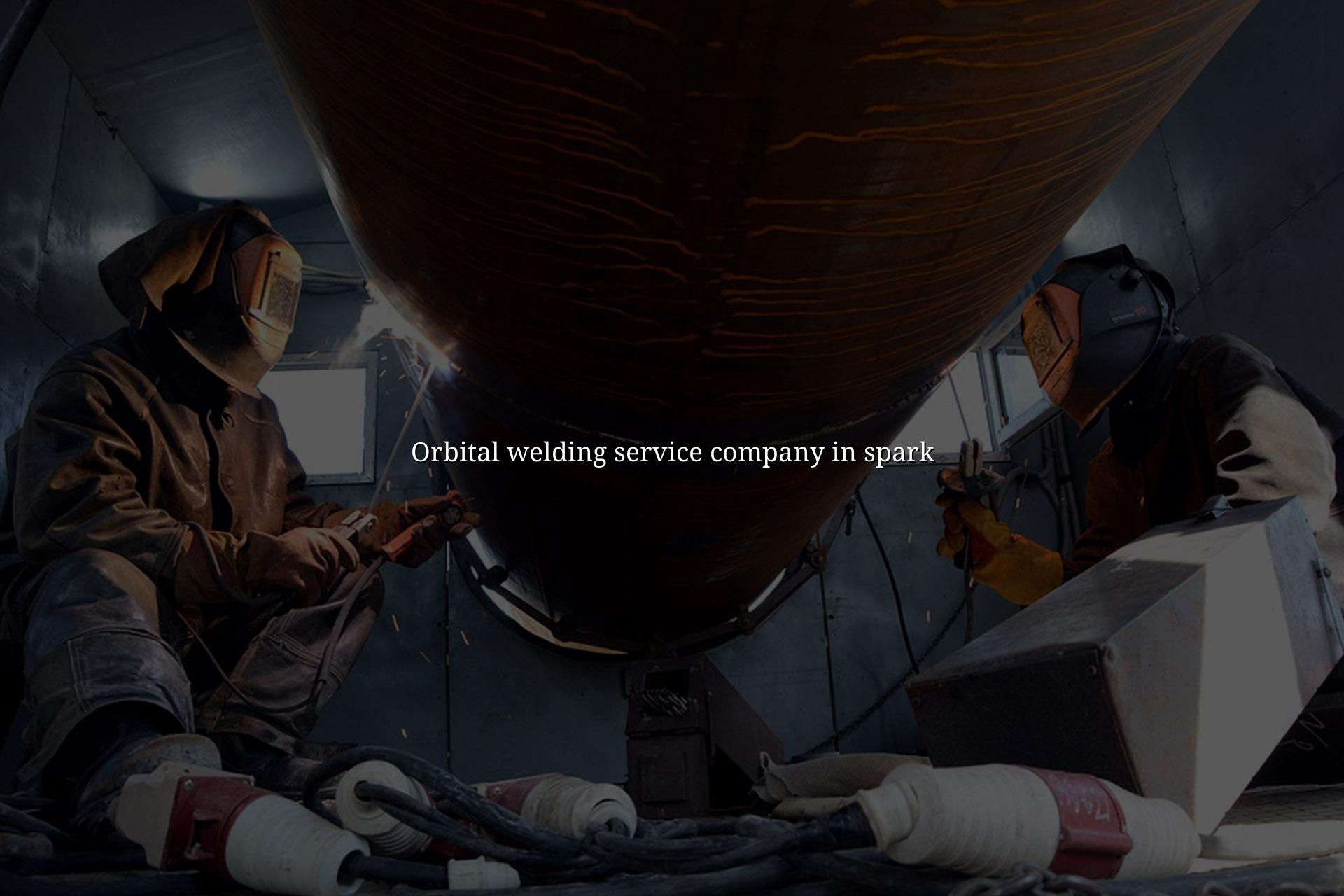
Orbital welding service company in Spark searches usually come from people who need cleaner pipe and tube welds with less variation from joint to joint. If that sounds like your job, we help you plan the welding method, match the pipe or tube size, and get repeatable results that fit industrial quality expectations.
We work with process lines, utility piping, clean utilities, and high-integrity tube work for clients in India, Saudi Arabia, and the Middle East. In our experience, the hardest part is rarely the weld arc itself; it’s getting the preparation, fit-up, shielding, and documentation right before the first pass starts.
Orbital welding service company in Spark for controlled pipe and tube work
Orbital welding is automated TIG welding for pipe and tube joints where uniformity matters. Instead of relying on hand motion alone, the torch travels around the joint in a programmed path, which helps reduce inconsistency on stainless steel lines, sanitary tube runs, instrumentation tubing, and other applications where the weld profile must stay tight and clean. For buyers in Spark and surrounding industrial areas, that consistency can save a lot of rework on site.
Where orbital welding makes sense
We see this method used most often on process piping, cleanroom utilities, pharmaceutical lines, food and beverage skids, and high-purity tube assemblies. It also fits jobs where access is awkward or where the weld quality has to stay the same across many joints. If your team has ever lost time blending out poor cap appearance or repairing uneven root formation, orbital welding is usually worth a serious look.
What our team checks before welding starts
Good orbital welding begins long before the machine runs. The tube end must be square, clean, and free from burrs. The wall thickness, material grade, purge gas setup, and joint gap all matter. We also review whether the work needs shop preparation, site installation support, or a mix of both. That upfront check keeps the weld schedule realistic and helps avoid surprise shutdowns once the line is opened.
- Review the application — we confirm the pipe or tube material, size, and service conditions before we pick the method.
- Prepare the joint properly — ends are cleaned, aligned, and checked so the torch path stays stable.
- Set the weld procedure — current, travel speed, gas shielding, and head selection are matched to the job.
- Run the weld and inspect it — the weld is monitored for uniformity, then checked for fit and finish before release.
- Better repeatability than manual TIG on long runs with many similar joints.
- Useful for stainless steel pipe and tube where surface finish matters.
- Helps reduce variation caused by operator fatigue on repetitive work.
- Fits clean utility, pharma, food, and process applications in industrial facilities.
- Supports quality records when traceability and weld control are part of the handover.
Choosing orbital welding versus manual TIG for your project
| Aspect | Orbital Welding | Manual TIG Welding |
|---|---|---|
| Repeatability | Programmed travel helps keep each joint similar | Depends more on the welder's hand control and consistency |
| Best fit | Pipe and tube runs with many similar joints | Custom work, repairs, and awkward field modifications |
| Surface finish | Usually cleaner and more uniform when setup is correct | Can be excellent, but varies more from operator to operator |
| Site planning | Needs accurate prep, shielding, and fit-up before welding starts | More flexible on the fly, but less controlled on repetitive work |
Why quality teams ask for orbital welding
QA and maintenance teams usually ask for orbital welding when they need less scatter in the final result. That matters on stainless steel pipework, batch process lines, and installations where weld appearance, cleanliness, and traceability are part of the acceptance check. It also helps when the client wants a more disciplined handover with fewer field corrections.
Good setup beats guesswork
We keep the focus on preparation, not drama. If the pipe is out of alignment or the purge is weak, the weld won’t magically fix itself. A careful setup, the right weld head, and the right operator oversight make a real difference, especially on industrial projects in India and Saudi Arabia where site conditions can change fast.
Built for repeatable industrial handover
Our team supports orbital welding alongside calibration, inspection, mechanical work, and commissioning tasks, so the welding activity fits the rest of the shutdown or project plan. That helps when one team is handling pipe prep, another is checking line readiness, and the client expects a cleaner closeout.
What affects an orbital welding job on site
Pipe material is the first thing we look at. Stainless steel is common, but wall thickness, diameter, and cleanliness level all change how the setup behaves. The next factor is access. If the weld head can’t move freely around the joint, or if nearby equipment blocks the path, the job needs a different plan. That is where site survey work saves time.
We also look at the job context. A new skid in a controlled workshop is a very different job from retrofit work inside an operating plant, especially in oil and gas, petrochemical, power, or cold-chain facilities. Good coordination matters because shutdown windows are short, and people do not want avoidable rework after piping has already been installed.
How Mayon Industrial Services Can Help
We provide orbital welding support as part of a wider industrial service set that includes calibration, mechanical work, inspection, lab setup, and testing. If your project in Spark needs cleaner pipe or tube welds with proper site planning, we can help you line up the welding scope with the rest of the job so the handover feels controlled.
Call +91 99447 80844 (India) or +966 59 633 8012 (Saudi Arabia), email services@mayonservices.com, or message us on WhatsApp.
Frequently Asked Questions
We handle automated TIG welding for pipe and tube joints where consistency matters. That includes setup advice, joint preparation checks, weld execution, and support for industrial handover. For many clients, the main reason to use orbital welding is to keep the weld profile and finish more uniform across repeated joints.
Yes, it’s a common choice for stainless steel pipe and tube when cleanliness and repeatability matter. We still need to check the diameter, wall thickness, and joint access before we confirm the setup. If the prep is poor, the process won’t perform the way it should.
Yes, if the work area, access, and shielding conditions are suitable. On operating plants, we pay close attention to coordination, safety controls, and shutdown timing because site conditions can change quickly. If the job is awkward, we may recommend more preparation work before the weld starts.
We see it often in oil and gas, petrochemical, power, pharmaceutical, food and beverage, cold chain, and manufacturing work. The common thread is simple: the client wants repeatable joints and a cleaner finish on pipe or tube work. It shows up a lot where quality records matter during project closeout.
You can contact our India or Saudi Arabia team, send an email, or use WhatsApp to share the job scope. The more you tell us about material, diameter, quantity, and site location, the easier it is for us to guide the next step. If needed, we can also discuss related mechanical, inspection, or calibration work in the same visit.
Ready to get cleaner welds on your next pipe or tube project?
Send us the scope and we’ll help you plan the orbital welding work around your site conditions, shutdown window, and handover needs.
Contact Mayon