
Orbital Welding Service Company in Tanajib
Automated TIG pipe and tube welding for Tanajib projects that need repeatable quality, traceability and clean site execution.
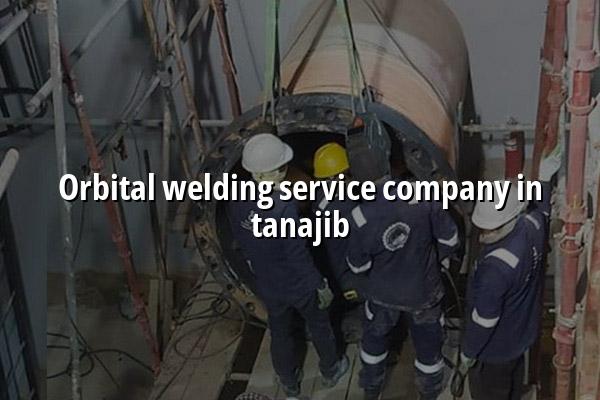
Orbital welding service company in Tanajib clients call us when the weld has to be clean, repeatable and easy to audit. That usually means pipe spools, tube runs, stainless lines or process systems where manual variation is a risk nobody wants.
We work with industrial teams in Saudi Arabia and the wider Middle East who need disciplined site execution, weld consistency and sensible QA records. In Tanajib, that often means oil and gas work, utility lines, skids and maintenance shutdown tasks that don't leave much room for guesswork.
Orbital welding service company in Tanajib for controlled pipework
When a process line needs tight control over root quality, heat input and bead profile, orbital welding is often the better fit. The head tracks the joint, the travel is consistent, and the result is far easier to repeat across similar spools. That matters on Tanajib jobs where shutdown windows are planned around production, not around a welder's personal style.
We see this most often on stainless pipe, hygienic tube, instrument lines and other systems where fit-up needs to be prepared properly before the arc starts. If the prep is poor, the machine doesn't rescue the job. The good news is that a disciplined orbital weld package can reduce rework and make inspection more straightforward for QA teams working to ISO 9001:2015 expectations.
Where orbital welding fits best
Automated TIG welding is a strong choice for repeated joints, limited-access runs and projects where cleanliness matters. In our experience, the teams that get the best results are the ones that plan joint preparation, purge quality and weld sequence before anyone wheels in the power source.
What we look at before we start
We check the material, wall thickness, diameter range, access, purge arrangement and whether the site needs bench work or field work. On industrial jobs in Saudi Arabia, especially around oil and gas assets, that early check saves time later because the welding plan matches the real site conditions instead of a drawing-only assumption.
- Survey the weld line — confirm pipe size, material, access and the number of joints that need orbital control.
- Prepare the joint properly — clean, square and fit up the tube or pipe so the process starts with a stable root gap.
- Set purge and parameters — establish gas shielding, travel settings and program control for the specific joint type.
- Run the weld and inspect it — monitor consistency, then verify visual finish, cleanliness and any required records.
- Good for stainless and other controlled pipe and tube applications.
- Helps maintain repeatability across similar welds and spools.
- Supports cleaner documentation for QA, inspection and handover.
- Useful where site space is tight and workmanship has to stay consistent.
Orbital welding versus manual TIG for Tanajib industrial work
| Item | Orbital Welding | Manual TIG |
|---|---|---|
| Repeatability | Very consistent once parameters are set and fit-up is stable | Depends more on individual technique and fatigue |
| Best use | Tube, pipe, hygienic lines, repeated production welds | Complex repairs, special access and one-off fabrication |
| Quality control | Easier to standardise logs, settings and weld records | Needs closer monitoring of each operator and joint |
| Site fit | Strong choice for controlled industrial jobs and clean lines | Useful where geometry or access makes automation impractical |
How we keep orbital weld work under control
For industrial customers, the weld itself is only part of the job. The other part is control: fit-up, purge, parameter stability, inspection hold points and a clean handover. We build that discipline into the job from the start so the outcome is predictable for your maintenance or project team.
Records matter more than people think
Most supervisors in Tanajib and the Eastern Province don't ask for fancy language. They want to know what was welded, on what material, with which process settings and how the joint was checked. That is exactly the kind of traceability we keep in mind, because it helps your QA file stay usable long after the welding crew has moved on.
Built for industrial shutdowns and maintenance jobs
We support new installation work, repair scopes and turnaround tasks where the site team needs a practical welding method, clear coordination and no loose ends at the end of the shift. That approach suits Tanajib operations where schedule pressure is real and weld quality can't be a moving target.
Where our orbital welding service is used on site
Oil and gas lines
Process piping, instrument tubing and service lines that need stable weld quality in Tanajib and nearby industrial assets.
Process systems
Controlled welds on systems where contamination control and joint finish are part of the acceptance criteria.
Skids and assemblies
Compact fabrication where the weld sequence has to stay tidy and easy for inspection teams to review.
Repairs and modifications
Targeted work where the existing line needs a controlled weld method without turning the site into a fabrication shop.
What helps an orbital weld job go right the first time
Good preparation starts before the equipment reaches site. If the line is not cleaned, aligned and measured properly, you end up spending time fixing avoidable problems. That is why we ask for the basics early: pipe specification, joint count, access conditions and any inspection requirements your team is working to.
Small details that save trouble
One extra clamp point, a better purge setup or a cleaner cut can change the whole job. The teams that call us repeatedly usually understand that the machine is only one part of the process. The rest is site discipline, and that's where experienced coordination matters.
- Confirm the material grade and joint size before planning the weld setup.
- Keep the joint face clean so purge and root quality stay stable.
- Allow inspection access around the weld, not after the weld is finished.
- Share the site constraints early if the work is in a shutdown window.
How Mayon Industrial Services Can Help
We support orbital welding jobs with the same practical approach we use across calibration, mechanical work and inspection. If your Tanajib project needs pipe or tube welding, controlled QA records or coordinated site execution, our team can help you plan the scope properly and keep the work moving.
Call +91 99447 80844 (India) or +966 59 633 8012 (Saudi Arabia), email services@mayonservices.com, or message us on WhatsApp.
Frequently Asked Questions
We set up and run automated TIG welds on pipe and tube work where consistency matters. That can include joint preparation checks, purge setup, weld execution and the records your QA team needs for handover. It's a better fit than manual welding when repeatability is the main concern.
Yes, it is often a strong option for stainless lines, instrument tubing and other controlled applications. The key is proper fit-up and clean purge conditions, because the machine only performs well when the joint is prepared well. If the prep is rushed, the result suffers.
We support projects in Saudi Arabia through our operating presence in Dammam Industrial City 2, and we work with clients who need practical site support in industrial locations. For Tanajib jobs, the first step is usually to discuss access, scope and the type of line you need welded so we can plan the setup properly.
We usually ask for the material specification, pipe or tube size, joint count, site access details and any inspection or handover requirements. If you already have drawings or a spool list, that helps too. The more accurate the starting data, the better we can plan the weld sequence.
Because the process reduces operator variation and makes the weld easier to standardise across multiple joints. That helps when a project needs traceable records and a consistent finish across a series of similar lines. For maintenance teams, it also makes repeat work easier to manage later.
Ready to put controlled weld quality on your Tanajib job?
If your project needs orbital welding, clear site coordination and a team that understands industrial work, talk to Mayon Industrial Services and we'll help you plan the next step.
Contact Mayon