
PAT Testing Company in Al Hasa
Portable appliance testing for offices, workshops and industrial sites in Al Hasa, with clear certification and practical reporting.
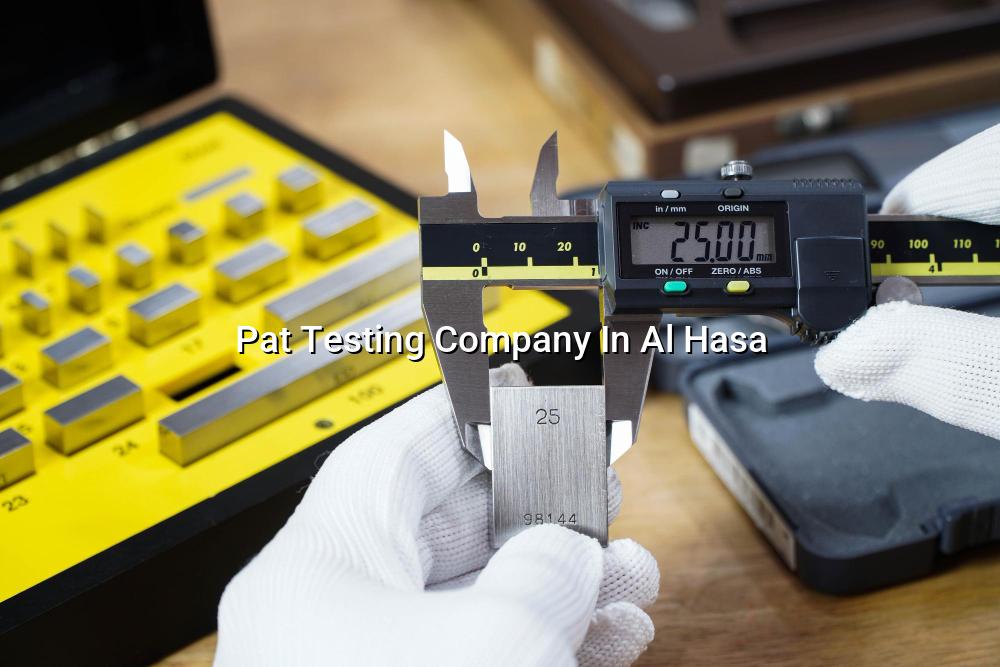
PAT testing company in Al Hasa support matters when your team needs clear evidence that portable appliances are safe to use, not just a quick visual check. We help you control risk, label equipment properly and keep a usable record for audits, maintenance reviews and site handovers.
In Al Hasa, we often see the same mix of equipment: office kettles and printers, workshop grinders, extension leads, chargers, small pumps and cleaning tools. Our work fits that reality, with practical testing that suits industrial facilities, support offices, project camps and mixed-use buildings across Saudi Arabia.
PAT testing company in Al Hasa for day-to-day electrical safety
PAT testing is about checking portable appliances in a way that gives maintenance teams a clear decision: use it, tag it out, repair it, or replace it. The process usually combines a visual inspection with electrical tests such as earth continuity, insulation resistance and leakage checks, then ends with pass or fail identification that users can understand at a glance.
Why site teams ask for it
Most requests come from supervisors who need order, not paperwork for its own sake. In a factory, warehouse or contractor yard, one damaged lead can travel from bay to bay and become everyone’s problem. A structured PAT programme helps you spot that kind of issue before it turns into a stoppage, a complaint or a near miss.
Where the checks make sense
We test tools and equipment used in offices, plant rooms, kitchens, workshops, stores and temporary facilities. That can include IT equipment, hand tools, desktop appliances, extension reels and cleaners’ equipment. If the item plugs in and moves around, it belongs in the conversation.
- Identify the appliance — record the asset name, location and a unique reference so the item can be traced later.
- Inspect it first — look for cracked plugs, heat marks, loose strain relief, damaged flexes and poor previous labels.
- Run the electrical checks — test the item using the correct method for its class and construction, then compare the result with the test criteria.
- Label and document the outcome — apply a clear pass or fail tag and issue a report that your supervisor can file or share during audits.
- Helps reduce avoidable electrical faults on portable equipment
- Supports safer handover of tools between teams and contractors
- Gives clear pass/fail identification for operators and auditors
- Works well for offices, workshops, warehouses and project sites
- Fits mixed equipment fleets in Al Hasa and wider Saudi industrial zones
Typical PAT testing results and what they mean
| Item type | Common risk | Typical result use |
|---|---|---|
| Desktop appliance | Damaged plug, heat stress or poor earthing | Confirms whether the item can stay in service |
| Hand tool | Flex abrasion, strain on the cord, loose casing | Supports tag-out or return-to-use decisions |
| Extension lead | Overloading, pin damage, worn insulation | Helps control shared-use equipment on site |
| Cleaning equipment | Moisture exposure and rough handling | Reduces surprises in kitchens, stores and plant rooms |
What makes a good PAT programme on industrial sites?
A good programme starts with a sensible register. You don't need to test every item on the same day, but you do need a plan that reflects risk, usage and environment. Equipment in a dusty workshop, a mobile camp kitchen or a wet utility area usually deserves more attention than a laptop that stays on one desk.
Practical points that save trouble
Keep the asset list current. Track repairs. Replace unreadable labels. And don't mix up a quick visual check with a full electrical test. Teams in Saudi Arabia often inherit equipment from multiple contractors, which is exactly where sloppy records create confusion. A clean log makes life easier for the supervisor who has to answer questions later.
Useful for real operating conditions
In Al Hasa, we see equipment used in administrative offices, stores, maintenance shops and temporary project areas. Those mixed environments need simple rules that operators can follow, plus labels that stay legible after handling, dust and movement. That is where structured PAT testing earns its keep.
How we structure PAT testing for offices, workshops and project camps
We usually start with a discussion about the site type, the number of items and how the equipment is being used. A small office with low-risk appliances needs a different pace from a workshop with power tools and extension leads crossing the floor. That distinction matters more than people think.
After that, we agree the scope, identify the items, perform the checks and issue the records in a format that can be filed with maintenance documents or shared with the client team. If some appliances need pickup and controlled handling, our wider industrial support capability helps us manage that properly. If the site needs related electrical work or calibration support, we can coordinate that too.
What good reporting should show
Your report should let a manager see the appliance identity, location, result and any obvious action item. It should not force someone to guess what failed, where the item lives, or who should remove it from service. Clear reporting saves time during audits and toolbox talks.
- Asset identification matched to site location
- Visual condition notes before electrical testing
- Pass/fail outcome and label applied to each item
- Report format suitable for maintenance and QA files
- Practical handling for mixed equipment fleets
What site managers usually miss
One common mistake is testing only the items people can see easily, then leaving old spares in cabinets, storerooms or temporary cabins untouched. Another is forgetting that replacement equipment still needs to be logged and checked before it enters service.
We also see confusion around ownership. If contractors bring in their own appliances, someone needs to decide who records them and who removes them when they fail. That conversation sounds small, but on a busy site it prevents a lot of unnecessary arguing later.
Simple habits that help
Keep labels readable, keep serial numbers or internal IDs consistent, and update the register after every repair or disposal. A short monthly review works better than a once-a-year scramble, especially on sites with rotating teams and shared tools.
Electrical safety that fits the way people work
PAT testing is most effective when it matches how your staff actually use equipment. A warehouse team will treat leads and chargers differently from an admin team, and that should show in the testing plan. We keep the process practical and easy to follow.
How Mayon Industrial Services Can Help
We provide PAT testing as part of a wider industrial support service, so you can combine appliance checks with calibration, mechanical maintenance, inspection work or electrical testing when the site needs more than one discipline. Our team understands Saudi industrial conditions, and we work with the same practical mindset on offices, workshops and project sites in Al Hasa.
Call +91 99447 80844 (India) or +966 59 633 8012 (Saudi Arabia), email services@mayonservices.com, or message us on WhatsApp.
Frequently Asked Questions
We check portable appliances for signs of damage and then carry out the electrical tests needed for a pass or fail decision. That usually includes a visual inspection, earth continuity where applicable, insulation resistance and leakage checks. The exact method depends on the item type and how it is built.
Yes, both. Offices usually have IT gear, kettles, printers and chargers, while workshops and stores often have hand tools, extension leads and cleaning equipment. We treat those differently in the test plan, because their risks are not the same.
Yes. Mixed contractor sites are common in Saudi Arabia, and they need clear control of shared tools and temporary equipment. We can work with your team to identify what is in scope and make sure failed items are marked out of service properly.
We provide clear results so your team can track each appliance, location and outcome. Labels are used to show the current status, and the report gives you a record for QA files, maintenance planning and internal review. That makes it easier to spot repeat failures or poor handling.
No. We support clients across Saudi Arabia from Dammam Industrial City 2 through SMC Engineering Services / Sixfaces Maintenance Co, and we also serve India and the wider Middle East. If your site is in the region, we can discuss the right way to set up the job.
Ready to keep portable equipment under control?
If you need a practical PAT plan for Al Hasa, we can help you sort the items, test them properly and keep the records tidy.
Contact MayonGood PAT testing is rarely about the label alone. It is about knowing what is in service, what needs attention and what should be removed before it causes trouble. If you're managing portable equipment in Al Hasa, Mayon Industrial Services can help keep the process clear, traceable and suited to the way your site actually works.