
PAT Testing Company in Tabuk
Portable appliance testing for Tabuk sites that need clear records, safer equipment, and practical compliance support.
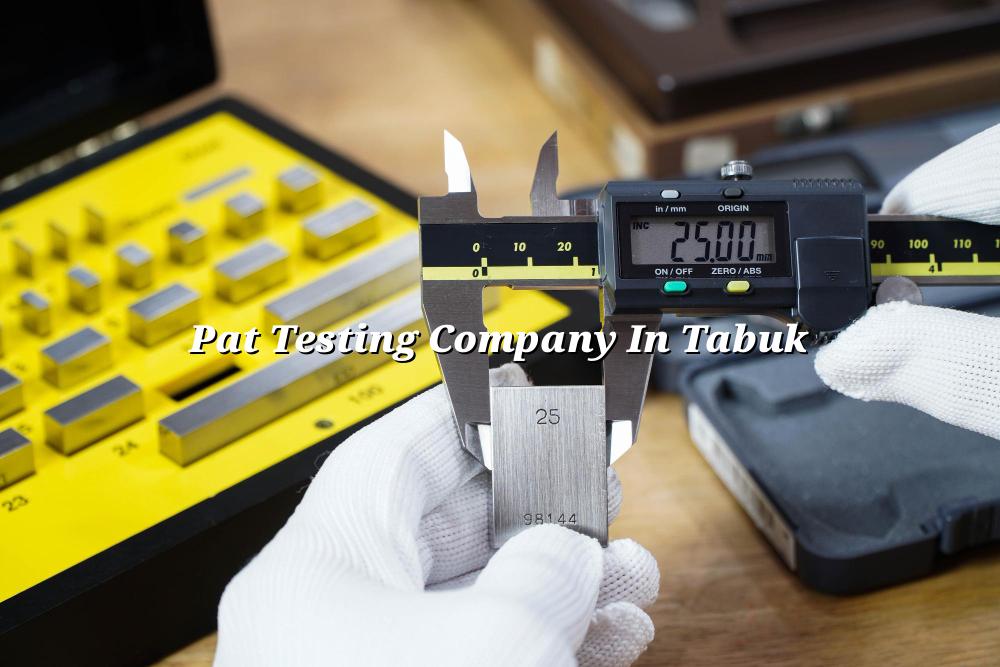
PAT testing company in Tabuk searches usually come from maintenance teams that need a clear answer fast: who can check portable appliances properly, label them right, and leave records that stand up to audit. That’s exactly what we do. We test, classify, and certify everyday electrical equipment so you can keep sites safer without turning the job into paperwork chaos.
Our team supports industrial camps, warehouses, workshops, offices, and support facilities across Tabuk and the wider Saudi region. We work with a practical field mindset: visual checks first, then electrical tests, then pass/fail tagging and traceable reporting that fits real operations, not theory.
PAT testing company in Tabuk for site safety and clear records
PAT testing is a simple idea done properly. You inspect the appliance, check the plug and cable, confirm earth continuity where needed, test insulation resistance, and look for leakage or obvious damage before you decide whether the item can stay in service. That process matters on Saudi industrial sites because power tools, extension leads, kitchen equipment, printers, chargers, and small office appliances all get moved around, shared, and stressed in ways that are easy to miss during normal housekeeping.
What we test on Tabuk sites
We handle the kinds of equipment that usually cause headaches for HSE teams and facilities managers: hand tools, portable cleaners, IT equipment, small appliances, temporary workshop gear, and site support items. The real value is not just the test itself. It’s knowing which items are safe to keep using, which ones need repair, and which ones should come out of service before they cause downtime or an avoidable incident.
How the work usually starts
Most requests begin with a list of appliances from a contractor camp, plant room, office floor, or project site. We then plan the visit, review access points, and test equipment in a way that keeps operations moving. If you have a mix of low-risk office devices and rough-service tools, we’ll separate the handling so the inspection is efficient and the reporting stays clean.
- Identify the appliance group — we sort the items by type, area, and use, so the test plan matches the actual risk profile.
- Carry out a visual inspection — plugs, cables, casings, labels, strain relief, and obvious damage are checked before electrical testing begins.
- Run the electrical tests — we use the relevant checks for the item, such as earth continuity, insulation resistance, and leakage assessment where applicable.
- Label and record the result — each item gets a pass or fail outcome, with records you can file for internal audits and safety reviews.
- Use onsite PAT testing to reduce equipment movement and avoid unnecessary downtime.
- Keep pass/fail tags visible for contractors, supervisors, and QA teams.
- Test after repairs, relocations, or water exposure, not just on a fixed calendar.
- Include extension leads and adapters; they fail more often than people expect.
- Keep a simple asset list with location, serial number, and user department.
Common PAT testing checks and what they tell you
| Check | What we look for | Why it matters |
|---|---|---|
| Visual inspection | Damage, exposed conductors, loose plugs, heat marks, missing screws | Finds the faults that electrical testing may not fully reveal |
| Earth continuity | Integrity of the protective earth path on class I equipment | Helps confirm fault current has a safe path to operate protection |
| Insulation resistance | Condition of internal insulation and cable integrity | Flags breakdown risk before the appliance becomes unsafe |
| Leakage assessment | Unexpected current leakage from equipment during use | Useful for appliances where touch current and user safety matter |
Why Tabuk teams ask for documented PAT testing
On busy sites, untested appliances create small risks that add up. A damaged extension lead in a workshop, a cracked kettle in a camp pantry, or a charger with a loose cable can all turn into maintenance calls, operator complaints, or worse. Clear PAT records help your supervisors show that basic electrical safety checks were done in a repeatable way, which is exactly what internal audits and contractor controls expect.
Useful for more than one department
We often see the same appliance spread across operations, admin, accommodation, and temporary project areas. That’s why a good PAT programme needs more than a sticker. You need a register, a sensible risk-based approach, and a team that can handle re-testing after equipment moves between buildings or workfronts.
Practical support for real sites
We work around shift patterns, access constraints, and mixed equipment types. If your site has office IT, kitchen gear, workshop tools, and temporary power equipment in one place, we’ll separate the load so the testing stays orderly and easy to review.
How we schedule PAT testing without disrupting work
For Tabuk projects, timing matters. Nobody wants a testing crew blocking a store room during receipt checks or interrupting office users in the middle of a shift handover. We normally plan the job around access windows, equipment grouping, and the movement of items between departments. That keeps the work moving and avoids the common mess of half-tested asset lists.
If there’s an area with higher wear, such as a workshop, pantry, or temporary labor accommodation, we treat those appliances as a separate group. In our experience that small step saves time later because the failure pattern is easier to see and the record trail is cleaner.
It also helps when the client has one person who knows the site map. A facilities lead or maintenance supervisor can point out storage rooms, rental equipment, and shared appliances that often get missed. From there, we can confirm what is in scope, what has already been repaired, and what should be quarantined before testing starts.
That practical setup is better than trying to chase appliances one by one. You end up with fewer gaps, fewer repeat visits, and a set of records that actually reflects what is being used on the ground.
How Mayon Industrial Services Can Help
We support PAT testing as part of a wider industrial service offering that includes calibration, inspection, mechanical work, and electrical testing. If you need portable appliance checks alongside instrument verification, commissioning support, or equipment repairs, our team can keep the work under one coordinated plan. That matters on Saudi sites where different contractors often touch the same assets.
Call +91 99447 80844 (India) or +966 59 633 8012 (Saudi Arabia), email services@mayonservices.com, or message us on WhatsApp.
Frequently Asked Questions
We check the appliance condition first, then the electrical safety points that match the type of equipment. That usually includes the plug, cable, casing, earth continuity on class I items, insulation resistance, and leakage-related checks where needed. The goal is to decide whether the item can stay in service with confidence.
Yes. Onsite work is usually the easiest option because it cuts down on equipment movement and lets us test items where they’re actually used. We can work through offices, workshops, camps, stores, and mixed-use facilities in a way that keeps the site running.
Portable tools, extension leads, IT equipment, kitchen appliances, chargers, cleaning equipment, and other plug-in items are the usual candidates. If it can be moved, shared, or plugged into a socket, it’s worth checking. We usually see the highest wear on items that get handled daily or moved between departments.
Yes, we can separate failed items, mark them clearly, and help you decide what to repair, replace, or isolate. In many cases the issue is visible damage, a faulty lead, or a plug problem. The important part is that failed equipment doesn’t stay mixed in with the safe items.
That depends on how the equipment is used, how much it moves, and what sort of environment it lives in. A workshop lead and a desk charger won’t need the same review cycle. We normally recommend a risk-based schedule instead of guessing, so the test plan matches the actual use pattern on site.
Ready to put your Tabuk appliance records in order?
If you need a PAT testing company in Tabuk that understands industrial sites, mixed equipment, and traceable reporting, we’re ready to help.
Contact Mayon