
Pressure Calibration Company in Hawiyah
Onsite and in-lab pressure calibration support for Hawiyah plants that need traceable results and steady instrument performance.
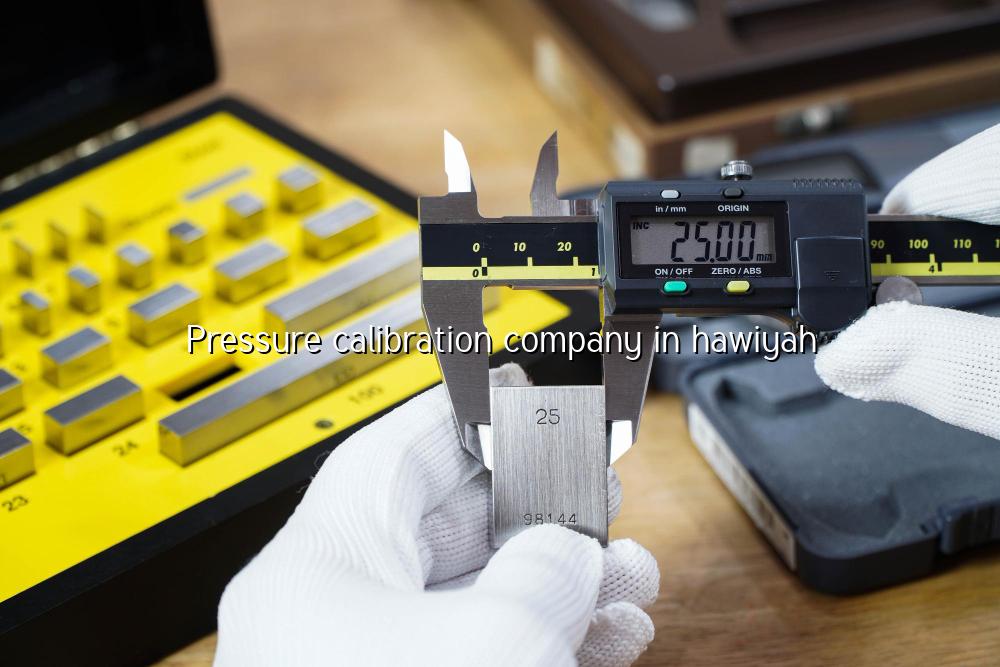
Pressure calibration company in Hawiyah searches usually come from a plant team that needs a unit to read right before a shutdown, startup or audit. That’s the job we handle. We check the instrument against traceable standards, find drift early, and help you decide what should stay in service and what needs attention.
Our work fits the way industrial sites in Hawiyah operate: long service runs, critical process lines, and equipment that can’t afford guesswork. We support gauge, transmitter and indicator calibration for oil and gas, petrochemical, power and maintenance teams across Saudi Arabia and the wider Middle East, with onsite coverage when removal is a problem.
Pressure calibration company in Hawiyah for plant-critical instruments
When a pressure instrument starts drifting, the effect shows up fast. A bad reading can throw off filling lines, compressor systems, test manifolds, safety checks and process control. In Hawiyah, where many operations run under tight maintenance windows, the practical answer is a calibration partner that can come onsite, compare the instrument with reference equipment, and document the result in a way your QA or maintenance team can use straight away.
What gets calibrated
We work with pressure gauges, pressure transmitters, pressure switches, indicators, test gauges and related assemblies used in process, utility and maintenance work. That includes instruments found in pump skids, hydraulic systems, field panels, gas handling areas and workshop test benches. If the unit needs to be removed for better control, our in-house lab in Chennai and pickup support can help for special-condition jobs.
Why teams in Hawiyah ask for onsite support
Most site teams don’t want to strip a line just to check one instrument. Onsite calibration keeps the work closer to the actual operating setup, which helps when you’re dealing with mounted gauges, panels, manifolds or hard-to-reach points. It also reduces the chance of reinstallation errors. For instruments that need a stable environment, our temperature-controlled laboratory gives you a cleaner route than trying to manage the job in the field.
- Review the instrument tag and range — we confirm the unit type, range, connection and intended service before work starts.
- Select the right reference method — our technicians choose equipment suited to the pressure range and the instrument’s application.
- Apply test points through the span — the instrument is checked across practical points, not just a quick zero check.
- Record the as-found and as-left condition — you get a clear view of drift, adjustment need and final status.
- Decide the next step — return to service, repair, re-test, or move to laboratory handling if the unit needs special care.
- Suitable for routine maintenance, shutdown work and pre-commissioning checks
- Helps catch drift before it becomes a process or safety issue
- Supports onsite work where removal would interrupt the line
- Fits calibration traceability expectations in Saudi industrial sites
- Can be paired with repair, commissioning and mechanical support when needed
Common pressure calibration checks and where they fit
| Instrument type | Typical site use | What we verify |
|---|---|---|
| Pressure gauge | Pumps, skids, manifolds and utility lines | Indication across range, zero condition and repeatability |
| Pressure transmitter | Process control and monitoring loops | Output response, span accuracy and adjustment status |
| Pressure switch | Protection and control interlocks | Set point, reset behaviour and switching action |
| Test gauge | Workshop benches and mobile test kits | Reference stability and comparison against known standards |
What makes pressure calibration useful for QA and maintenance teams
Calibration is only valuable when the result can stand up to review. For industrial users in Hawiyah, that usually means clear identification, traceable comparison, and records that show what was tested and what changed. Our work is aligned to ISO/IEC 17025:2017 for calibration competence, which is the standard many Saudi and GCC sites expect when they ask for evidence they can file without trouble.
Inside the report trail
A useful pressure calibration report should tell you the condition of the instrument before adjustment, the final result after correction, and the reference used during the check. That gives your team a proper history. It also helps during internal audits, vendor reviews and maintenance planning, because you can spot repeat drift instead of treating each instrument as a one-off job.
Built for real plant conditions
Our mobile calibration lab is useful when the site setup is busy, remote or sensitive. It gives you a controlled environment on wheels for many onsite tasks, while pickup and delivery help when special handling is smarter than field work. That mix matters in the Eastern Province, where plants often need a vendor that can move between workshop work and live-site support without drama.
How a pressure calibration job usually runs
Every site has its own pace, but the work usually follows the same practical sequence. A good calibration company keeps it simple for the plant team, because the people calling us are normally balancing production, maintenance and paperwork at the same time.
First, we identify the instrument
That means the tag, range, service medium, mounting style and the reason for testing. A pressure instrument used on a compressor skid is not the same as one used on a workshop bench, even if the face looks similar.
Then, we compare it with reference equipment
We apply known pressure points and watch how the device responds. If the reading is outside acceptable limits, the technician can adjust it where the design allows, then run the checks again. If the unit has a mechanical issue, it may need repair or replacement instead of simple recalibration.
- Pressure checks can be done onsite, in-lab or through pickup and delivery
- Field visits are useful for mounted instruments and active process areas
- Lab handling is better for special conditions and cleaner control
- Calibration can be bundled with repair, commissioning or inspection work
Frequently Asked Questions
Honestly, the best fit is usually the team that can show traceability, handle onsite and lab work, and understand industrial pressures rather than just bench testing. In Hawiyah, that matters because a lot of instruments sit inside live process areas or on equipment that’s awkward to remove. We focus on that kind of work every day.
Yes, many can. Onsite work is a good option for mounted gauges, transmitters and switches where dismantling would take time or disturb the line. If the instrument needs special conditions, we can move it to our lab or arrange pickup and delivery instead.
Most industrial buyers want calibration traceability that aligns with ISO/IEC 17025:2017 competence expectations. That’s the main standard we work to for calibration services. When your own QA team or client asks for evidence, that kind of structure makes review much easier.
Yes. Those are exactly the kinds of sites where pressure work has to be clean, documented and practical. We support plant teams, maintenance contractors and QA groups with onsite checks, lab handling when needed, and related mechanical or commissioning services if the job goes beyond a simple instrument check.
Send the instrument type, pressure range, quantity, location and whether you need onsite or lab service. If you have tag numbers or photos, send those too. That saves back-and-forth and helps us plan the right equipment from the start.
How Mayon Industrial Services Can Help
If you need a pressure calibration company in Hawiyah, we can support the job with onsite calibration, laboratory handling, pickup and delivery, and related engineering work when the instrument needs more than a quick check. Our team also helps with mechanical services, testing and commissioning, inspection, repair and maintenance, so one call can cover a few moving parts instead of many vendor lists.
Call +91 99447 80844 (India) or +966 59 633 8012 (Saudi Arabia), email services@mayonservices.com, or message us on WhatsApp.
Frequently Asked Questions
The interval depends on service severity, criticality and how fast the instrument drifts in your own history. Some sites review them during planned maintenance, while others set shorter intervals for safety-critical points. The right answer is the one backed by your process record, not a fixed guess.
Yes, and that’s often the best time to do it. Shutdown windows make it easier to access mounted instruments, isolate equipment safely and complete follow-up checks without interrupting production. We work with maintenance schedules and site constraints rather than forcing a fixed method.
Ready to get pressure readings back under control?
Send the instrument list, site location and service scope, and we’ll help you plan the right calibration route for Hawiyah or the wider Saudi market.
Contact Mayon