
Temperature Calibration Company in Fadhili
Traceable temperature calibration for Fadhili sites, with onsite support and controlled-lab handling for critical thermal instruments.
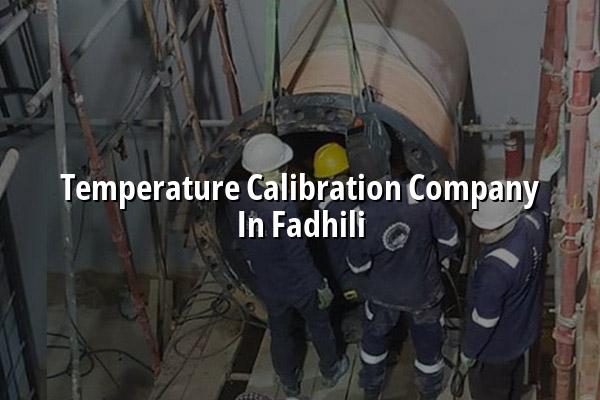
Temperature calibration company in Fadhili services matter when your plant depends on readings from ovens, freezers, chambers, baths, transmitters and portable indicators. If you need cleaner traceability and fewer surprises during audits, we help you keep those instruments aligned with the numbers your process actually needs.
We work with teams in Saudi Arabia and across the wider Middle East where thermal control is tied to product quality, storage integrity and plant safety. In our experience, the trouble usually starts with small drift that nobody spots early. That is why we build our work around ISO/IEC 17025:2017 traceability, practical onsite support and controlled handling for critical instruments.
Why a temperature calibration company in Fadhili matters for plant accuracy
A temperature calibration company in Fadhili has to do more than test one sensor and print a certificate. Real jobs involve checking how an instrument behaves across its working range, comparing it with a suitable reference, and making sure the result fits the way the instrument is used on site. That is the difference between a number that looks fine and a number you can rely on in production, storage, maintenance or quality control.
For plants in Fadhili and nearby industrial areas, the usual requests come from process skids, utilities, packaged equipment, cold-chain rooms, laboratories and maintenance workshops. We handle RTDs, thermocouples, temperature indicators, controllers, data loggers and monitoring devices, both in the field and in our in-house laboratory. When the instrument needs special handling or stable conditions, we can collect it, calibrate it in controlled space and return it ready for service.
Where thermal errors usually start
Most temperature problems are not dramatic. A sensor gets bumped during maintenance, a transmitter drifts after heat exposure, a chamber map is never repeated after a repair, or a controller looks fine at one point but is off at the top of range. That is why we pay attention to the full use case, not just the label on the asset. If a freezer, a reefer unit or a thermal chamber protects valuable stock, even a small offset can create avoidable losses.
How we approach the work
Our team follows a practical sequence. We identify the instrument, check the condition and application, select the right reference standards, run the comparison at relevant points and record the readings clearly. When the asset is part of a controlled environment, such as a cold room or pharmaceutical storage area, we also think about the operating pattern, loading condition and whether mapping or system verification is the better next step.
- Identify the instrument and its use — we confirm the type, range, location and whether it's measuring product, ambient or process temperature.
- Choose the right reference — the check has to suit the device, so we match it with a traceable standard and the right points on range.
- Test under realistic conditions — where possible, we calibrate onsite in Fadhili or use controlled-lab handling for tighter thermal stability.
- Record results and status clearly — you get the reading data, pass/fail outcome and a record that can support internal quality files and audits.
- Check thermometers, probes and transmitters after any repair, relocation or controller replacement.
- Ask for calibration points that reflect real use, not just a single mid-range check.
- Keep cold rooms, freezers and chambers on a repeatable verification cycle, especially after cleaning or defrost work.
- Separate routine process sensors from critical quality sensors so maintenance can plan them properly.
- Use traceable references and keep certificates together with asset history for quicker audit checks.
Typical temperature calibration needs by asset type
| Asset type | Common site use | What we check |
|---|---|---|
| RTD / thermocouple probe | Process lines, vessels, furnaces, utilities | Reading accuracy at chosen points, condition, installation issues |
| Temperature indicator or controller | Panels, ovens, chambers, packaging lines | Setpoint response, display accuracy, control stability |
| Data logger | Cold rooms, warehouses, reefer vehicles, pharma storage | Logged values, sensor drift, battery or memory condition |
| Thermal chamber / room system | Testing, storage, validation work | Distribution pattern, stability, mapping needs, system variation |
What you should expect from thermal calibration work in Saudi Arabia
In Saudi Arabia, especially around oil & gas, petrochemical and power sites, temperature work has to fit a disciplined maintenance culture. You need clear identification, traceable results and practical handling that respects the plant schedule. Our calibration service is built for that kind of environment, with onsite attendance where it makes sense and in-house lab control when the instrument needs a more stable setting.
Why the environment matters
Temperature instruments can look stable and still be off when the process changes load, ambient conditions shift or a probe loses contact. That is why we don't treat every job the same. A free-running chamber is different from a storage freezer, and a handheld indicator is different from a transmitter buried in a system. If the job needs more than a basic spot check, we plan for it properly.
Useful for audits and maintenance alike
Good temperature records help QA, maintenance and operations speak the same language. They also reduce arguments during shutdowns, when every hour matters and nobody wants to guess whether an instrument is still trustworthy.
What we handle for temperature-sensitive operations
Our work covers both instrument calibration and the wider temperature-control problems around it. That can include portable sensors used by maintenance teams, fixed monitoring points in production areas, or support for mapping and verification of cold rooms, freezers, reefer vehicles and thermal chambers. For plants that need pick-up and delivery, we can move selected instruments into our controlled laboratory, then return them after completion.
We also support clients who manage mixed assets across multiple facilities. One site may need a handheld probe checked before a turnaround, while another needs the chamber system reviewed after a service intervention. If the operation spans India and Saudi Arabia, it helps to have one team that understands both onsite attendance and lab-based work.
Applications we see often
Food and beverage teams call us for storage and process temperature checks. Pharmaceutical and healthcare clients usually care about traceability, repeatability and controlled handling. Manufacturing plants ask for calibration tied to ovens, moulding equipment and utilities. In the Middle East, we also see steady demand from cold-chain operators and industrial service contractors who need records they can present without delay.
- Onsite checks for fixed installations and hard-to-move assets
- In-house lab work for instruments that need stable conditions
- Pick-up and delivery for selected temperature instruments
- Support for cold-chain, process and storage temperature systems
How Mayon Industrial Services Can Help
If you need a temperature calibration company in Fadhili that understands plant reality, we can help with calibration, inspection support, mechanical work around equipment readiness, and controlled-lab handling for instruments that need better conditions. Our team also supports temperature mapping, lab setup and training, so you can tighten the whole measurement chain instead of fixing one device at a time.
Call +91 99447 80844 (India) or +966 59 633 8012 (Saudi Arabia), email services@mayonservices.com, or message us on WhatsApp.
Frequently Asked Questions
Any site that depends on controlled temperature should. That includes production plants, cold-chain operators, storage facilities, maintenance contractors and labs. If a reading affects product quality, safety or compliance records, calibration should be part of the routine.
Yes, we can handle onsite work where the instrument and access conditions allow it. That is often the best option for fixed probes, controllers and systems that are awkward to remove. For instruments that need tighter thermal control, we can take them into our lab handling flow.
We commonly handle probes, thermocouples, RTDs, indicators, controllers, transmitters, loggers and monitoring devices. We also support temperature-related work around cold rooms, freezers, reefer vehicles and thermal chambers when a broader review is needed.
Yes. Our calibration work is aligned with ISO/IEC 17025:2017, and we structure the records so QA and maintenance teams can use them for internal files and external review. The point is to keep the paperwork useful, not buried in jargon.
Then we look at the full application, not just the sensor. For storage systems, mapping or verification may be needed alongside calibration, especially after repairs, relocation or load changes. That gives you a clearer view of how the system behaves in use.
Ready to get your temperature readings under control?
Send us the asset list, the site location and the temperature range you care about, and we'll help you plan the right calibration approach.
Contact MayonIf you need a partner who can handle temperature calibration with practical field support, controlled lab handling and clear records, Mayon Industrial Services is ready to help. We work with teams that want fewer surprises and better confidence in every reading.