
Thermal Mapping and Validation Company in Hail
Onsite temperature mapping for Hail cold chain, storage rooms and chambers, backed by practical validation support from Mayon.
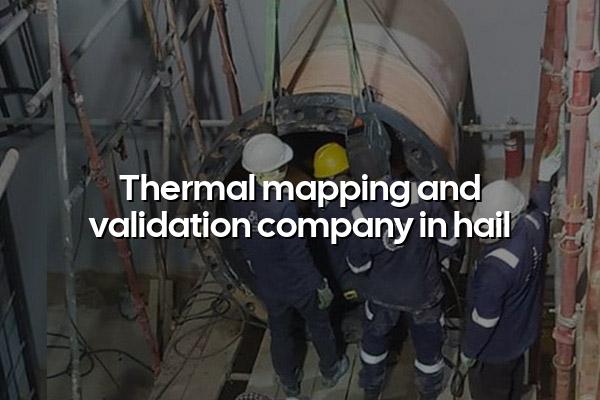
Thermal mapping and validation company in Hail projects need more than a report; they need proof that a room, chamber or vehicle stays within the range your product needs. We help you check real temperature behaviour, spot hot and cold spots, and document the result in a way QA teams can use.
In Hail and across Saudi Arabia, that usually means cold rooms, freezers, warehouse zones, and reefer vehicles linked to food, pharma and cold-chain work. We bring onsite support, calibrated instruments and a practical process that fits industrial sites, not a classroom.
Thermal mapping and validation company in Hail for cold chain control
When clients ask for thermal mapping, they usually want to know one thing: where does the product actually sit inside the space, and for how long? Our team records temperature distribution across the full volume, then helps you read the results in context. That matters in Hail, where ambient conditions, loading patterns and door openings can change the profile fast.
What we map and why it matters
We work on cold rooms, chillers, freezers, thermal chambers and transport equipment. The aim is simple. Show the hottest and coldest points, confirm the stability of the system, and give your team evidence for storage decisions, hold-time checks and routine revalidation.
Validation without guesswork
Validation is not just a formality. A clean map can show whether sensors are placed well, whether air circulation is balanced, and whether a unit needs maintenance before it creates a stock loss. In our experience, the trouble often appears near doors, corners, evaporator paths and stacked-load areas.
- Site review — we look at the room layout, loading pattern, product type and the controls already in place.
- Sensor placement — we position data loggers to cover the full space, including likely problem zones.
- Monitoring run — we record temperatures during normal operating conditions, not a polished demo setup.
- Result review — we check patterns, explain risks and note where the system needs action or follow-up.
- Use calibrated instruments with traceable records for each run.
- Cover corners, centre points, doors and return-air paths.
- Test under the operating conditions your team really uses.
- Keep maps, plots and certificate records together for audits.
Typical thermal mapping applications in Hail facilities
| Asset type | What we check | Why teams request it |
|---|---|---|
| Cold room | Temperature spread, door effects, loading points | To protect stored food, medicines or raw material |
| Freezer | Uniformity, recovery after openings, cold spots | To support storage control and revalidation |
| Warehouse zone | Hot spots, airflow breaks, ceiling-to-floor variation | To show storage suitability in mapped areas |
| Reefer vehicle | Setpoint stability, transit variation, loading influence | To verify transport performance on the road |
How validation helps QA teams make better calls
A good validation exercise gives more than a pass or fail. It gives your QA or maintenance team a clear picture of how the system behaves over time, so you can decide whether to change loading practice, improve air movement, service a unit or relocate a product zone. That is useful in food plants, pharmaceutical stores and healthcare support facilities around Hail.
Records people can actually use
We keep the focus on plain records, plotted data and site observations. If a chamber needs repeat testing after a change, or if a mapped area needs a different sensor layout, we say so clearly. No drama. Just useful information that stands up in internal review and customer checks.
Built for controlled environments
Our team understands real industrial sites: loading bays, staggered shifts, hot ambient conditions and mixed stock profiles. That is why the mapping plan has to match the way your operation runs, not a textbook example.
What a solid mapping visit should cover
A proper visit starts with the asset itself, not the paperwork. We check the physical condition, the door seals, the shelving, the product load pattern and the setpoint history you already have. If the unit is already struggling, the map will usually show it quickly.
For Hail clients, that can mean a room that performs well in the morning but drifts after repeated door openings or during heavier load periods. We look for those patterns because they often explain why a site keeps seeing the same complaints.
We also pay attention to the way the data will be read later. A spreadsheet alone is not enough if the team needs a decision. The report should show the mapped area, the sensor positions, the observed range, and the practical point your team should act on next.
That makes life easier for warehouse managers, QA leads and maintenance planners who need to make a call without spending half a day decoding the data.
How Mayon Industrial Services Can Help
We support thermal mapping with the same discipline we bring to calibration, inspection and maintenance work. If your Hail site needs cold-room mapping, chamber validation, instrument calibration or follow-up mechanical support, our team can plan the visit, collect the data and keep the process straightforward. We also work from Saudi Arabia and serve wider Middle East projects with onsite and mobile-lab capability.
Call +91 99447 80844 (India) or +966 59 633 8012 (Saudi Arabia), email services@mayonservices.com, or message us on WhatsApp.
Frequently Asked Questions
It normally includes sensor placement, temperature recording, review of the data, and a report that shows the temperature profile across the room or chamber. For many clients, that also means checking how door openings, load position and airflow affect the result. We keep the process practical so your QA team can use it without extra interpretation.
The exact interval depends on your internal quality system, product risk and any changes to the room or equipment. A new map is usually sensible after major maintenance, layout changes or repeated complaints about temperature variation. Many teams also repeat it as part of routine validation planning.
Yes, we can. Reefer units need a different approach from static rooms because movement, loading pattern and door openings all affect the data. We look at the actual transport condition so the result reflects what happens on the road, not a showroom setup.
For calibration and testing competence, we work within ISO/IEC 17025:2017. We also operate with ISO 9001:2015 quality management, BS EN standards for lifting and inspection work, and EURAMET CG-15 for electrical calibration where it applies. That combination helps keep the evidence chain clean.
Yes, we support projects across Saudi Arabia from our Dammam Industrial City 2 base through SMC Engineering Services / Sixfaces Maintenance Co. We also serve clients across India and the wider Middle East. If your team has a multi-site requirement, we can discuss the right setup.
Ready to prove your temperature control is working?
If you need a thermal map, validation support or a second opinion on an existing cold-chain setup, talk to Mayon and we’ll help you plan the next step.
Contact Mayon