
Thermal Mapping and Validation Company in Hawiyah
Traceable temperature studies for cold rooms, warehouses, freezers and chambers serving Hawiyah and the wider Eastern Province.
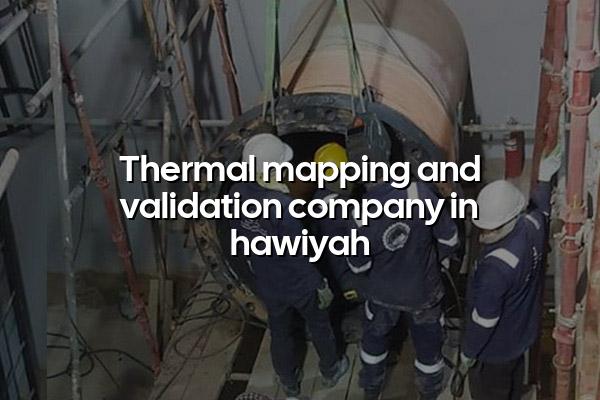
Thermal mapping and validation company in Hawiyah searches usually come from a real production problem: a warehouse manager needs proof that temperature stays within limits, or a QA team needs a clean study before product release. We help you get that proof with traceable, field-ready work that makes sense to auditors and operators alike.
From Hawiyah and the Eastern Province to wider Saudi Arabia, we support cold rooms, freezers, reefer vehicles, warehouses and thermal chambers with the same practical approach we use across India and the Middle East. Our team works with ISO/IEC 17025 expectations, mobile-lab capability and equipment that suits industrial sites, not just clean office settings.
What thermal mapping and validation in Hawiyah should cover
If you're comparing a thermal mapping and validation company in Hawiyah, start with the scope. A proper study should tell you where the hot and cold spots sit, how long the load takes to recover after door openings, and whether your equipment holds the set range at different points in the chamber. That matters in cold chain, food storage, pharma support areas and any facility where product quality depends on temperature history.
Why the data has to be clean
Validation only helps when the data is dependable. We place sensors in sensible positions, confirm the mapping period fits the equipment size and loading pattern, and record the conditions so you can explain the result later. In practice, that means less debate with auditors and fewer surprises when the same room is used during busy shifts in Hawiyah or during hotter Gulf weather.
What people often miss
The room itself is only part of the story. Door frequency, pallet height, evaporator location, product load and even whether the room is emptied before the study can change the result. We see this often in warehouses and reefer operations around Saudi Arabia: the system is fine, but the study never reflected how the site really runs.
- Define the asset and the product risk — list the room, chamber, vehicle or freezer, then decide what temperature band must be protected.
- Check the layout and operating pattern — note door openings, loading style, air paths and any dead zones near corners or shelving.
- Install calibrated sensors — place data loggers across the space so the study can show true variation, not just one clean reading.
- Run the study under real conditions — keep the room operating as it would during normal work, with the same loading and access pattern where possible.
- Review the report and act on findings — fix airflow, loading or maintenance issues before the next audit or product campaign.
- Use calibrated instruments with traceability suited to ISO/IEC 17025 expectations.
- Map empty and loaded conditions when the risk profile needs both views.
- Include recovery checks after door openings where product handling is frequent.
- Keep clear records of setpoint, ambient conditions and sensor locations.
- Use the study to correct airflow, shelving or loading issues before they become audit findings.
Common thermal mapping setups and what they help prove
| Asset type | Main purpose | Typical review focus |
|---|---|---|
| Cold room | Check temperature uniformity and recovery | Door openings, airflow, shelving, loading pattern |
| Warehouse | Show storage conditions across a larger space | Hot spots, circulation, loading bays, seasonal heat impact |
| Freezer | Confirm low-temperature stability | Setpoint hold, defrost effects, product placement, alarms |
| Reefer vehicle | Verify transport conditions during transit | Air distribution, loading pattern, trip profile, door events |
How Hawiyah sites use validation to stay audit-ready
In our experience, the best studies are the ones that fit the site's daily rhythm. A warehouse near Hawiyah doesn't run like a lab, and that's fine. What matters is showing that the room, chamber or vehicle can still keep product within the required range when people are working, goods are moving and the weather outside is punishing.
Where the findings become useful
Once the mapping is complete, the report should help your maintenance and quality teams make decisions. You may need to change fan settings, adjust shelving gaps, move probes, service insulation or tighten door discipline. For regulated cold chain and industrial storage, that practical follow-through is what turns a report into control.
What a good report gives you
It shows the test method, sensor placement, observed variation, the room profile and the points that need attention. That helps QA, maintenance and procurement teams speak the same language before the next audit or production run.
Signs your facility needs a new thermal study
A mapping study is not something to leave on a shelf for years. If the room layout changes, the door cycle changes, the HVAC system is serviced or the product mix shifts, the old result may no longer match reality. That is especially true in Saudi Arabia, where ambient heat and site loading can make weak spots show up fast.
Most teams call us after one of a few common triggers: a new storage room is commissioned, a validation file is being prepared for an audit, or someone notices temperature swings during night shifts. None of that is unusual. It just means the site needs current data, not assumptions.
- New cold room, freezer, chamber or warehouse commissioning.
- Room layout, shelving or loading pattern has changed.
- Maintenance work affected fans, dampers, sensors or insulation.
- Audit files need current evidence for product storage conditions.
- Temperature complaints are appearing during peak load or hot weather.
Why mobile capability matters for Hawiyah and the Eastern Province
Validation work is easier when the team can come to the site with the right equipment. Our mobile calibration lab and onsite service style help us support facilities without turning every job into a logistics exercise. That matters for industrial sites, cold-chain stores and remote operations where equipment can't be pulled out of service for long.
Onsite work versus offsite checks
Some instruments need special handling or temperature control, and some studies are better done where the asset already runs. We handle both. If a logger, probe or related instrument needs controlled transport, our pick-up and delivery process helps keep it in good condition on the way to our in-house laboratory.
What we often support
Cold rooms, warehouses, freezers, reefer vehicles and thermal chambers in Saudi Arabia, plus related calibration and inspection work that keeps the wider maintenance plan moving.
How Mayon Industrial Services Can Help
We support thermal mapping with the same discipline we use for calibration, inspection and engineering work. That means calibrated instruments, practical field crews, clear reporting and a setup that suits industrial sites in Hawiyah, Dammam and the wider Middle East. If your team needs validation for a cold room, warehouse, freezer or chamber, we can help you plan the study and keep the paperwork usable.
Call +91 99447 80844 (India) or +966 59 633 8012 (Saudi Arabia), email services@mayonservices.com, or message us on WhatsApp.
Frequently Asked Questions
Yes, we do that work for industrial and cold-chain sites serving Hawiyah and Saudi Arabia. We handle cold rooms, warehouses, freezers, reefer vehicles and chambers with onsite field support and traceable calibration practices. The goal is a report your QA team can actually use.
Typically we look at temperature variation across the usable space, the response during door openings, and any hot or cold spots near walls, fans or shelving. We also record the test conditions so the result can be reviewed later. That makes the study useful for audits and maintenance planning.
Yes, both. Warehouses often need a broader sensor layout because the air movement and loading patterns are less predictable, while reefer vehicles need attention to airflow during transit and door events. We adjust the study to suit the asset, not the other way around.
Because your validation data is only as useful as the instruments behind it. ISO/IEC 17025 expectations help keep the calibration chain clear, which is what auditors and quality teams want to see. It reduces arguments about whether the numbers can be trusted.
Repeat it when the room changes, the operating pattern changes, or you see unexplained variation during storage. New equipment, new shelving, major maintenance and audit cycles are all sensible triggers. If the site has changed, the old map may no longer reflect reality.
Yes, we support projects across Saudi Arabia and the wider Middle East from our operating setup in Dammam Industrial City 2 and our India head office in Chennai. That includes industrial, pharma-related, food and cold-chain environments where reliable temperature evidence matters. If you need onsite support, we can talk through the scope first.
Ready to check your temperature-controlled space?
If you need a practical thermal mapping and validation company in Hawiyah, we’re ready to review the room, the risk and the best way to document it.
Contact Mayon