
Thermal Mapping and Validation Company in Spark
Traceable temperature studies for cold rooms, warehouses, freezers, reefer vehicles and thermal chambers used in Spark and nearby industrial sites.
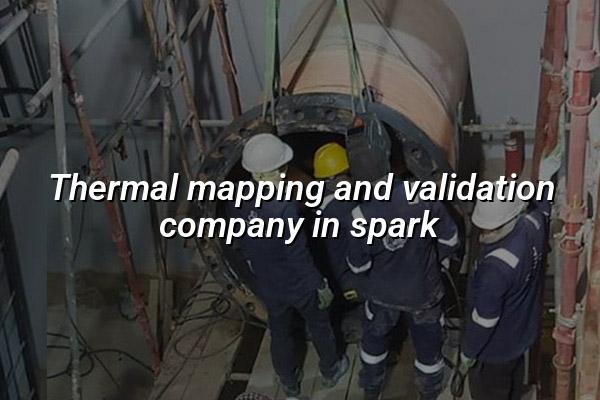
Thermal mapping and validation company in Spark is the kind of search you make when product temperature matters and the room, freezer, or chamber has to prove it. We help you see where hot spots, cold spots, and recovery gaps sit, so you can make decisions with data instead of guesswork.
Our team works with food, pharma, healthcare, warehousing, and cold-chain sites across India, Saudi Arabia, and the Middle East, using ISO/IEC 17025-style discipline, calibrated instruments, and practical field methods that fit real plant conditions. If your site in Spark needs a map for compliance, audit support, or basic process control, we build the study around the way your operation actually runs.
Thermal Mapping and Validation Company in Spark for regulated storage
A proper thermal study is more than placing a few probes and printing a chart. We look at temperature distribution, load condition, door-opening effect, product placement, airflow, and the hold time you actually need for your process. For Spark facilities handling vaccines, reagents, food, or sensitive materials, that detail can make the difference between a clean audit trail and a lot of explainable variation.
What we check during a mapping study
We place data loggers at representative points across the working volume, then run the study under conditions that reflect normal use. That usually means empty and loaded cases where needed, along with steady-state checks and recovery observations after access events. For reefer vehicles, we also pay attention to body condition, airflow paths, and how the load is stacked, because the same truck can behave very differently from one route to another.
Why validation matters to your team
Validation gives QA and maintenance teams something they can defend in a review. It helps you decide where to store sensitive stock, which shelves to avoid, how often to re-check the chamber, and whether the refrigeration system is keeping a stable profile in real use. In our work, the biggest surprises usually come from corners, upper racks, and units that look fine on a controller display but drift when the door cycle gets busy.
- Site review — we study the space, the load pattern, the target temperature band, and the way staff use the equipment.
- Instrument placement — calibrated loggers are arranged across the volume so weak points are caught, not missed.
- Run the study — the space is monitored through the operating cycle, including opening events where that matters.
- Review the data — we check spread, stability, and recovery, then prepare findings that your team can act on.
- Use calibrated loggers and probes with traceable records.
- Map under real loading, not just a clean empty chamber.
- Check door-opening recovery if your operation sees frequent access.
- Keep a clear record of acceptance criteria and observation points.
Common thermal mapping and validation studies in Spark sites
| Asset | Typical focus | What the study helps you prove |
|---|---|---|
| Cold room | Room distribution, rack effect, door recovery | Stock can be stored in stable zones with known hot and cold spots |
| Freezer | Low-temperature stability and pull-down behavior | The unit stays inside the chosen band during normal use |
| Thermal chamber | Uniformity, recovery, controller response | Test conditions are repeatable for QA or production checks |
| Reefer vehicle | Airflow, loading pattern, route vibration impact | Transported goods stay protected during dispatch and delivery |
How validation data supports audits, QA reviews, and daily control
When a customer, auditor, or internal reviewer asks how you know the space is behaving, the mapping report gives you the answer. It shows the method, instrument IDs, locations, observations, and results in a format that can be filed and referenced later. For many teams in the Middle East and India, that traceability is just as valuable as the temperature numbers themselves.
What makes a report useful
Useful reports are easy to read and easy to compare. We keep the language direct, point out the measured spread, and mark any operational issues we found during the run, such as weak circulation, delayed recovery, or uneven loading. That makes it simpler for you to decide whether to adjust shelving, service the refrigeration system, or change your access routine.
Built for real plant conditions
We work around shift patterns, dock activity, and the practical limits of live sites. If the study needs to happen with the store in operation, we plan for that. If a chamber needs special handling, we can support onsite work with our mobile calibration lab and pick-up or delivery arrangements for instruments that need controlled conditions.
Facilities that usually ask for thermal mapping
We get calls from QA managers, warehouse heads, and plant engineers who know the room is probably fine, but they need proof. That often includes cold-chain stores, pharma holding areas, hospital stores, food warehouses, and production chambers that sit inside a bigger process. A good study also helps when you are commissioning a new room or trying to settle a recurring temperature complaint.
Signs it is time to map the space
If you see temperature drift near the door, unstable product readings, repeated alarm events, or complaints that the top shelf behaves differently from the bottom shelf, it is time. Another common trigger is a layout change after racks, pallets, or batch sizes shift. Those changes can alter airflow more than people expect.
Cold-chain confidence
Spark sites often ask for mapping before audits, after equipment repair, or before a new product line starts. That timing makes sense. You want the numbers before a problem turns into spoilage, downtime, or a debate over who changed what.
How Mayon Industrial Services Can Help
We handle thermal mapping alongside calibration, inspection, temperature mapping, condition monitoring, and lab support, so the study fits into a wider maintenance or QA plan instead of becoming a stand-alone file. If your Spark site needs validation for a cold room, freezer, chamber, or reefer fleet, we can plan the work, collect the data, and keep the result practical for your team. Call us when you want the study done with proper instrumentation and field sense.
Call +91 99447 80844 (India) or +966 59 633 8012 (Saudi Arabia), email services@mayonservices.com, or message us on WhatsApp.
Frequently Asked Questions
We measure how temperature moves across the cold room, not just what the controller says. That tells you where the stable areas are, where the edges of the room behave differently, and whether the room can support your storage limits during real use.
We place calibrated data loggers at set points through the working volume and run the equipment through the agreed operating condition. After that, we compare the readings, check variation, and review recovery after access or load changes if those are part of the process.
Yes. We support onsite work from our India head office in Medavakkam, Chennai, and from our Saudi Arabia operation in Dammam Industrial City 2 through SMC Engineering Services / Sixfaces Maintenance Co. That helps us cover plant and warehouse sites without forcing you to move everything offsite.
We most often see interest from pharma, healthcare, food, cold chain, warehouses, manufacturing plants, and temperature-sensitive logistics teams. Those sectors need a clear record that storage or transport conditions stay within the agreed range under day-to-day use.
Yes, we can. Reefer vehicle studies look at airflow, loading arrangement, and temperature behavior during transport, which is different from a fixed cold room. If the load is sensitive, the route and docking pattern matter, so we plan the study around that.
That depends on your process, changes to the room, and internal QA policy. In practice, teams often repeat a study after major repair, layout change, controller adjustment, or when audit evidence needs refreshing, because those are the moments that can change the temperature profile.
Ready to check the temperatures your process really sees?
If you need a mapping report for a room, freezer, chamber, or reefer fleet in Spark, we can help you set it up and document it properly.
Contact MayonGood thermal validation does not need drama. It needs the right test points, solid records, and a team that understands how industrial sites behave when the doors open, the load changes, and the shift gets busy. That is the standard we bring to Spark and to every site we support.