
Thermocouple and RTD Calibration Company in Jafurah
Traceable temperature calibration support for field instruments, shutdown work and plant maintenance teams in Jafurah and the wider Eastern Province.
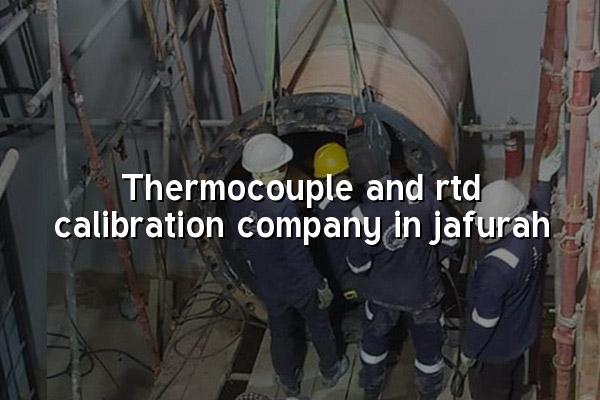
Thermocouple and RTD calibration company in Jafurah searches usually come from maintenance teams that need stable readings before a shutdown, startup, or routine plant audit. We help you get those sensors checked against traceable standards so your process data is worth trusting.
In Jafurah, temperature instruments often sit in harsh service: gas processing, utility systems, skids, freezers, and controlled rooms all need different handling. Our team works with onsite calibration, in-lab work, and controlled transport when the instrument needs special care, which is often the case with fragile probes and assemblies.
Thermocouple and RTD calibration in Jafurah for plant teams
Temperature drift looks small on paper, yet it can change batch quality, trigger false alarms, or hide a real process problem. For thermocouples and RTDs, we check response, compare readings across the relevant range, and issue calibration support that fits industrial use, not lab-only theory. That matters in Jafurah, where field crews deal with gas facilities, power utilities, packaged equipment, and cold-chain systems that can’t afford guesswork.
Why thermocouples and RTDs need different treatment
Thermocouples and RTDs may both measure temperature, but they behave very differently. A thermocouple is often chosen for wider range and tougher service, while an RTD is used where stability and repeatability matter more. We calibrate them with the right method for the sensor type, because treating both the same is how bad readings slip through inspection.
What clients usually want before a shutdown or audit
Most teams call us because they need the instrument list cleared before work starts, not after a problem shows up. That usually means checking sensors, confirming condition, tagging what passed, and separating what needs repair or replacement. When the job includes multiple points, we plan the work so your maintenance and QA people can see what was tested and what should be watched next.
- Identify the sensor type — confirm whether you have thermocouples, RTDs, transmitters, or complete assemblies.
- Check the service condition — review range, process media, mounting style, cable length, and any visible damage.
- Compare against traceable references — use controlled equipment and documented points suited to the application.
- Review the result with your team — separate usable items from probes that need repair, replacement, or closer monitoring.
- Ask for calibration points that match your operating range, not a random lab set.
- Keep damaged connectors and loose leads out of service until they are checked.
- Record tag numbers before dispatch so the return process stays clean.
- Use onsite testing for fixed assets and pickup service for delicate instruments that need careful handling.
Common temperature instrument checks we handle
| Instrument type | Typical plant use | What we look at |
|---|---|---|
| Thermocouple | Process heaters, furnaces, skids, exhaust systems | Sensor condition, polarity, junction integrity, reading stability |
| RTD | Utilities, storage tanks, HVAC, controlled process loops | Resistance response, repeatability, insulation condition, wiring issues |
| Temperature transmitter | Loop transmission to PLC or DCS | Sensor input, scaling, output consistency, installed condition |
| Complete assembly | Fixed plant points and critical monitoring locations | Probe, sheath, cable, transmitter, and end-to-end performance |
Why ISO/IEC 17025 traceability matters here
Plants in Saudi Arabia and across the GCC expect temperature data to be traceable and easy to defend during audits. Our work follows ISO/IEC 17025:2017 principles for competence and controlled measurement, while ISO 9001:2015 supports the quality system around the job. That gives your QA and maintenance teams a paper trail that makes sense when someone asks how a reading was verified.
Where this usually shows up
You see it in cold stores, chemical lines, food plants, and utility areas where one bad probe can distort a whole trend chart. We also see it in field projects where portable instruments need pickup and delivery because the sensor can’t be handled roughly, or the site needs controlled movement between locations.
Built for field reality
We work with tight spaces, shutdown windows, and mixed asset lists. That means practical planning, clear identification, and enough care to keep the instrument condition visible from start to finish.
How the job is usually organized
Some sites need us to come to the instrument because downtime is expensive or access is hard. Other jobs are better handled in a controlled lab, especially when the probe is delicate, the assembly needs careful inspection, or the customer wants pickup and delivery with proper handling. In practice, the best route depends on the asset, the range, and the condition of the sensor body and connection points.
We usually look at the same basics first: what the sensor is, where it’s used, how it’s wired, and whether there are signs of wear, corrosion, or bending. That’s simple, but it saves trouble. A loose connection or damaged sheath can make a calibration result look worse than the actual sensor performance, and sometimes the real fault is in the installation, not the element itself.
How Mayon Industrial Services Can Help
If you need thermocouple or RTD checks in Jafurah, we can support onsite calibration, controlled in-lab work, and pickup for instruments that need gentler handling. Our team also helps with related temperature instruments, electrical testing, inspection, and lab setup, so you can keep one trusted partner on the maintenance list. When your plant needs a clear answer on sensor condition, we’ll help you get it.
Call +91 99447 80844 (India) or +966 59 633 8012 (Saudi Arabia), email services@mayonservices.com, or message us on WhatsApp.
Frequently Asked Questions
You can arrange onsite or in-lab support with Mayon Industrial Services. For fixed plant assets, onsite work is often the easiest path. If the sensor needs careful handling, pickup and delivery can be arranged using our temperature-controlled and mobile-lab capability.
Yes. We handle both, and the method depends on the sensor type, range, and installation. A thermocouple in a high-heat process line is treated differently from an RTD in a controlled utility loop, so we plan the work around the actual service.
We work within ISO/IEC 17025:2017 and ISO 9001:2015 quality systems. That matters when your team needs traceability for audits, shutdown records, or internal QA checks. We keep the focus on controlled measurement and clear documentation.
Yes, we can. Some sensors are better moved under controlled handling rather than tested in place, especially if they’re fragile or tied to critical measurement points. We use our in-house lab and mobile calibration setup to keep the process practical.
We serve clients across Saudi Arabia, India, and the wider Middle East. Many of our jobs come from industrial sites in the Eastern Province, but we also work with teams in other plant locations that need temperature calibration, inspection, or related engineering support.
Ready to get your temperature points checked?
Send us your sensor list, and we’ll help you choose the right calibration route for thermocouples, RTDs, and related instruments.
Contact MayonFor Jafurah projects, the real win is simple: fewer surprises when temperature data matters. Mayon Industrial Services gives you a practical route for calibration, documentation, and field support without turning the job into a long back-and-forth.