
Thermocouple and RTD Calibration Company in Khurais
Traceable temperature calibration for thermocouples and RTDs used in Saudi oil, gas, power and industrial plants.
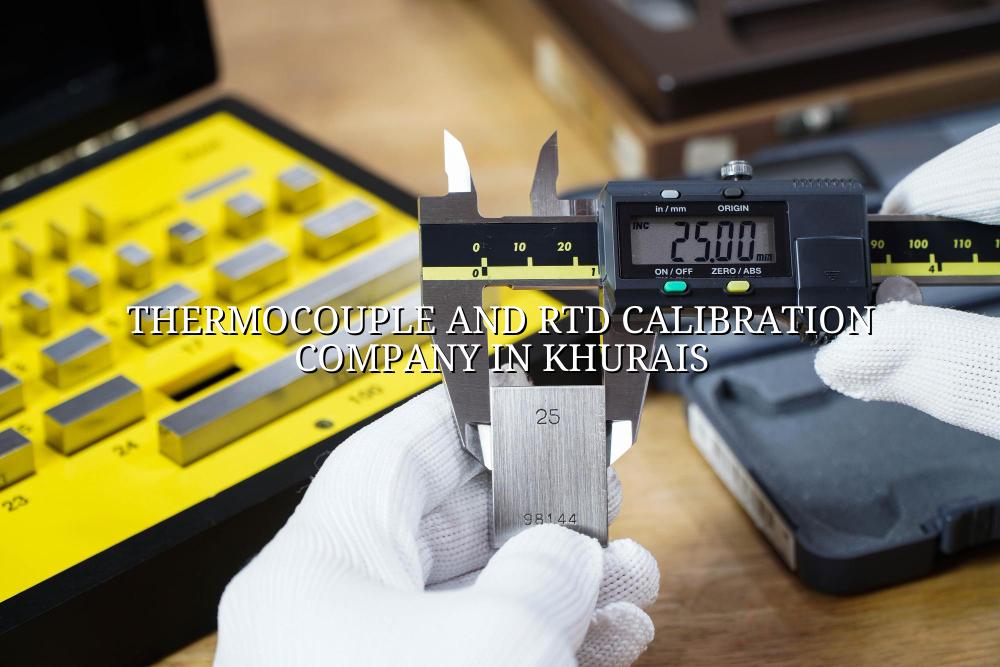
Thermocouple and RTD calibration company in Khurais customers call when temperature readings start drifting, alarms don’t match process reality, or maintenance teams need traceable proof before startup. If you need a clean handover for the next shutdown, this page explains how we handle field and laboratory calibration for temperature sensors used in Saudi industrial plants.
Our work fits the kind of conditions you see around Khurais and nearby Saudi oil and gas assets: high ambient heat, long cable runs, noisy panels, and instruments that have to stay trustworthy under pressure. We support plants that need ISO/IEC 17025:2017 traceability, practical onsite service, and a team that understands production schedules, not just paperwork.
Why thermocouple and RTD calibration matters in Khurais
Thermocouples and RTDs are easy to overlook until a batch temperature, heater loop, furnace zone, or line heater starts reading a little too high or too low. In a place like Khurais, that small drift can affect product quality, equipment protection, and the confidence your operators place in the panel. We see the same pattern in Saudi plants again and again: the sensor still “works”, but the process team no longer trusts it.
Our calibration approach is built around practical use. We check the sensor type, connection method, cable condition, and the instrument range before we test it against suitable reference equipment. For RTDs, that usually means verifying the resistance response across the expected span. For thermocouples, we confirm the millivolt output and compare it against the required temperature points so your team can see where the error starts.
What we check before any calibration
We don’t start with the certificate. We start with the sensor and the application. A thermocouple buried in a hot process line has different risks from an RTD sitting in a control room freezer, and the test method should reflect that. Cable damage, oxidation at the tip, loose terminals, wrong extension wire, and bad transmitter scaling can all make a good sensor look bad.
What the calibration result should tell you
The useful result is not just pass or fail. You need to know whether the sensor stays within tolerance across the full range, whether it drifts at the upper end, and whether the replacement decision should happen now or at the next planned outage. That’s the sort of detail maintenance and QA teams can act on.
- Identify the sensor and service point — confirm whether it is a thermocouple, RTD, transmitter input, or complete loop, then note the process range and location.
- Inspect the hardware — check probe length, sheath condition, head assembly, wiring, tag details, and any visible damage before testing.
- Test against reference points — compare the sensor at selected temperature points using calibrated references and record the deviation.
- Review tolerance and action — decide whether the unit can stay in service, needs repair, or should be replaced before the next production run.
- Suitable for field instruments, process skids, panels, and test benches in Saudi industrial plants
- Useful for shutdown planning, start-up checks, and periodic verification of temperature loops
- Supports both thermocouple and RTD sensor types, along with transmitters where needed
- Helps QA teams keep traceability aligned with ISO/IEC 17025:2017 expectations
- Works for oil and gas, petrochemical, power, manufacturing, and cold-chain applications
Thermocouple vs RTD checks for industrial use
| Item | Thermocouple | RTD |
|---|---|---|
| Typical signal | Millivolt output that changes with temperature | Resistance change, usually read through a transmitter or instrument |
| Best use | Higher-temperature process zones and rugged field service | Stable measurement where accuracy and repeatability matter |
| Common checks | Polarity, junction condition, output at set points, wiring integrity | Resistance value, sensor stability, lead wire condition, transmitter input |
| Typical fault seen in plants | Broken junction, extension-wire mismatch, drift at high temperature | Open circuit, lead damage, slow response, scaling error at the transmitter |
How we handle calibration in Saudi field conditions
In Khurais and other Saudi sites, people usually need calibration to fit around work permits, plant access, and maintenance windows. We plan for that. If the instrument can be tested onsite, our mobile calibration lab helps reduce handling risk and keeps the sensor close to its real service environment. If special conditions are needed, we can pick up and deliver the instruments to protect them during transport.
Why the environment matters
Heat, dust, vibration, and long cable routes can all affect temperature measurement. A sensor that looks fine on paper may still give false readings once it is mounted on a vibrating skid or run through an exposed junction box. That is why the application matters as much as the calibration result.
Built for maintenance and QA teams
We support shutdown checks, turnaround work, commissioning, troubleshooting, and routine verification for temperature loops. Our goal is simple: help you trust the reading before the process depends on it.
How Mayon Industrial Services Can Help
We calibrate thermocouples and RTDs for plants that need dependable temperature data, and we do it with the same industrial discipline we use for broader calibration, mechanical, inspection, and commissioning work. If your site in Khurais needs onsite support, our team can coordinate the job around your maintenance plan, and we can also help when a sensor needs special handling in our controlled lab. It’s the kind of work we do every week for oil and gas, petrochemical, and power clients across Saudi Arabia.
Call +91 99447 80844 (India) or +966 59 633 8012 (Saudi Arabia), email services@mayonservices.com, or message us on WhatsApp.
Frequently Asked Questions
Yes, we support Khurais and nearby Saudi industrial locations with onsite and laboratory-based temperature calibration. If the job needs field testing, we plan around your access window and plant requirements. If the sensor needs controlled handling, we can arrange pickup and delivery through our Saudi service setup.
We first check the thermocouple type, wiring, junction condition, and application range. Then we compare its output against suitable reference points and record the deviation. That gives your team a clear picture of whether the sensor can stay in service or needs replacement.
RTD calibration normally includes checking the sensor resistance response, lead integrity, and transmitter input where applicable. We look for drift, open circuits, and wiring problems that can distort the reading even when the probe itself seems fine. The result helps maintenance teams decide on repair, replacement, or continued use.
Yes, onsite work is a normal part of what we do. It is often the best option when the instrument is installed on a live system, when removal would take too long, or when the team wants the reading checked in its actual operating location. We also support jobs that need special handling in a controlled lab.
Because traceability matters when you’re running production, quality, or safety-critical systems. ISO/IEC 17025:2017 gives confidence that the calibration process is controlled and the results are suitable for industrial use. That’s especially useful in Saudi projects where documentation is checked closely.
Ready to put temperature readings back under control?
If your thermocouples or RTDs in Khurais need calibration, we can help you plan the work, test the instruments, and keep the paperwork clean.
Contact MayonWhen temperature data starts to drift, the safest move is to check it early. Mayon Industrial Services gives Khurais teams a practical way to verify thermocouples and RTDs with traceable methods, clear reporting, and support that fits real plant work.