
Thermocouple and RTD Calibration Company in Red Sea
Traceable temperature calibration for process plants, cold-chain sites and engineering teams across India, Saudi Arabia and the Middle East.
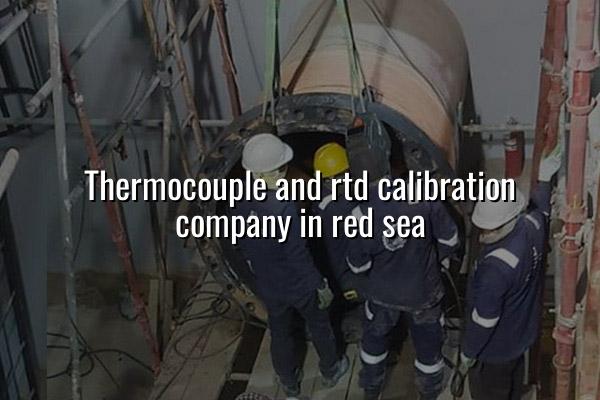
Thermocouple and RTD calibration company in Red Sea support matters when your process depends on steady temperature readings, not guesswork. We help you verify sensors used in reactors, ovens, freezers, utilities and packaged systems so your team can trust the numbers before a batch goes out the door.
At Mayon Industrial Services, we work with plant maintenance teams, QA groups and instrumentation engineers who need traceable calibration for sites in India, Saudi Arabia and the wider Middle East. Our in-house lab, mobile calibration setup and pick-up service make it easier to handle routine checks, field instruments and sensors that need controlled conditions.
Why a Thermocouple and RTD Calibration Company in Red Sea matters
In the Red Sea region, temperature instruments often work in mixed conditions: hot ambient air, saline environments, insulated lines, process skids and cold storage areas that need stable control. A thermocouple drift of just a few degrees can change a process alarm, a drying cycle or a storage log, while a mismatched RTD can hide a real fault until production quality slips. That is why we calibrate sensors against controlled references and document the results for audit use.
Thermocouples and RTDs need different checks
Thermocouples are common where fast response matters, especially in furnaces, heaters and high-temperature process lines. RTDs are often chosen where better stability and tighter tolerance are needed, such as cold rooms, pharma spaces and food processing. We treat them as different instruments, because their error sources are different too: wire junction issues on one side, resistance changes and lead effects on the other.
What our calibration work usually covers
For most clients, the job starts with identification, visual condition check and tag verification. Then we compare the instrument output against approved references in the relevant temperature range, record as-found readings, correct if needed and issue traceable documentation. If a probe is damaged, unstable or badly contaminated, we flag it rather than forcing a false pass.
- Identify the sensor type — confirm whether the device is a thermocouple, RTD, transmitter or complete loop before any test begins.
- Check the physical condition — look for sheath damage, loose terminals, broken insulation, corrosion or moisture ingress.
- Compare against a reference — test at set points that suit the application, using controlled equipment and traceable standards.
- Record the result clearly — capture as-found data, adjustment details where applicable, and the final condition for your records.
- Use calibration points that match the actual process range, not just a generic room-temperature check.
- Keep thermocouple types separate, since Type K, J and other alloys behave differently.
- Ask for traceable records that help during ISO/IEC 17025 and ISO 9001 reviews.
- Replace or repair probes that fail mechanically, even if the reading looks close at one point.
- Protect RTDs from vibration and poor installation, because movement can create repeat errors.
Thermocouple vs RTD in real plant use
| Aspect | Thermocouple | RTD |
|---|---|---|
| Typical use | High heat, fast-changing process temperatures | Stable measurement where tighter accuracy is needed |
| Response | Usually quicker | Usually steadier but can respond more slowly |
| Common issue | Junction wear, drift and wiring errors | Lead resistance, sensor damage and installation faults |
| Best check style | Multi-point verification across the working range | Careful comparison in the range used by the process |
How we keep the calibration traceable
Traceability is what lets your team stand behind a reading during a shutdown, a customer audit or a quality review. We work to ISO/IEC 17025:2017 for calibration competence, and we also support clients who need documentation aligned with ISO 9001:2015 quality systems. For electrical calibration work, we reference EURAMET CG-15 where it applies to the instrument and the method.
Why documentation matters as much as the test
A sensor can be installed correctly and still cause trouble if the records are incomplete. Maintenance teams in petrochemical, power, manufacturing and cold-chain sites often need serial numbers, calibration points, out-of-tolerance findings and status labels in one place. That makes it easier to decide whether a probe goes back into service, gets rechecked or gets replaced.
Built for real sites, not just bench work
Our mobile calibration lab helps with onsite work when removing every sensor is not practical. For units that need special handling, we can arrange pick-up and delivery so temperature-controlled instruments reach our in-house lab safely. That is useful for food, healthcare and pharma sites where handling discipline matters.
Where Red Sea customers use temperature calibration
We usually see this work in oil & gas facilities, petrochemical plants, power plants, cold rooms, reefer fleets, warehouses, maintenance shops and manufacturing lines. In Saudi Arabia, many teams need practical onsite checks for field-installed transmitters and sensors that cannot be left out of service for long. In Chennai and other Indian industrial hubs, the same need shows up in OEM workshops, utilities and production plants running under tight quality controls.
Common situations we help with
Some clients need a one-time audit correction before a customer visit. Others set up a scheduled verification plan for critical lines, especially where temperature data affects safety or product release. If a site has a mix of thermocouples, RTDs and transmitters, we help separate the instruments by duty so the right method is used for each one.
What we look for first
Before any adjustment, we check the sensor code, wiring condition, probe construction and the range it actually sees in service. That simple step saves time and avoids treating a process heater like a cold-room probe. It also helps us give you a useful result, not just a printed sheet.
How Mayon Industrial Services Can Help
If you need a thermocouple and RTD calibration company in Red Sea, we can support you with onsite calibration, in-lab checks, sensor condition review and follow-up engineering support. Our team also handles related mechanical and inspection work, so if your temperature issue is tied to installation, vibration or equipment condition, we can look at the full picture. For plants in Saudi Arabia, India and across the Middle East, that saves a lot of back-and-forth.
Call +91 99447 80844 (India) or +966 59 633 8012 (Saudi Arabia), email services@mayonservices.com, or message us on WhatsApp.
Frequently Asked Questions
Look for a team that can handle both sensor types, not just one. You also want traceable records, practical onsite support and experience with industrial sites that run under ISO 9001 or ISO/IEC 17025 expectations. If the provider can explain the method clearly before they start, that's a good sign.
Yes, many can. Onsite calibration works well when the sensor is installed in a process line, panel or skid and removing it would create downtime. For probes that need special handling or tighter environmental control, we can use our in-house lab and arrange pick-up and delivery.
We check the sensor condition, wiring, identification and the reading at selected temperature points. The aim is to see how far the device is from the reference and whether it can still serve the application. If the probe shows damage or unstable output, we flag that in the result.
That depends on the duty, criticality and how much vibration or temperature cycling the probe sees. A cold room RTD and a high-vibration process RTD won't age the same way. Many plants set their own schedule based on risk, past drift and audit needs.
Yes. We support clients in India from Medavakkam, Chennai, and in Saudi Arabia through our Dammam Industrial City 2 base. We also work across the wider Middle East for industrial projects that need onsite support and traceable calibration records.
Ready to check your temperature sensors with confidence?
If your thermocouples or RTDs are part of a critical process, we can help you verify them and keep the records in order.
Contact Mayon