
Thermocouple and RTD Calibration Company in Tanajib
Traceable temperature calibration support for Tanajib operations, with onsite, mobile-lab and pickup options where the job calls for it.
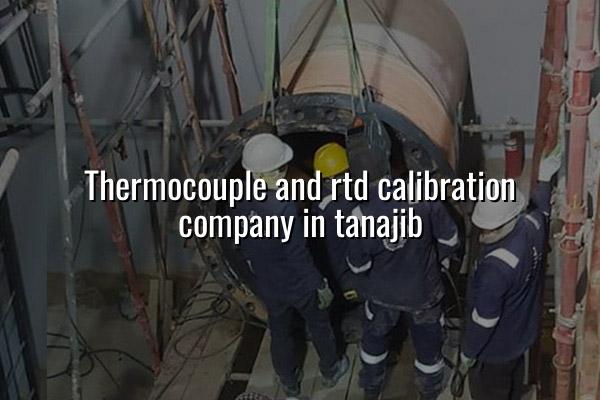
Thermocouple and RTD calibration company in Tanajib services matter when your process temperatures drive production, safety checks, or maintenance decisions. If a probe is off, the error spreads fast through heaters, ovens, tanks and test rigs, so you need readings you can trust.
We work with clients who need traceable calibration for field instruments and plant equipment across Saudi Arabia and the wider Middle East. In Tanajib, that often means supporting oil and gas, petrochemical and utility sites where temperature control has to stay tight, documentation has to be clean, and the work has to fit around operational windows.
Thermocouple and RTD calibration company in Tanajib for process reliability
Thermocouples and RTDs behave differently, and that’s where people get caught out. A thermocouple may respond quickly but drift with age, while an RTD usually offers better stability if the element, lead wiring and transmitter are all healthy. We check the sensor against the right reference equipment, record the results clearly, and help you spot drift before it turns into a shutdown discussion.
Where the checks usually start
Most Tanajib jobs begin with the sensor type, its temperature range, how it’s installed and what the instrument feeds into. A bare probe in a maintenance workshop is one thing. A temperature loop tied to a process skid, control panel or safety system is another. We treat both carefully, because the calibration method has to match the actual use, not just the label on the tag.
Why traceability matters in Saudi industrial work
Clients in Tanajib usually ask for confidence, not a sales pitch. That means traceable results, proper identification, and enough detail for QA, maintenance and audit files. Our ISO/IEC 17025:2017 approach is built for that kind of work, with temperature-controlled in-house lab support, mobile calibration capability for onsite jobs, and pickup and delivery where instruments need special handling.
- Identify the sensor and circuit — confirm whether you have a thermocouple, RTD, transmitter, indicator, or complete loop.
- Inspect condition and installation — look for broken sheaths, loose terminals, corrosion, damaged insulation and mounting issues.
- Compare against a reference — test at suitable points across the working range so the reading is meaningful, not just a single spot check.
- Review the result and label the instrument — record pass or fail, note any drift, and decide whether the item stays in service, needs adjustment or should be replaced.
- Check thermocouple polarity before blaming the process temperature.
- For RTDs, verify lead resistance and connection integrity, especially on long cable runs.
- Recalibrate sensors used on critical heaters, furnaces and test chambers after repair or replacement.
- Keep separate records for the sensor, transmitter and display if they are calibrated as a loop.
Thermocouple vs RTD calibration checks
| Item | Thermocouple | RTD |
|---|---|---|
| Typical behaviour | Fast response, more prone to drift over time | Stable readings, slower response in some builds |
| Common check point | Polarity, junction condition, output against reference | Element resistance, wiring, transmitter input |
| Best use case | High-temperature process lines and quick monitoring | Process control where stability and repeatability matter |
| What we watch for | Noise, open junctions, damaged sheath, unstable output | Lead errors, sensor ageing, poor connection integrity |
What good calibration records should show
Good records do more than say “passed”. They should identify the instrument, the range checked, the condition on receipt, the reference used, and any pre- or post-adjustment reading. For engineering teams in Tanajib, that makes the difference between a file that sits in a cabinet and a file that helps you make a maintenance decision next week.
When we recommend action instead of reuse
If a thermocouple is unstable, if an RTD is reading outside its acceptable band, or if the loop is affected by cable faults and dirty terminals, we’ll say so plainly. Some sensors can be adjusted and returned to service. Others are too far gone. That honest split saves time on repeat failures.
Built for plant teams, not paperwork alone
We support shutdown planning, maintenance shutdowns and routine verification for temperature-critical assets in oil and gas, petrochemical, power and manufacturing sites. The aim is simple: fewer surprises on the floor, cleaner handover notes, and less guessing when a loop drifts.
How we handle thermocouple and RTD work in Tanajib
Some items are best handled onsite. That’s usually the case when the sensor is part of a live process, when removal would interrupt production, or when the system needs a field check before anyone authorises downtime. Our mobile calibration lab is useful in those situations because it keeps the work close to the asset.
Other instruments need more controlled conditions. If a probe has to be picked up and checked in our in-house laboratory, we can arrange that too. This is common for sensors that need special handling, multiple point checks, or closer inspection after heat damage, contamination or repeated drift.
What Tanajib teams usually need from a calibration partner
Traceable results
QA teams need records they can file and review without chasing missing data later.
Field flexibility
Onsite service helps when removing a sensor would disturb a working line or a shutdown plan.
Clear fault findings
Maintenance crews need plain answers about drift, wiring issues and sensor wear.
Regional support
Saudi and GCC operations usually want fast coordination and documentation that fits site controls.
How Mayon Industrial Services Can Help
We handle thermocouple and RTD calibration alongside broader temperature, mechanical and inspection work, so your team doesn’t need to juggle multiple vendors for the same shutdown. If you also need calibration for related instruments, maintenance support, or lab setup advice, we can keep the conversation in one place and work to the same quality standard.
Call +91 99447 80844 (India) or +966 59 633 8012 (Saudi Arabia), email services@mayonservices.com, or message us on WhatsApp.
Frequently Asked Questions
You can work with a provider that supports Tanajib from Saudi Arabia and handles both onsite and lab-based calibration. For industrial sites, that usually matters more than location alone, because the sensor may need field verification, pickup, or controlled lab checks depending on the job.
If the RTD drifts, reads inconsistently, or shows unstable values after you check the wiring and transmitter, calibration is the first step. If the element is damaged, resistance is abnormal, or the sensor keeps failing after correction, replacement may be the better call.
Yes, onsite work is often the best option when the sensor is already installed in a live process. It helps reduce handling, avoids unnecessary removal, and lets you check the actual operating setup, which is where many temperature errors start.
Our calibration work is aligned with ISO/IEC 17025:2017, which is the key competence standard for test and calibration labs. Where needed, we also work within ISO 9001:2015 quality management and the specific temperature or electrical practices relevant to the instrument.
We do. Our team supports a wide range of calibration, inspection, mechanical and engineering services, so temperature instruments can be handled alongside other plant assets. That saves time when you’re preparing for maintenance, audit work or a shutdown package.
Yes, we support clients across Saudi Arabia and the wider Middle East. If your site has multiple locations, we can discuss the practical setup for onsite work, mobile-lab support, or instruments that need pickup and delivery for special conditions.
Ready to put your temperature readings back on solid ground?
If your thermocouples or RTDs need traceable calibration in Tanajib, we’re ready to help you plan the next step and keep the work practical.
Contact Mayon