
Torque and Force Calibration Company in Abha
Traceable torque and force calibration support for Abha sites that need steady measurements and clean paperwork.
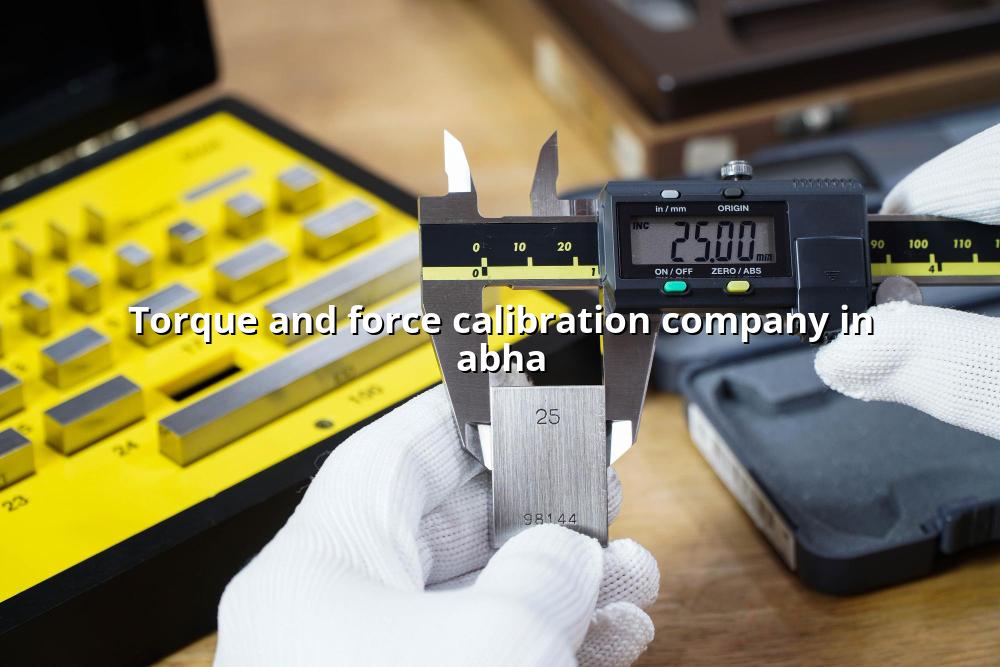
Torque and force calibration company in Abha support matters when a wrench, tester, press, or load cell has to read right the first time. If your maintenance team is tightening critical joints, checking lifting gear, or verifying a test rig, you need numbers you can trust and paperwork that stands up to QA review.
We help industrial teams in Abha, the wider Saudi market, and nearby Gulf operations keep torque and force instruments traceable under ISO/IEC 17025:2017. Our work suits plants that want clean records, careful handling, and a straightforward path from pickup or onsite visit to final certificate.
What torque and force calibration means for your site
Torque tools drift with use. So do force devices. A torque wrench that has taken a few hard knocks in a workshop can still look fine, yet the output may be off enough to affect assembly quality or joint integrity. A force gauge, load cell, or tension meter can do the same thing if it has seen overload, heat, cable strain, or rough storage. That is why calibration is not a box-ticking exercise. It is part of keeping production, maintenance, and inspection decisions honest.
Tools we commonly see from Abha and nearby industrial sites
In practice, the requests are usually very familiar. We see click-type and electronic torque wrenches, torque screwdrivers, torque testers, torque multipliers, force gauges, load cells, proving rings, and compression or tension devices used in testing bays. Some arrive from workshop teams in Abha itself. Others come from contractors working across Saudi Arabia who want one calibration partner for the lot rather than chasing different vendors for each instrument family.
Why traceability matters in real work
Traceability is the part that gives your QA team confidence when they sign off a job. With ISO/IEC 17025:2017 aligned calibration, the measurement chain is clear, the uncertainty is stated, and the result can be defended during audit or customer review. For sectors such as oil and gas, petrochemical, power, construction, healthcare, and manufacturing, that traceable link is often the difference between a usable certificate and a document nobody wants to rely on.
- Check the instrument and its condition — we review model details, range, visible wear, accessories, and whether the tool is safe to test.
- Stabilize and verify the setup — the calibration environment and test arrangement are checked so readings are not distorted by handling or fixture issues.
- Measure across the working range — the device is tested at suitable points, not just one spot, so you can see how it behaves across normal use.
- Compare, record, and label — results are compared against acceptance criteria, then we issue the certificate and status identification for your records.
- Send the torque tool with its socket, adaptor, or fixture if that accessory affects how it is used.
- Tell us the intended working range so we can match the test points to your actual use, not just the label.
- If a force device has been overloaded, mention it up front; that history changes how we look at the readings.
- Keep the instrument clean and packed well before transport, because grit and rough handling can hide a problem or create one.
Common torque and force items we calibrate
| Instrument type | Typical use | What we check |
|---|---|---|
| Torque wrench | Bolting, flange work, assembly | Reading accuracy at selected points and repeatability |
| Torque screwdriver | Small fasteners, electrical work, devices | Low-range performance and smooth release or display response |
| Load cell | Testing rigs, weighing, tension systems | Applied force response, stability, and traceable comparison |
| Force gauge | Push-pull checks, quality control, bench tests | Force indication, zero behavior, and range consistency |
How Abha teams usually choose the right calibration path
Some instruments are best handled in our temperature-controlled laboratory, especially when they need stable conditions or careful verification across several points. Others are more practical onsite, where the tool is already installed or where shutdown time is tight. We also support pickup and delivery for instruments that need special handling, which helps when a device cannot be moved safely or has to stay protected from heat, dust, or vibration during transport.
What your maintenance and QA team gets back
You get a certificate, the recorded results, and a clearer picture of whether the tool still fits service. That matters in Abha projects where a contractor may be preparing handover files, or a plant team wants to avoid arguments later about who last checked the instrument. In our experience, the smoothest jobs are the ones where the user tells us the application clearly before the instrument arrives.
Built for industrial teams
We handle single tools, workshop batches, and recurring calibration schedules for plants, contractors, and service companies that need traceable torque and force work without guesswork.
What to expect from a torque and force calibration company in Abha
A good calibration job starts before the test bench does. We look at the device, the range, the condition, and the application so the test plan fits the tool. If you are in procurement or maintenance, this saves a lot of back-and-forth later. It also reduces the chance of getting a certificate that does not really answer the question your site asked.
For Abha customers, this often means a mix of onsite service and controlled-lab work. Saudi industrial sites frequently need a partner who can handle urgent work without skipping the traceability side, and that is where a mobile calibration lab helps. It gives field teams a practical option for instruments already in service while still preserving the discipline expected under ISO/IEC 17025:2017.
Records that help during audits
Audit season is never the right time to discover that an instrument history is incomplete. Clear identification, stated results, and a proper calibration certificate make life easier for QA teams and end users. If your company works under internal quality controls or customer inspection, those records can save hours of explanation later.
- Clear instrument identification on the certificate
- Test points chosen for your real operating range
- Traceable calibration aligned with ISO/IEC 17025:2017 practice
- Support for onsite visits, lab work, or pickup and delivery where needed
How Mayon Industrial Services Can Help
Mayon Industrial Services supports torque and force calibration for teams that need dependable results, whether the instrument is a torque wrench in a workshop, a load cell in a test rig, or a force gauge used for quality checks. We can support onsite work, in-lab calibration, and pickup or delivery for instruments that need special care. If your operation in Abha needs one partner who understands industrial measurement and the paperwork that goes with it, we should talk.
Call +91 99447 80844 (India) or +966 59 633 8012 (Saudi Arabia), email services@mayonservices.com, or message us on WhatsApp.
Frequently Asked Questions
You can work with Mayon Industrial Services for torque and force calibration support tied to Abha and the wider Saudi market. We handle industrial instruments for maintenance, quality, and inspection teams, and we can discuss onsite or lab-based handling depending on the device and its condition.
Torque wrenches, torque screwdrivers, and torque testers are the usual ones because they see repeated use and handling. If the tool is used on critical bolts, flange joints, or equipment assembly, regular checking matters even more because wear and shock can change the output without obvious visual damage.
Yes, onsite service is possible for many industrial cases, especially when the instrument is installed in a line, rig, or test setup that is difficult to move. If the unit needs special environmental control or extra handling, we can discuss lab-based options and pickup or delivery as well.
For calibration competence, ask for ISO/IEC 17025:2017. That gives you a traceable process with documented measurement results and uncertainty. If your internal quality system also needs broader management controls, ISO 9001:2015 may appear in your company framework, but the calibration work itself should be anchored to the 17025 process.
Yes, those sectors are a normal fit for this work. In oil and gas or petrochemical jobs, a torque reading often affects joint integrity, shutdown planning, and final handover. That is why the certificate, traceability, and careful handling matter as much as the number on the screen.
Send the instrument itself and any accessory that affects the way it is used, such as sockets, adapters, or fixtures. If there has been overload, a drop, or a fault, tell us that before dispatch. That context helps us judge the result in the right way and avoid surprises when the report is issued.
Ready to keep your torque and force tools in line?
Send the instrument details to Mayon Industrial Services and we’ll help you choose the right calibration path for your site in Abha or across Saudi Arabia.
Contact Mayon