
Torque and Force Calibration Company in Al Hasa
Traceable torque and force calibration for maintenance teams, QA checks and shutdown work in Al Hasa, with onsite and in-lab support.
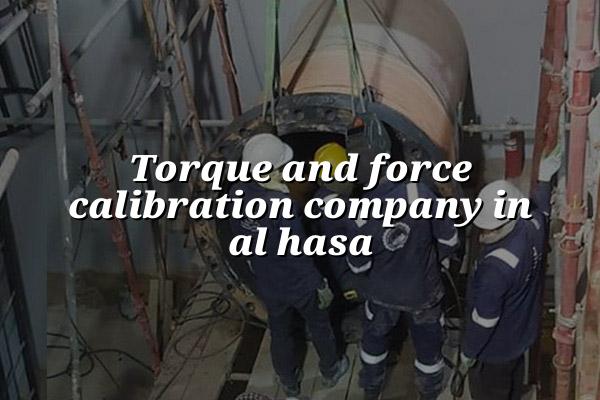
Torque and force calibration company in Al Hasa services matter when your tools, jigs and test rigs have to hold up under real plant work. If a torque wrench reads light, or a force gauge drifts after a few cycles, the result shows up in bolt integrity, safety checks and the confidence of your maintenance team.
We help customers in Al Hasa and the wider Eastern Province keep torque tools, force gauges and related measuring equipment traceable, documented and fit for use. That includes onsite support for active sites, pickup and delivery for instruments that need controlled handling, and laboratory work backed by ISO/IEC 17025:2017 discipline.
Why torque and force calibration matters in Al Hasa plants
In Al Hasa, we often hear the same story from maintenance supervisors: the tool looked fine, the job was finished, and then a joint had to be reopened because the torque evidence was weak. That’s exactly why torque and force calibration company in Al Hasa searches usually come from teams that need more than a certificate file. They need records that make sense on shutdown day, during audits, and when a safety or quality team asks for traceability.
Where torque tools usually drift
Manual torque wrenches, torque multipliers, hydraulic torque tools and force gauges all behave differently, but wear and handling affect them in a similar way. Drop damage, overloaded use, vibration in transport, repeated high-load cycles and poor storage can shift readings without any obvious visual sign. In our work, the trouble usually appears first on critical flange work, assembly lines, structural tensioning jobs or test benches that depend on repeatable loading.
What we check during calibration
Our team looks at the instrument under controlled conditions, compares it against traceable standards and records the result across the usable range. For torque, that means the reading at the points your team actually uses, not just one token value. For force, we check response, repeatability and the condition of the device so you know whether it should stay in service, be adjusted, or be sent for repair before it goes back out.
- Identify the tool and range — confirm the make, model, serial number and the working range you use on site.
- Inspect before test — look for loose handles, damaged couplings, leakage, worn displays or signs of overload.
- Calibrate against traceable standards — compare the instrument under controlled conditions and record the deviation.
- Review the result and label status — decide whether it can return to service, needs adjustment, or should be repaired first.
- Use calibration intervals that match how hard the instrument is actually used.
- Keep torque wrenches separate from general hand tools during storage and transport.
- Match the calibration range to the job, not just the nameplate capacity.
- Ask for records that show results, not only a pass/fail sticker.
Torque and force equipment we commonly calibrate
| Instrument | Typical use | What we look for |
|---|---|---|
| Torque wrench | Bolting, assembly and maintenance work | Reading consistency, mechanism condition and usable range |
| Torque screwdriver | Small fasteners and light assembly | Low-end accuracy and smooth release behaviour |
| Force gauge | Pull, push and test applications | Response, repeatability and alignment under load |
| Load cell / force sensor | Testing rigs and verification setups | Output stability, linear response and traceability |
How our calibration process supports audits and shutdown work
For many customers in Saudi Arabia, the pressure is not just technical. It’s documentation. A calibration record has to stand up to internal QA review, vendor checks and plant-side signoff. We work to ISO/IEC 17025:2017 principles, and where electrical calibration is involved in broader job scopes, we keep EURAMET CG-15 in view for the discipline that standard brings to measurement practice.
Why traceable records help your team
Good records save time during audits because the instrument history is clear: identification, result, status and the date it was verified. They also help maintenance planners decide what stays in circulation and what should be held back. On a busy site in Al Hasa, that can mean fewer surprises when a shutdown starts and fewer arguments about which wrench should be used on a critical joint.
Built for real plant conditions
We see torque and force tools used in oil and gas, petrochemical, power and manufacturing settings where vibration, heat and repeated handling are part of the day. That’s why we keep the process practical: check the tool, verify the range, document the result and hand it back ready for the next job.
Onsite work, lab work and controlled handling when needed
Some instruments can stay in the field and be checked on site. Others need a calmer environment, especially if they are delicate, used on a high-value line or need pickup and delivery because of handling conditions. Mayon Industrial Services runs a temperature-controlled in-house laboratory plus a fully equipped mobile calibration lab, so we can choose the setup that fits the job instead of forcing every tool through the same path.
That flexibility matters in Al Hasa, where production schedules can change quickly and site access sometimes moves around maintenance windows. We keep the work practical for the customer: verify the equipment, carry out the calibration, issue the record, and help you decide what should be returned to service now and what needs repair or rechecking first.
What else the job may need besides calibration
Torque and force calibration is often one part of a wider maintenance plan. A plant may also need bolt torquing, tensioning support, flange facing, hydrotesting, testing and commissioning, or even repair work on hydraulic cylinders and pumps. We handle those adjacent needs too, which helps when a tool issue is only one piece of a larger shutdown list.
Why buyers ask for one team
Procurement teams usually want fewer handoffs. Maintenance managers do too. If the same partner can inspect the instrument, calibrate it, support the mechanical work and help with the paperwork, the job tends to move with less back-and-forth. That’s especially useful for projects spanning Saudi Arabia and the wider Middle East, where coordination time is often the biggest hidden cost.
Keep the asset ready
Tools that fail repeated use checks or drift outside tolerance should not be left in circulation just because they still switch on or feel tight. A clear calibration status helps your supervisors make the call before the next critical job starts.
How Mayon Industrial Services Can Help
We support torque and force work with the same mindset we use across calibration, mechanical services and inspection: keep it traceable, keep it practical and keep it honest. If you need onsite support in Al Hasa, in-lab verification, or a wider package that includes repair, commissioning or inspection work, our team can help you choose the right route for the instrument and the job.
Call +91 99447 80844 (India) or +966 59 633 8012 (Saudi Arabia), email services@mayonservices.com, or message us on WhatsApp.
Frequently Asked Questions
You can work with Mayon Industrial Services for onsite and in-lab calibration support connected to Al Hasa projects. We serve customers in Saudi Arabia from Dammam Industrial City 2 and support instruments used in maintenance, assembly and test work. The right setup depends on the tool, the condition of the instrument and how it’s used on site.
That depends on use, handling and the risk of the job. A wrench used daily on critical bolting usually needs a tighter control plan than one used occasionally. We normally look at the duty cycle, the environment and any signs of overload before advising on the interval.
Yes, onsite calibration is possible for many instruments when the field setup is suitable. If the device is sensitive, needs careful handling or should be checked in a controlled environment, we can arrange laboratory work and pickup delivery instead. The best choice depends on the instrument class and the risk of moving it.
You should receive a record that identifies the instrument, shows the result and states the status clearly. Many customers also need internal asset references, so we try to keep the paperwork practical for QA and maintenance teams. If you need a specific format for your plant, tell us before the job starts.
Yes, we support industrial customers across Saudi Arabia and the Middle East with calibration and related engineering services. That’s useful when the same shutdown also needs mechanical work, inspection or repair support. It keeps the vendor list shorter and the coordination easier.
Ready to put your torque records on solid ground?
If you need dependable calibration support in Al Hasa, our team is ready to help with the right setup for your tools and your site.
Contact Mayon